BN/BO Doping of peri‐Acenoacenes: Modulating Excited States in Trapeziumene Congeners
Daniele Poletto, Mauro Marongiu, David Hernández‐Castillo, Rúben R. Ferreira, Martina Crosta, Pradip Kumar Mondal, Leticia González, Davide Bonifazi

TL;DR
Researchers synthesized new aromatic hydrocarbons with boron, nitrogen, and oxygen to control their light-emitting and electronic properties.
Contribution
A new class of doped aromatic hydrocarbons is synthesized with tunable excited-state properties via peripheral doping.
Findings
Peripheral doping patterns modulate π-conjugation and intermolecular packing in trapeziumene congeners.
N→O substitution increases S1 energy and widens the T2–T1 energy gap, altering fluorescence and phosphorescence.
The compounds show bright fluorescence and p-type electrochemical behavior with tunable HOMO–LUMO gaps.
Abstract
The rational design of polycyclic aromatic hydrocarbons that combine chemical and physical robustness with finely tuned optoelectronic properties remains a key challenge in materials science. As an initial step toward this goal, we report the synthesis and comprehensive characterization of a new class of boron‐, nitrogen‐, and oxygen‐doped peri‐acenoacenes, termed (2,5,4)‐trapeziumene congeners. Analysis of these systems provides chemical descriptors that could guide the rational tailoring of their properties through peripheral doping. The target trapeziumene congeners were obtained via a sequence of Suzuki–Miyaura and Buchwald–Hartwig couplings, followed by directed borylation, giving both phenylborane and borinic derivatives with diverse peripheral doping sequences. Single‐crystal X‐ray diffraction revealed planar to slightly twisted backbones, with peripheral heteroatomic motifs that…
Genes, proteins, chemicals, diseases, species, mutations and cell lines named across the full text — each resolved to its canonical identifier and authoritative record.
Click any figure to enlarge with its caption.
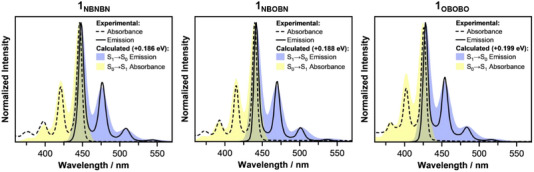 Figure 1
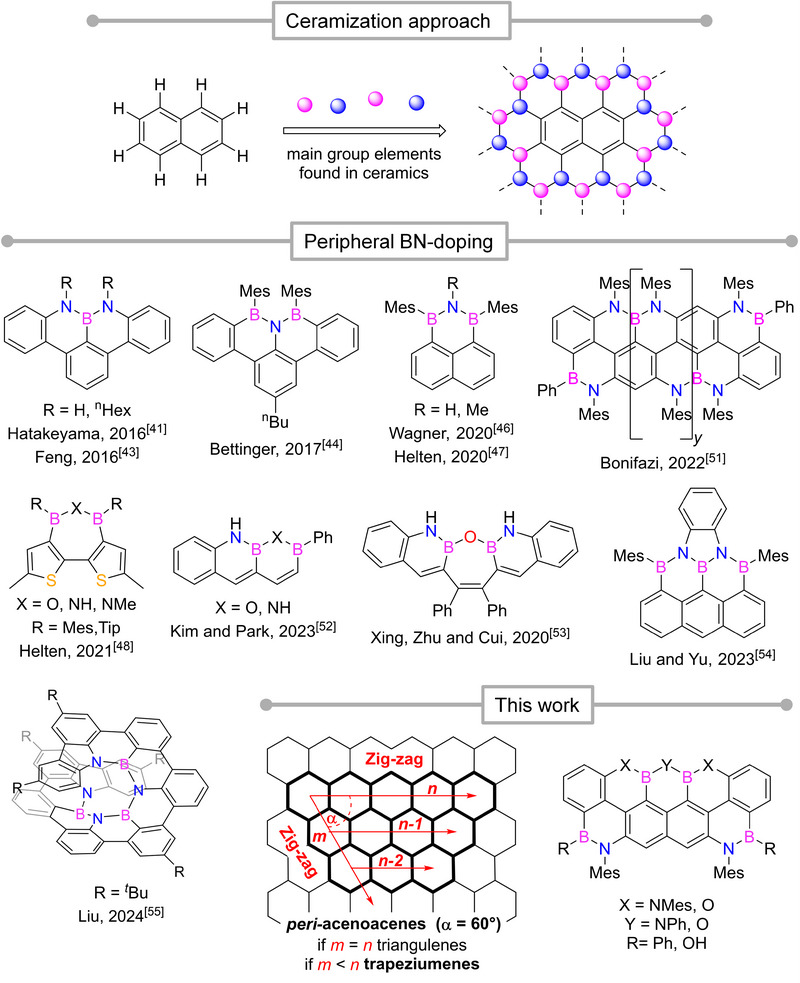 Figure 2
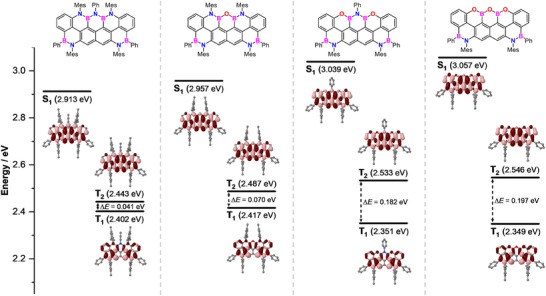 Figure 3
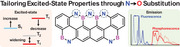 Figure 4
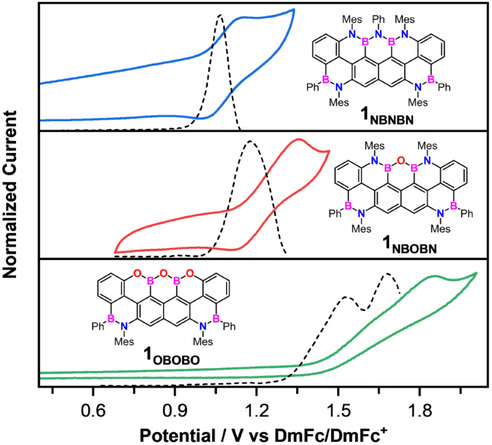 Figure 5
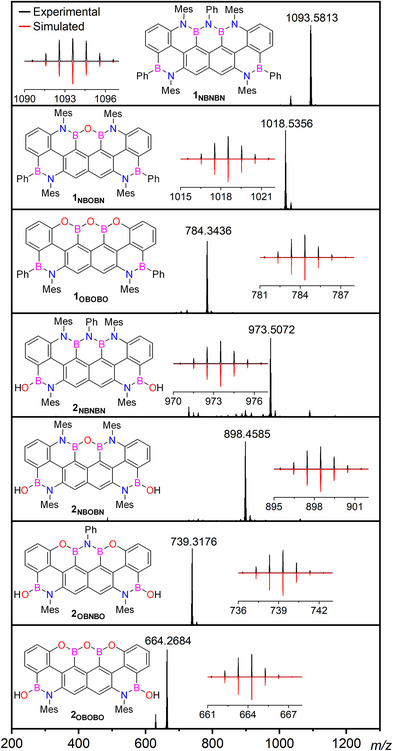 Figure 6
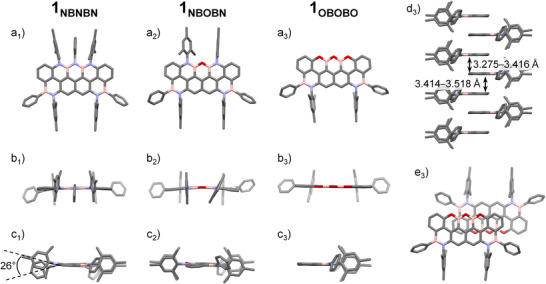 Figure 7
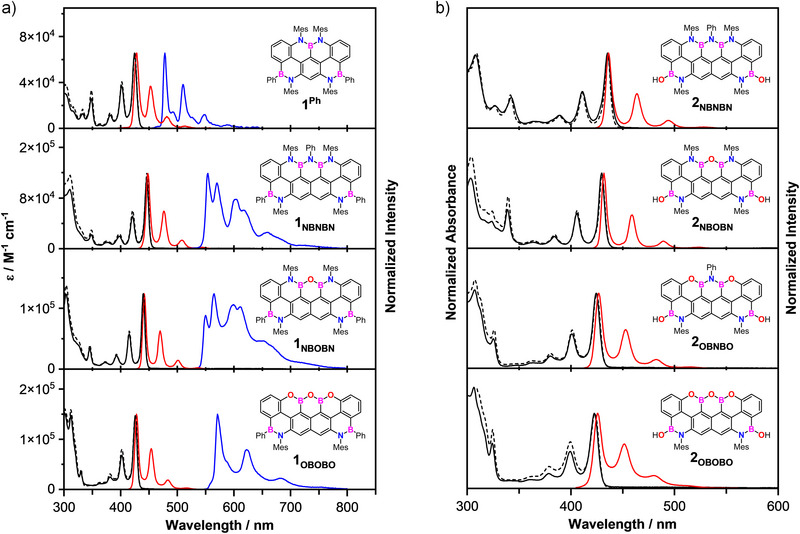 Figure 8
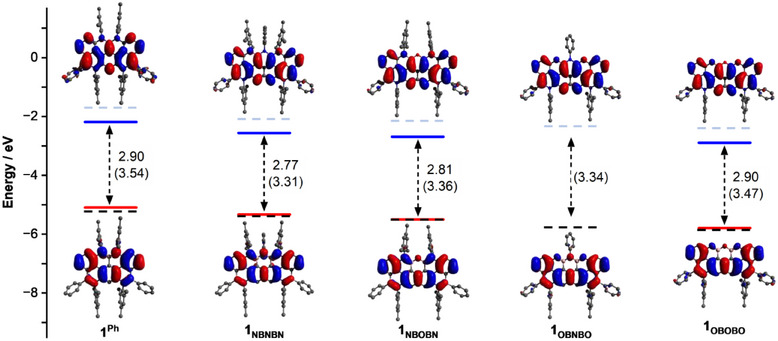 Figure 9
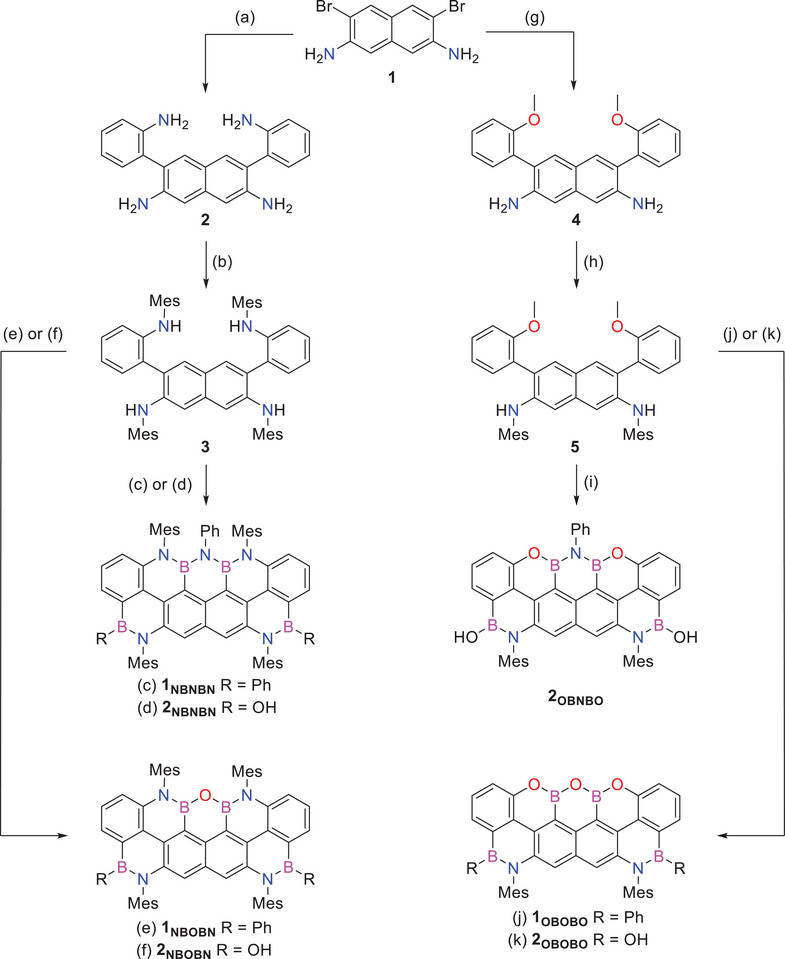 Figure 10
Peer Reviews
No public reviews on file for this paper yet. If you reviewed it on a platform where reviews are public (OpenReview, ICLR, NeurIPS, ICML), you can paste yours below so the community can read it here.
Videos
No videos yet. Explain this paper in a talk, walkthrough, or lecture? Add one.
Taxonomy
TopicsLuminescence and Fluorescent Materials · Organoboron and organosilicon chemistry · Conducting polymers and applications