Adaptive identity-regularized generative adversarial networks with species-specific loss functions for enhanced fish classification and segmentation through data augmentation
Hanaa Salem Marie, Moatasem M. Draz, Waleed Abd Elkhalik, Mostafa Elbaz

TL;DR
This paper introduces a new GAN method that improves fish classification and segmentation by generating realistic synthetic data tailored to specific species.
Contribution
The novel use of adaptive identity blocks and species-specific loss functions in GANs for biologically plausible data augmentation.
Findings
The method achieved 95.1% classification accuracy, a 9.7% improvement over baseline methods.
Segmentation performance reached 89.6% mean Intersection over Union, a 12.3% improvement over baselines.
Expert evaluation confirmed 88.7% overall quality and 87.4% biological validation score for generated data.
Abstract
Traditional fish classification systems suffer from limited training data and imbalanced datasets, particularly for rare or morphologically complex species. This paper presents a novel Generative Adversarial Network architecture that integrates adaptive identity blocks to preserve critical species-specific features during generation, coupled with species-specific loss functions designed around distinctive characteristics of marine species. Our method introduces adaptive identity blocks that learn to maintain species-invariant features while allowing controlled morphological variations for data augmentation. The species-specific loss function incorporates morphological constraints and taxonomic relationships to ensure generated samples maintain biological plausibility while enhancing dataset diversity. Experimental evaluation on a comprehensive fish dataset containing nine species…
Genes, proteins, chemicals, diseases, species, mutations and cell lines named across the full text — each resolved to its canonical identifier and authoritative record.
Click any figure to enlarge with its caption.
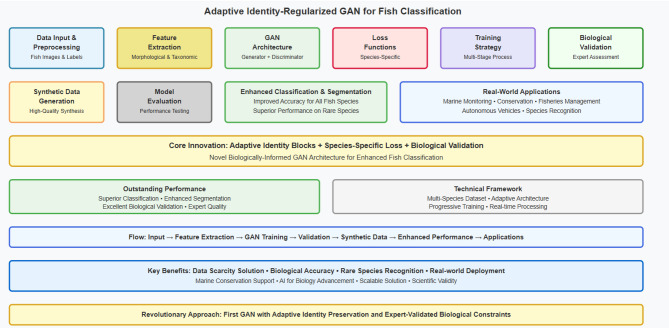 Figure 1
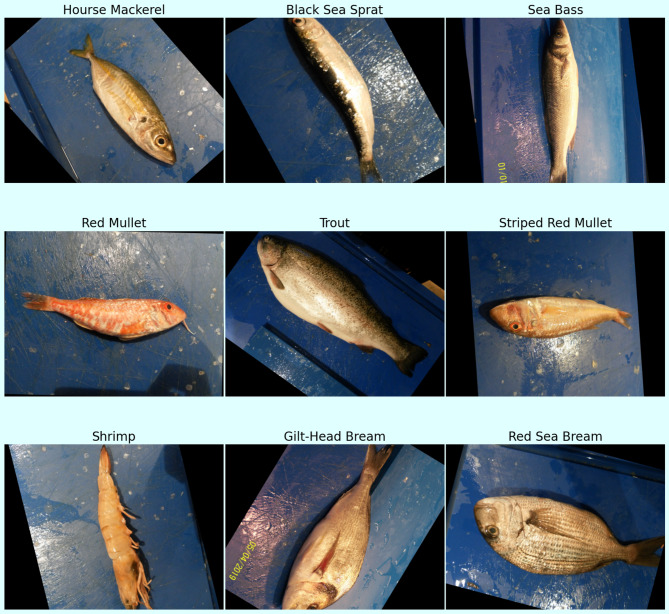 Figure 2
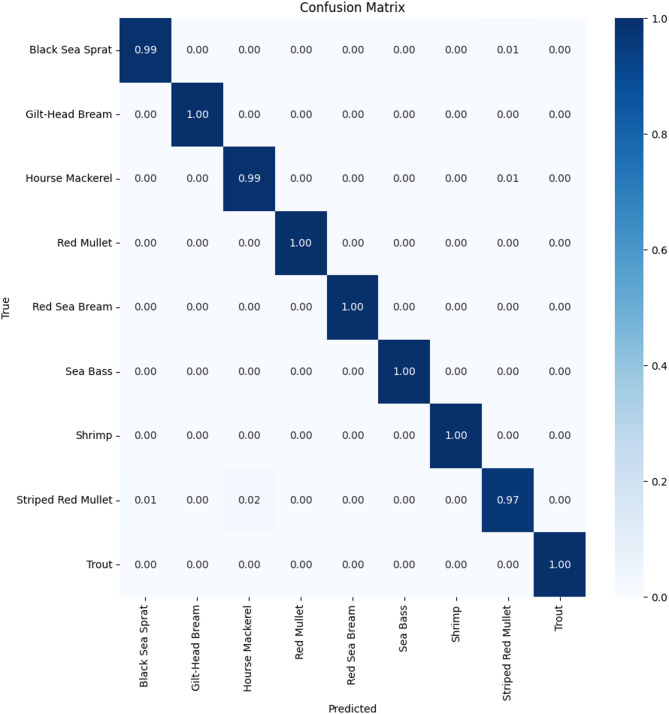 Figure 3
 Figure 4
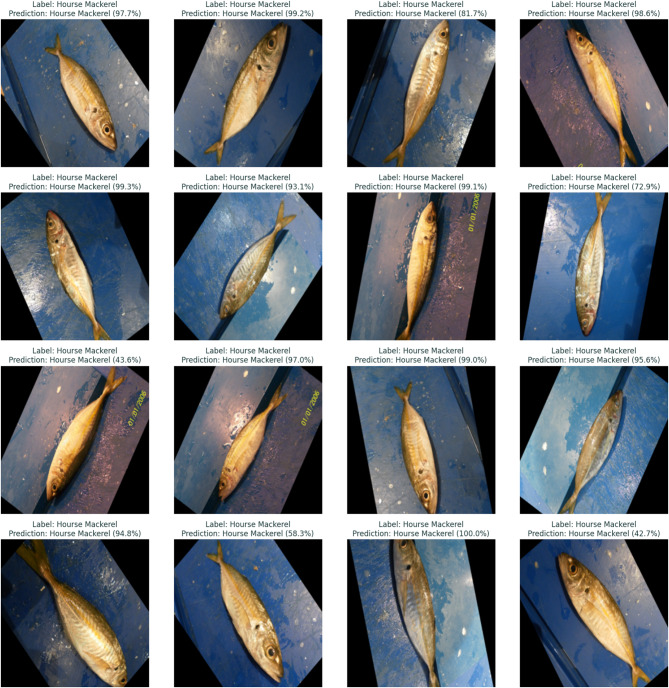 Figure 5
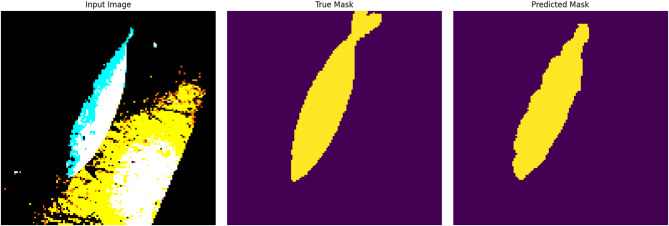 Figure 6
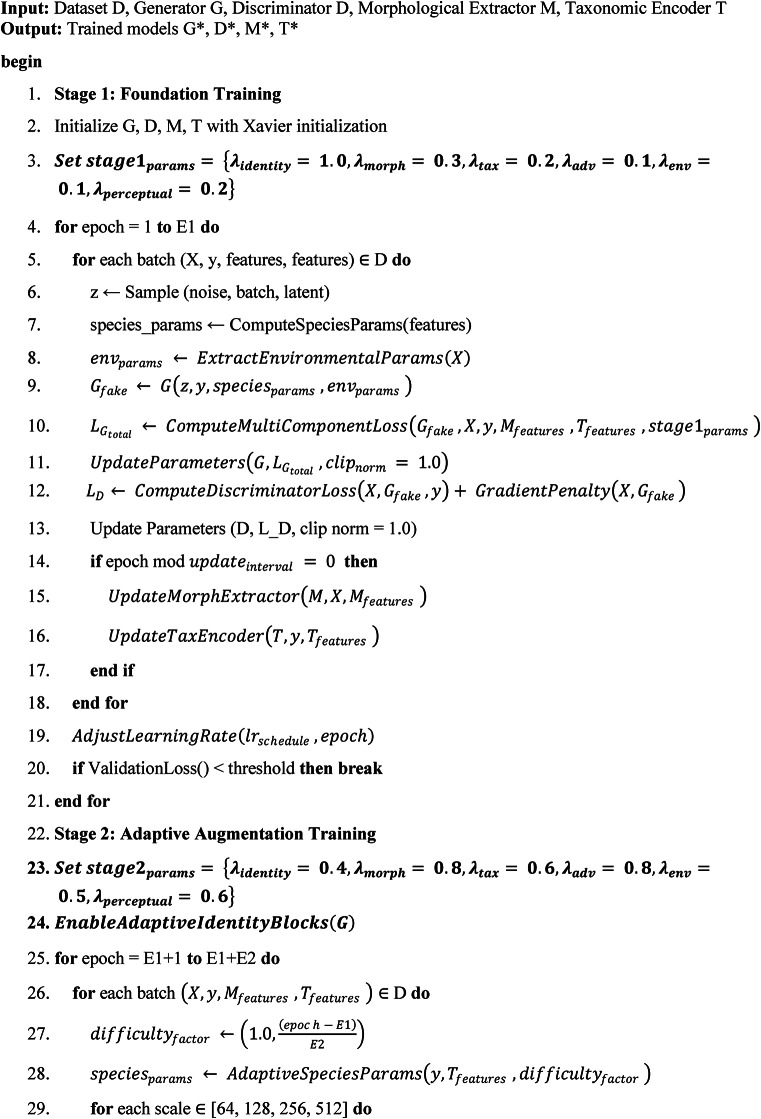 Figure 7
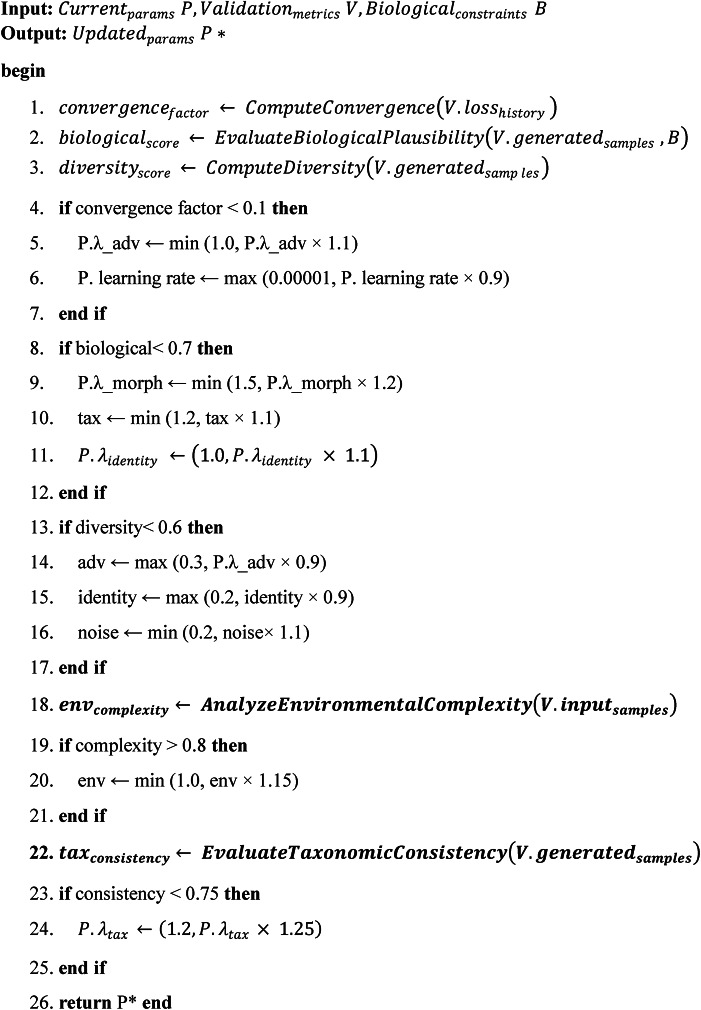 Figure 8
Peer Reviews
No public reviews on file for this paper yet. If you reviewed it on a platform where reviews are public (OpenReview, ICLR, NeurIPS, ICML), you can paste yours below so the community can read it here.
Videos
No videos yet. Explain this paper in a talk, walkthrough, or lecture? Add one.
Taxonomy
TopicsIdentification and Quantification in Food · Advanced Neural Network Applications · Water Quality Monitoring Technologies