Impairment of lysosomal quality control in Huntington disease
Paola Rusmini, Francesco Mina, Marta Valenza, Martina Vitali, Veronica Ferrari, Barbara Tedesco, Elena Casarotto, Marta Cozzi, Marta Chierichetti, Ali Mohamed, Paola Pramaggiore, Laura Cornaggia, Carmelo Milioto, Maria Brodnanova, Rocio Magdalena, Prashant Koshal

TL;DR
This study shows that Huntington disease causes lysosome dysfunction by trapping key proteins in harmful aggregates, leading to cell damage.
Contribution
The study reveals that TFEB and TFE3 are sequestered by mutant Huntingtin, impairing lysosome quality control and contributing to HD progression.
Findings
TFEB and TFE3 are trapped in mutant Huntingtin aggregates in HD models.
Reduced TFEB/TFE3 activity prevents lysophagy and leads to damaged lysosome accumulation.
Overexpression of TFEB and TFE3 reduces mutant Huntingtin aggregates and lysosomal damage.
Abstract
Huntington disease (HD) is a neurodegenerative disease caused by a polyglutamine expansion (polyQ) in the Huntingtin protein (muHTT), which makes it prone to misfolding and aggregation. muHTT aggregates sequester a wide variety of proteins essential for cell homeostasis, including chaperones and transcription factors, and their depletion may contribute to HD pathogenesis. Lysosomes are the main hubs for degradative and signaling activities in cells, and their functionality is crucial for cell homeostasis, especially for neurons. Different forms of cellular stresses, including proteotoxic stresses, can alter lysosome integrity and induce lysosomal membrane permeabilization (LMP). Damaged lysosomes are recognized by galectins, in particular galectin-3 (LGALS3) with activation of the lysosome quality control (LQC) system responsible for repairing, degrading, or replacing leaky lysosomes.…
Genes, proteins, chemicals, diseases, species, mutations and cell lines named across the full text — each resolved to its canonical identifier and authoritative record.
Click any figure to enlarge with its caption.
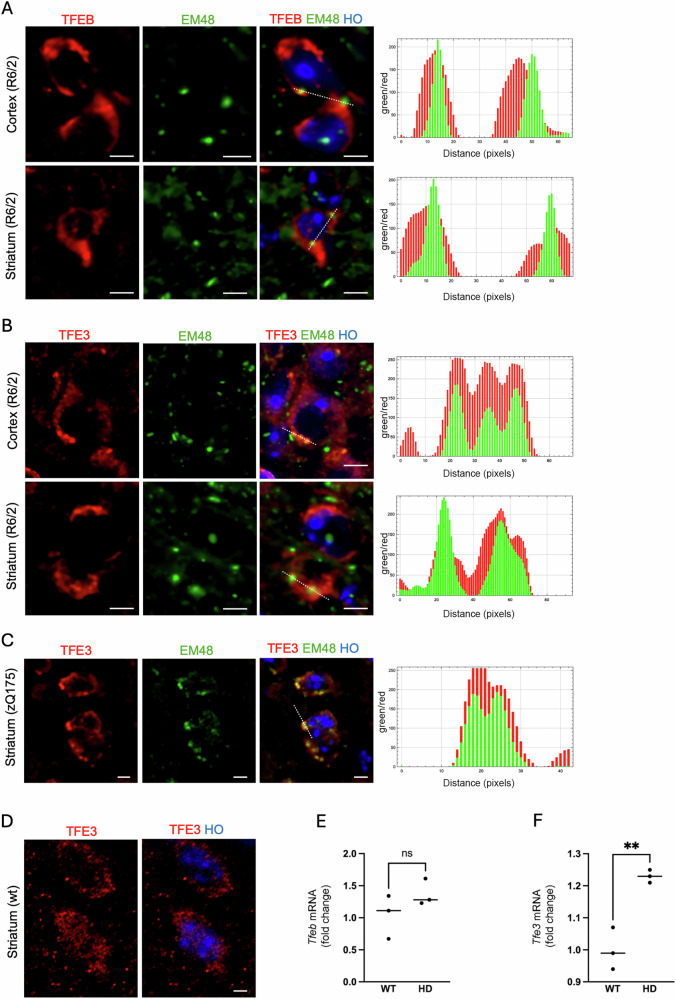 Figure 1
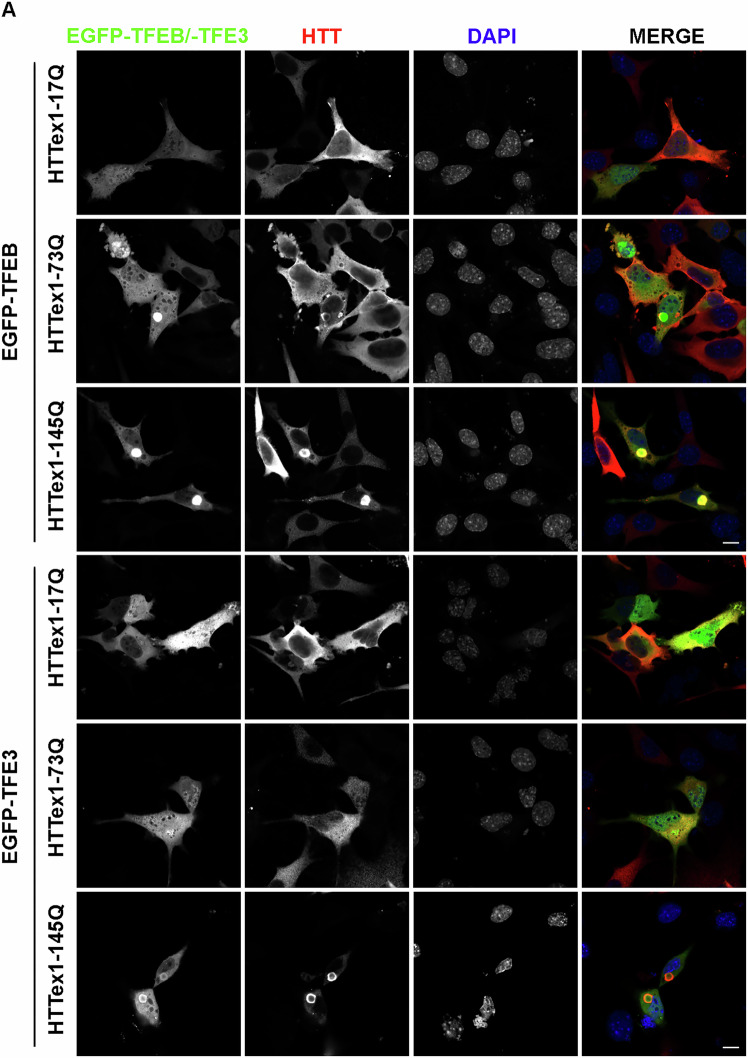 Figure 2
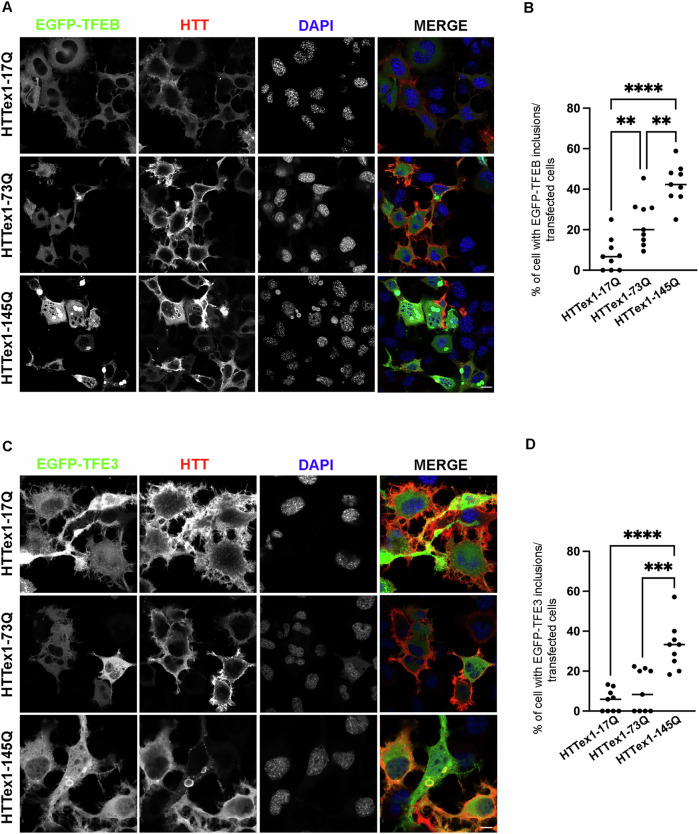 Figure 3
 Figure 4
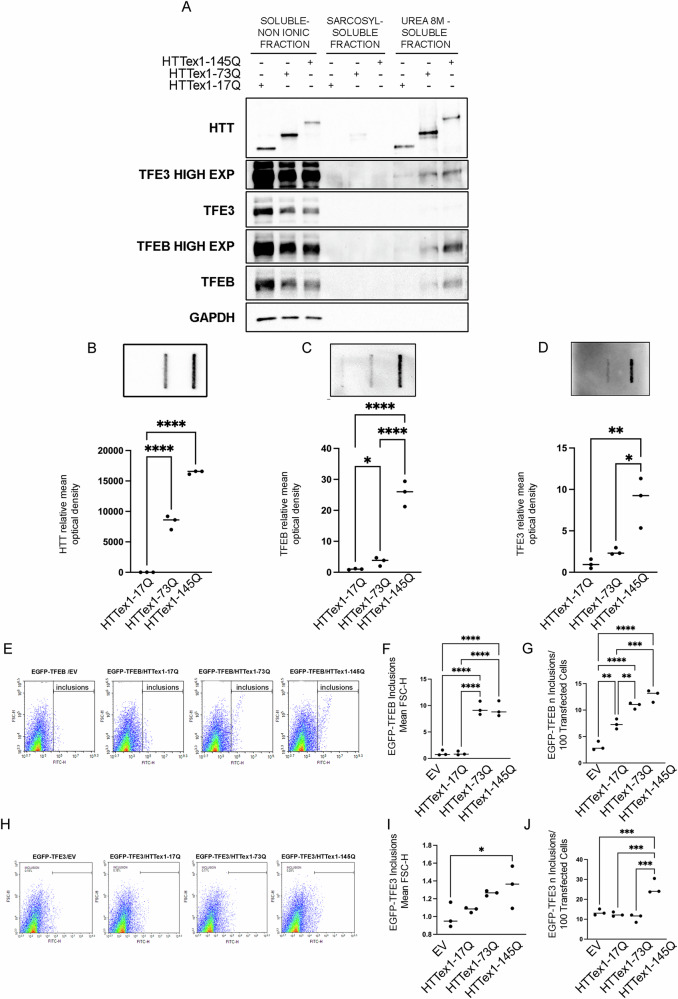 Figure 5
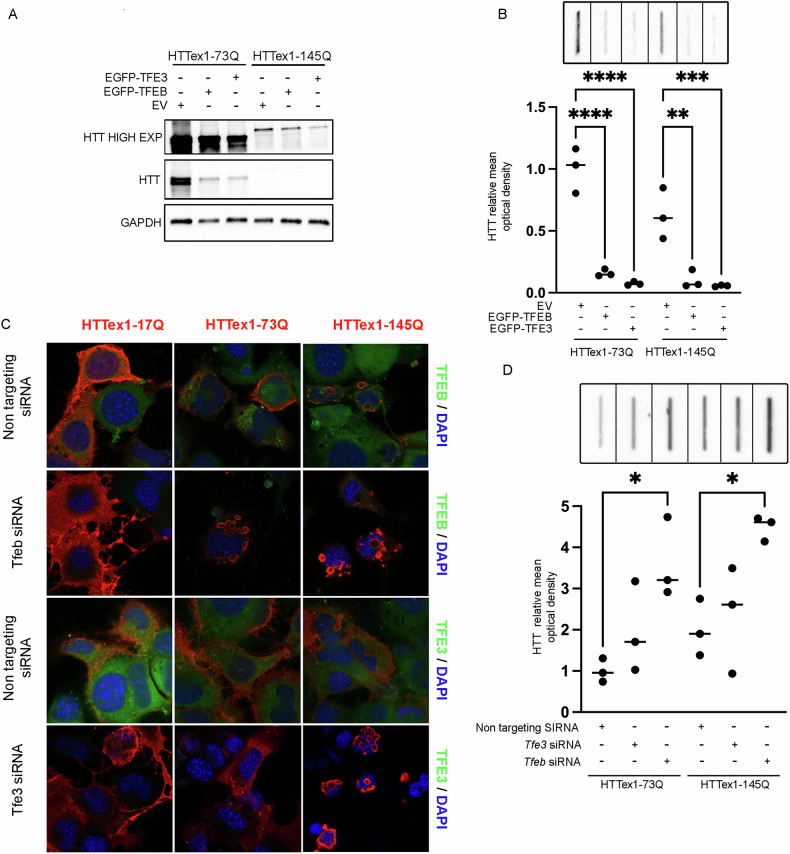 Figure 6
 Figure 7
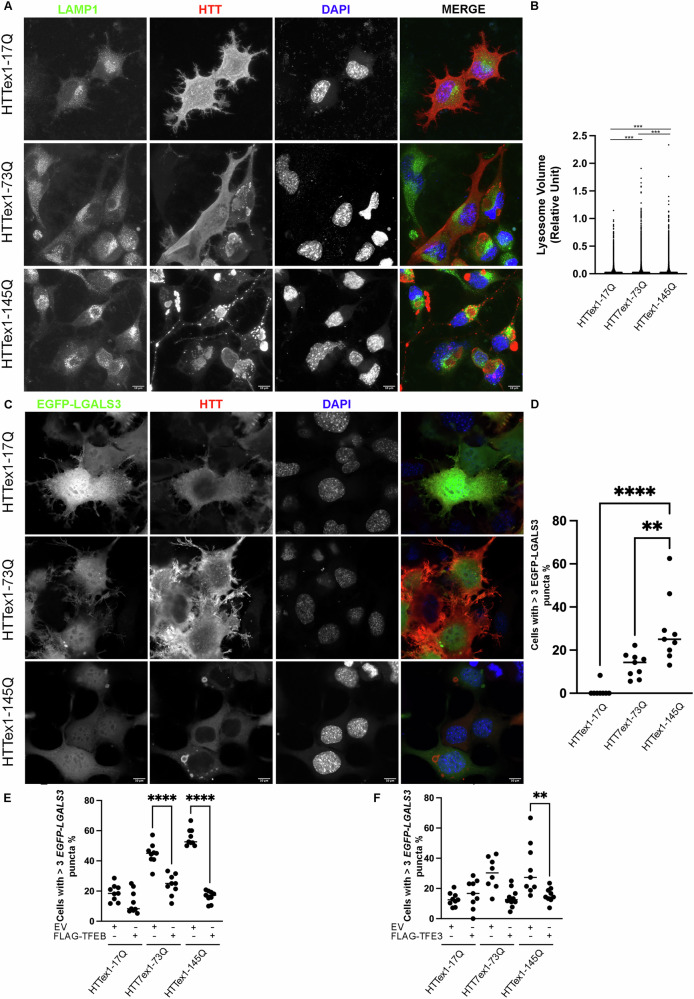 Figure 8
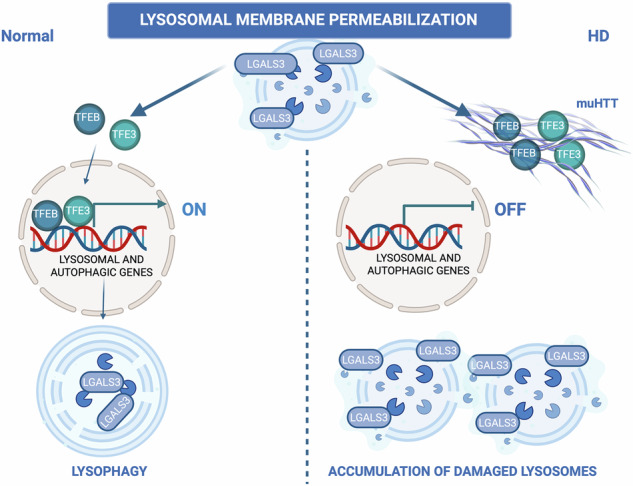 Figure 9
Peer Reviews
No public reviews on file for this paper yet. If you reviewed it on a platform where reviews are public (OpenReview, ICLR, NeurIPS, ICML), you can paste yours below so the community can read it here.
Videos
No videos yet. Explain this paper in a talk, walkthrough, or lecture? Add one.
Taxonomy
TopicsGenetic Neurodegenerative Diseases · Endoplasmic Reticulum Stress and Disease · Mitochondrial Function and Pathology