Cucurbitacin B suppresses glioblastoma via the STAT3/ROS/endoplasmic reticulum stress pathway
Guangyao Lv, Shanshan Sun, Xueying Li, Ruxia Han, Shule Liu, Mei Lu, Xinfu Gao, Jianqiao Zhang, Wenwen Lv

TL;DR
Cucurbitacin B, a natural compound, shows promise in treating glioblastoma by triggering cell death and improving drug delivery through a new liposome-based method.
Contribution
A novel liposome formulation enhances CuB delivery to brain tumors, revealing its therapeutic potential via the STAT3/ROS/ER stress pathway.
Findings
CuB induces GBM cell apoptosis through the STAT3/ROS/endoplasmic reticulum stress pathway.
M@CuB-Lips improves targeted drug delivery to brain tumors and enhances tumor inhibition.
The formulation promotes effector T-cell infiltration in glioblastoma models.
Abstract
Cucurbitacin B (CuB), the tetracyclic triterpenoid compound belonging to cucurbitaceae family, demonstrates significant anticancer properties across various tumor types. However, its efficacy against glioblastoma (GBM), particularly in overcoming blood-brain barrier (BBB) and unique tumor microenvironment, remains a critical area of investigation. Our study reveals that CuB causes GBM cell apoptosis via STAT3/ROS/endoplasmic reticulum (ER) stress pathway. To enhance targeted delivery, we developed M@CuB-Lips, a novel formulation of CuB encapsulated in cancer cell membrane-coated liposomes. In vitro and in vivo experimental results verified targeted M@CuB-Lips delivery to brain tumor sites, demonstrating significant tumor inhibition and enhanced effector T-cell infiltration. These findings underscore CuB’s potential in GBM therapy, particularly through STAT3 suppression and ROS-ER Stress…
Genes, proteins, chemicals, diseases, species, mutations and cell lines named across the full text — each resolved to its canonical identifier and authoritative record.
Click any figure to enlarge with its caption.
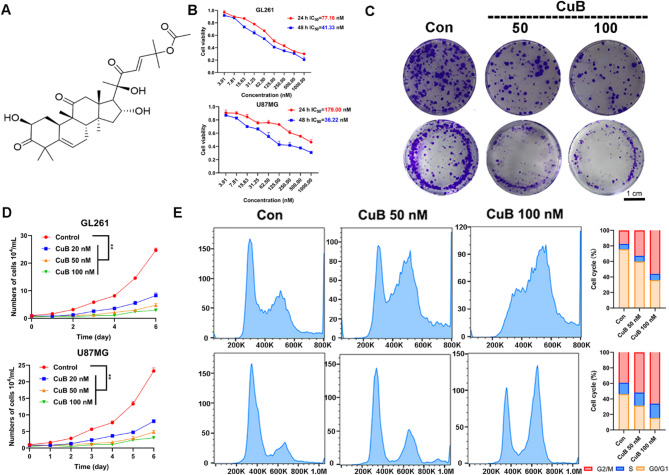 Figure 1
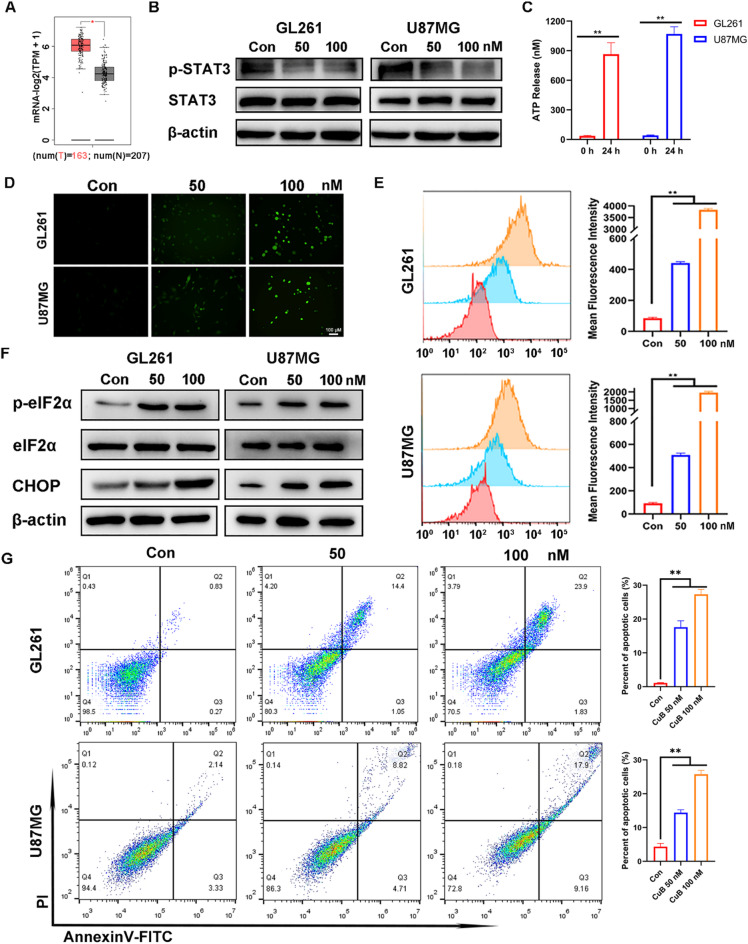 Figure 2
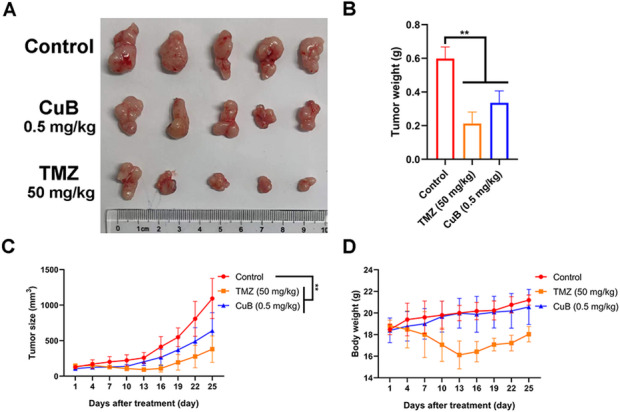 Figure 3
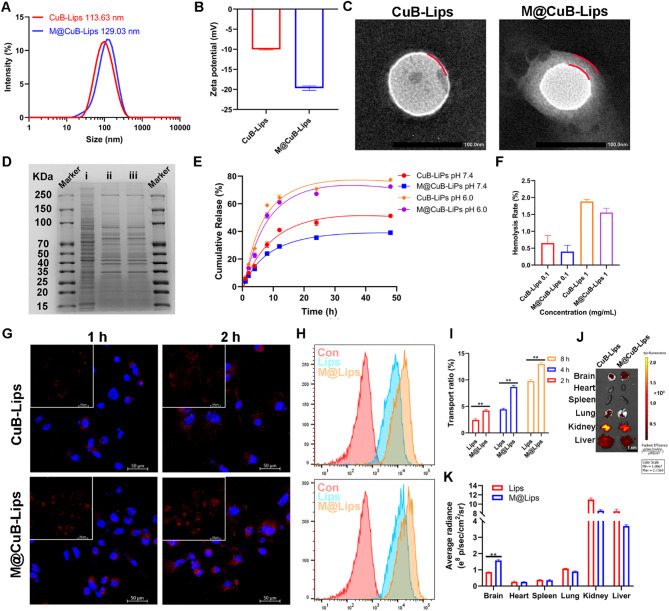 Figure 4
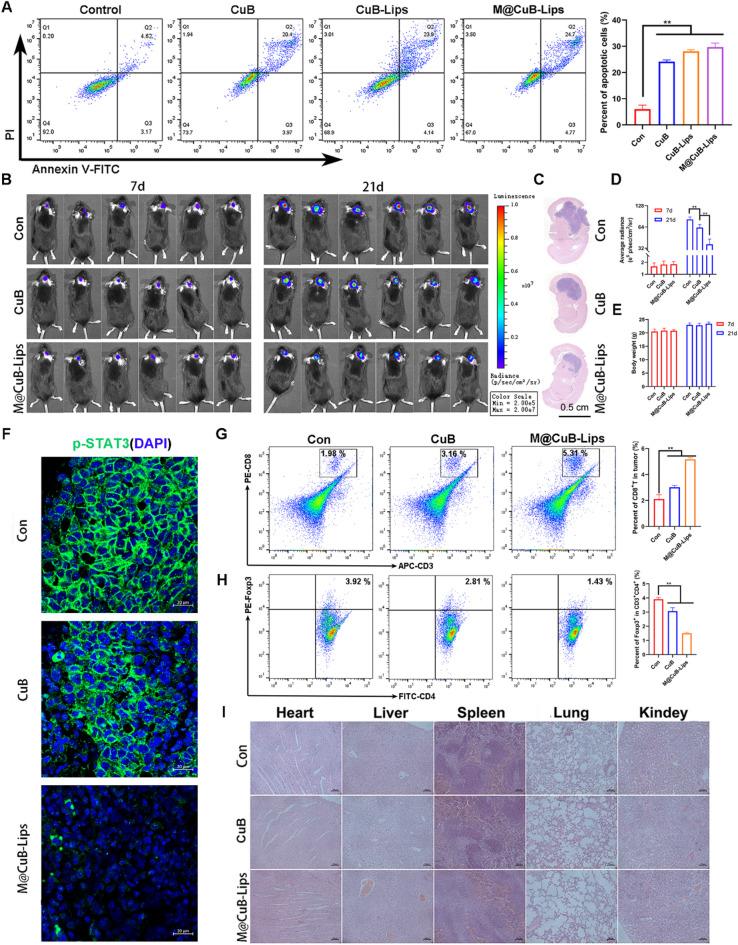 Figure 5
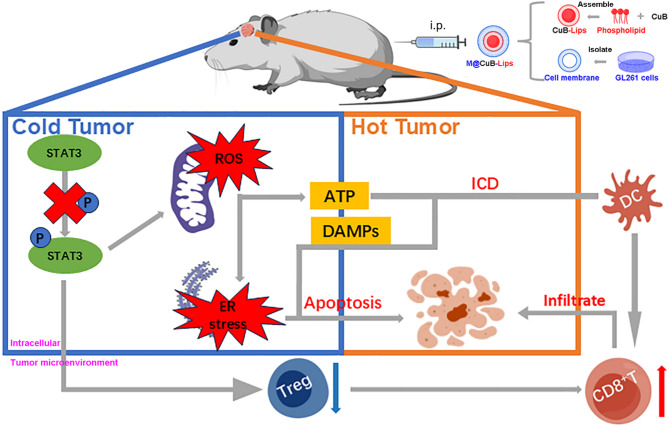 Figure 6
Peer Reviews
No public reviews on file for this paper yet. If you reviewed it on a platform where reviews are public (OpenReview, ICLR, NeurIPS, ICML), you can paste yours below so the community can read it here.
Videos
No videos yet. Explain this paper in a talk, walkthrough, or lecture? Add one.
Taxonomy
TopicsAdvances in Cucurbitaceae Research · Endoplasmic Reticulum Stress and Disease · CRISPR and Genetic Engineering