Anterior Abdominal Wall Pseudohernias After Anatomic Lung Resection: Incidence and Risk Factors
Andrew Behrmann, Blake Wojciechowski, Chase Schlesselman, Jussuf Kaifi, Sebastian Wiesemann

TL;DR
This study found that pseudohernias can develop after lung surgery, especially with robotic techniques and cryoablation, and may affect patient recovery.
Contribution
The study identifies risk factors for pseudohernias after lung resection and suggests that robotic surgery and cryoablation increase their incidence.
Findings
Pseudohernias occurred in 7.6% of robotic surgery cases but not in thoracotomy cases.
Cryoablation at or below the seventh intercostal space was significantly correlated with pseudohernia development.
Patients with pseudohernias had higher acute and chronic pain scores and higher 30-day readmission rates.
Abstract
Thoracic surgery can damage intercostal nerves and cause muscular atrophy and bulging of the anterior abdominal wall (pseudohernia). This pilot study investigated the incidence of and risk factors for development of pseudohernias after anatomic lung resection in either robotic video-assisted thoracoscopic surgery (R-VATS) or thoracotomy cases. A retrospective cohort analysis of 319 patients undergoing either R-VATS or thoracotomy for anatomic lung resection at a single institution from 2017 to 2021 was performed to determine pseudohernia incidence rates and possible risk factors. Only patients who underwent R-VATS had pseudohernias, with an incidence rate of 7.6%. Readmission within 30 days of operation was higher in patients with pseudohernias (P = .02). Cryoablation at or below the seventh intercostal space was significantly correlated with pseudohernia development (P = .04).…
Genes, proteins, chemicals, diseases, species, mutations and cell lines named across the full text — each resolved to its canonical identifier and authoritative record.
Click any figure to enlarge with its caption.
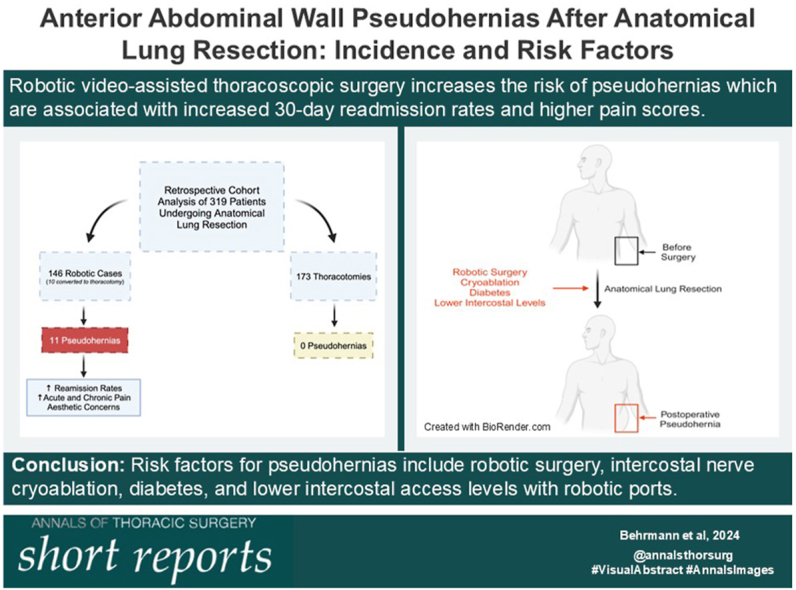 Figure 1
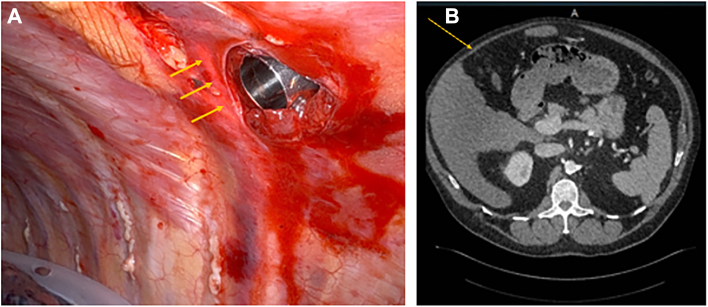 Figure 2
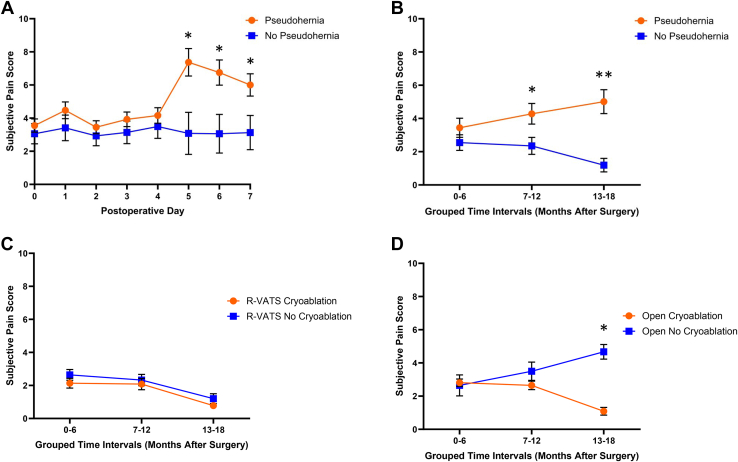 Figure 3
Peer Reviews
No public reviews on file for this paper yet. If you reviewed it on a platform where reviews are public (OpenReview, ICLR, NeurIPS, ICML), you can paste yours below so the community can read it here.
Videos
No videos yet. Explain this paper in a talk, walkthrough, or lecture? Add one.
Taxonomy
TopicsCongenital Diaphragmatic Hernia Studies · Pleural and Pulmonary Diseases · Trauma Management and Diagnosis