Clinical utility of comprehensive genomic profiling versus Oncomine Dx target test in pathological stage II–III non-small cell lung cancer
Kaito Yano, Kaoru Kaseda, Kohei Nakamura, Yu Okubo, Kyohei Masai, Tomoyuki Hishida, Shigenari Nukaga, Keiko Ohgino, Hideki Terai, Hiroyuki Yasuda, Yutaka Kurebayashi, Koichi Fukunaga, Hiroshi Nishihara, Keisuke Asakura

TL;DR
This study compares two genomic tests for lung cancer, showing that a comprehensive test can find more actionable mutations and improve treatment options.
Contribution
The study demonstrates the added value of in-house comprehensive genomic profiling as a complementary tool to the standard Oncomine Dx Target Test in NSCLC.
Findings
Driver mutation results were concordant in 94.1% of cases between the two tests.
CGP identified additional actionable alterations in 83.8% of patients.
CGP rescued one patient for targeted therapy by detecting an EGFR mutation missed by ODxTT.
Abstract
The next-generation sequencing (NGS)–based Oncomine Dx Target Test (ODxTT) is the standard tool for guiding postoperative adjuvant therapy in patients with non-small cell lung cancer (NSCLC) in Japan. To advance precision oncology, we evaluated the clinical utility of an in-house comprehensive genomic profiling (CGP) assay, Rapid-Neo, as a complementary approach to ODxTT in surgically resected NSCLC. Patients with pathological stage II–III NSCLC who underwent anatomical surgical resection between December 2019 and May 2024 were included. Resected specimens underwent genomic analysis using both ODxTT and Rapid-Neo CGP. We evaluated the mutational concordance and the frequency of additional actionable alterations identified by CGP. Among 68 eligible patients, driver mutation results were concordant in 64 (94.1%) cases. Crucially, CGP rescued one patient for targeted therapy by detecting…
Genes, proteins, chemicals, diseases, species, mutations and cell lines named across the full text — each resolved to its canonical identifier and authoritative record.
Click any figure to enlarge with its caption.
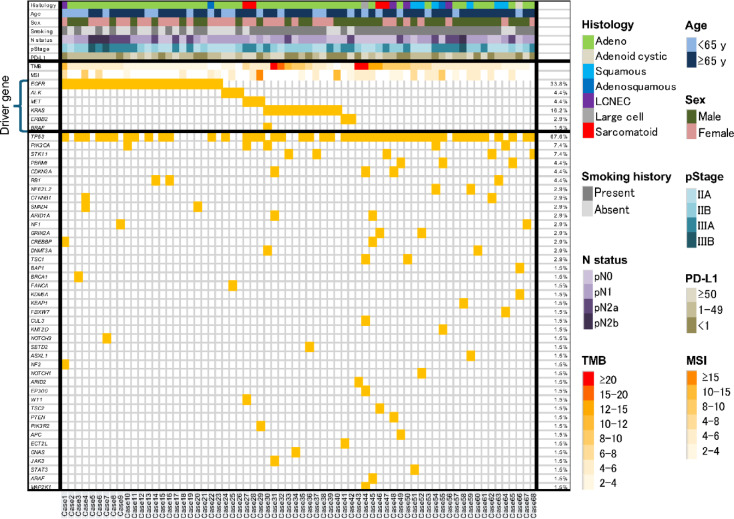 Figure 1
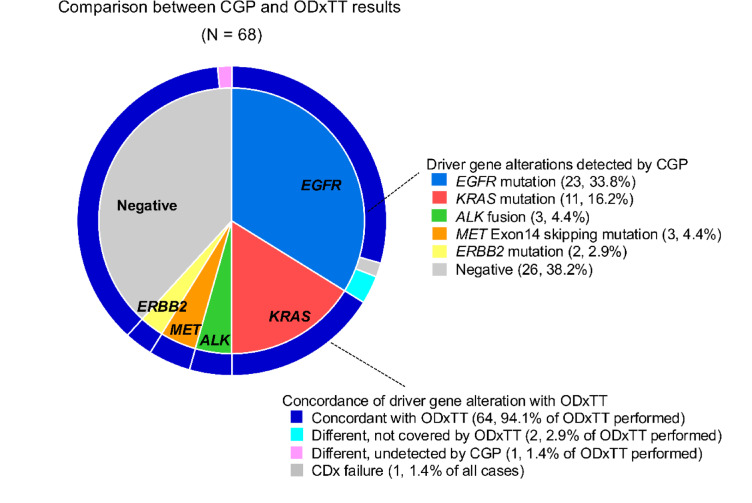 Figure 2
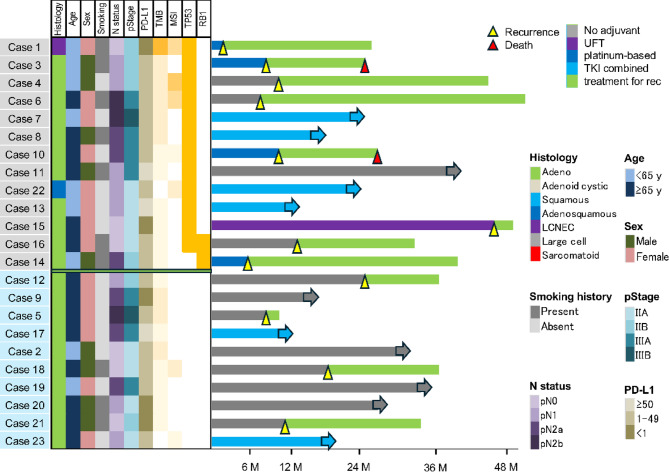 Figure 3
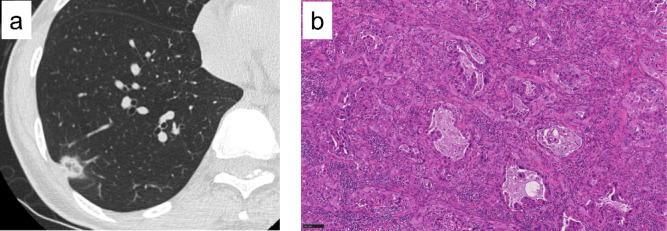 Figure 4
Peer Reviews
No public reviews on file for this paper yet. If you reviewed it on a platform where reviews are public (OpenReview, ICLR, NeurIPS, ICML), you can paste yours below so the community can read it here.
Videos
No videos yet. Explain this paper in a talk, walkthrough, or lecture? Add one.
Taxonomy
TopicsLung Cancer Diagnosis and Treatment · Lung Cancer Treatments and Mutations · Lung Cancer Research Studies