Radiolabeling and evaluation of 64+67Cu-2,2’-(1,2,4-Oxadiazole-3,5-diyl)di aniline as a theranostic agent for solid tumors
Mohamed A. Gizawy, Mohammed Salah Ayoup, Ahmad S. Kodous, Mohamed Taha Abdelrahman, M. A. Motaleb

TL;DR
This study develops a new theranostic agent using copper isotopes for both imaging and treating solid tumors, showing promising tumor targeting and stability.
Contribution
A novel theranostic agent using 64+67Cu-ODDA is developed with high radiolabeling efficiency and tumor-targeting properties.
Findings
64+67Cu-ODDA achieved 97.0 ± 0.8% radiolabeling yield and remained stable in serum for five days.
The compound showed high tumor uptake in mice, peaking at 18.0 ± 0.3%ID/g at 2 hours post-injection.
Molecular docking revealed strong binding to EGFR and VEGFR2, suggesting potential anticancer activity.
Abstract
Copper-64 (64Cu) and Copper-67 (67Cu) are promising theranostic isotopes for PET imaging and targeted radiotherapy. In this study, 2,2’-(1,2,4-Oxadiazole-3,5-diyl)di aniline (ODDA) was successfully radiolabeled with 64+67Cu, achieving high radiolabeling yield (97.0 ± 0.8%) and excellent stability in serum over five days. The optimized radiolabeling conditions included a ligand concentration of 30 µg, pH 4, a reaction time of 15 min, and a temperature of 60 °C. The biodistribution study in Ehrlich ascites carcinoma-bearing mice showed an initial tumor uptake of 7.8 ± 0.4%ID/g at 0.5 h, peaking at 18.0 ± 0.3ID/g at 2 h, confirming selective tumor accumulation. The log P value of -0.8 indicated a hydrophilic nature, leading to predominant renal clearance. Molecular docking studies showed strong binding to EGFR (-9.1 kcal/mol) and VEGFR2 (-8.6 kcal/mol), suggesting potential anticancer…
Genes, proteins, chemicals, diseases, species, mutations and cell lines named across the full text — each resolved to its canonical identifier and authoritative record.
Click any figure to enlarge with its caption.
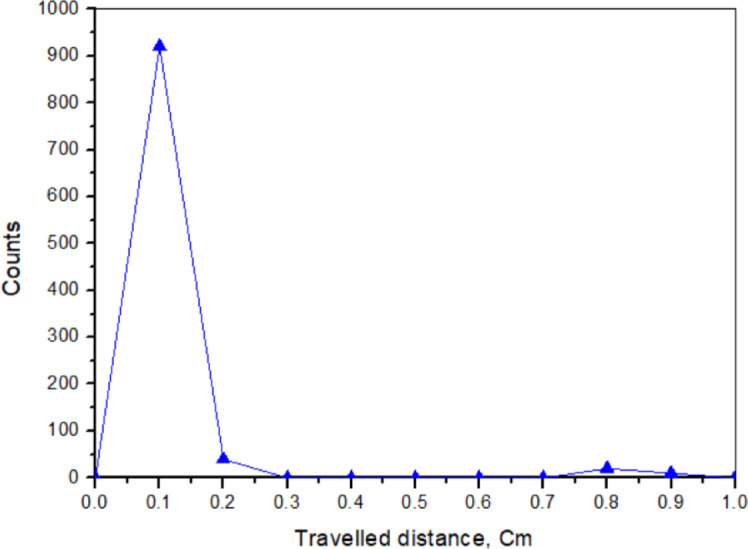 Figure 1
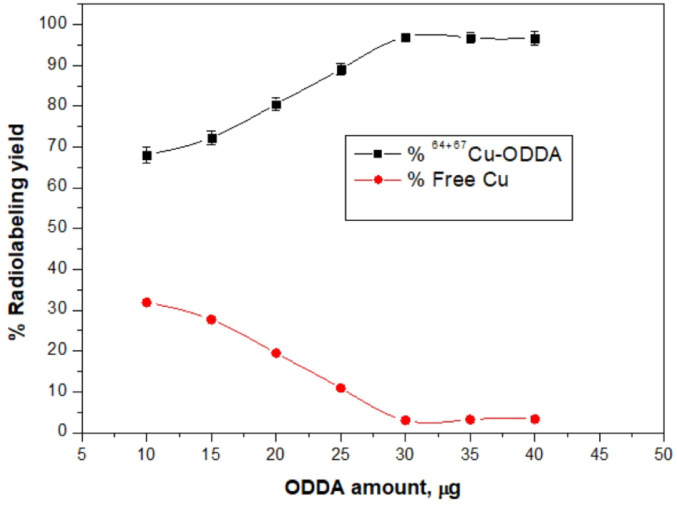 Figure 2
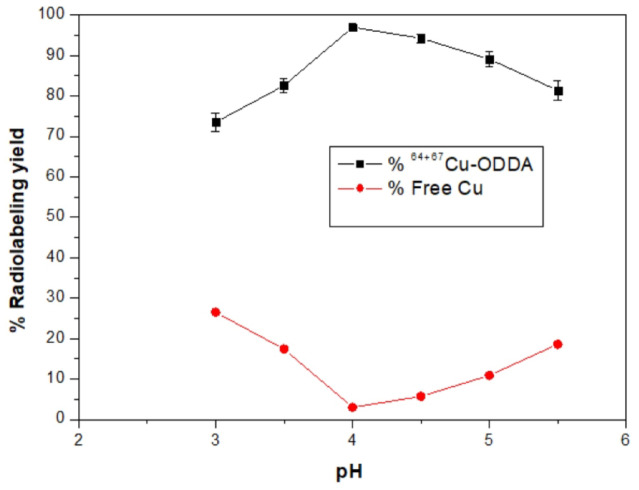 Figure 3
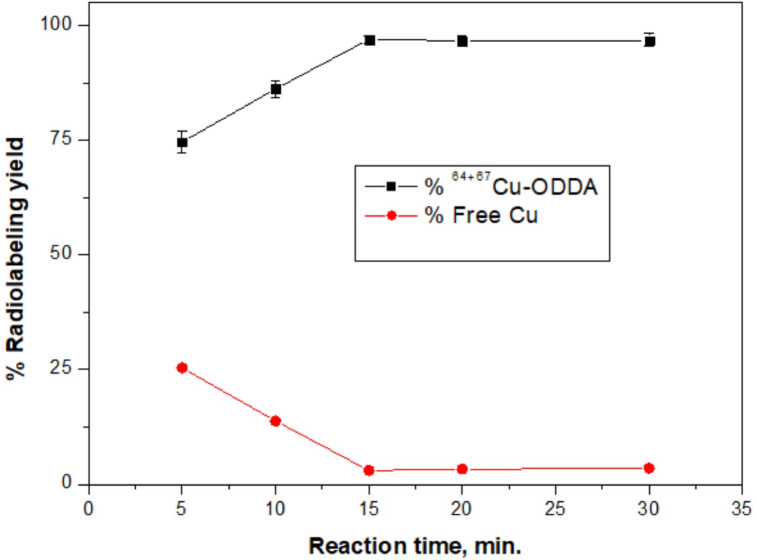 Figure 4
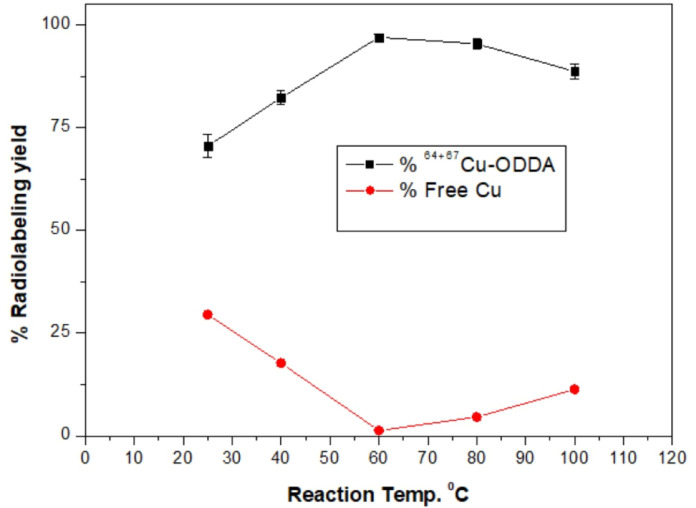 Figure 5
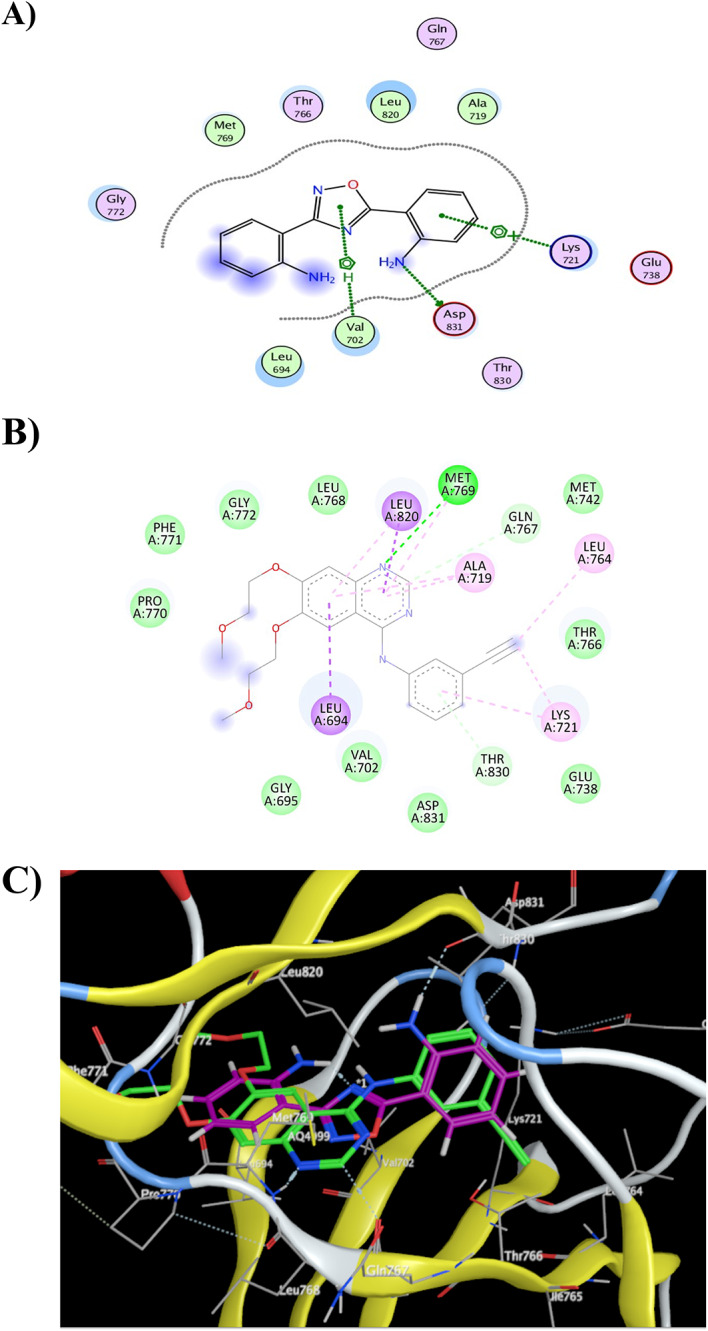 Figure 6
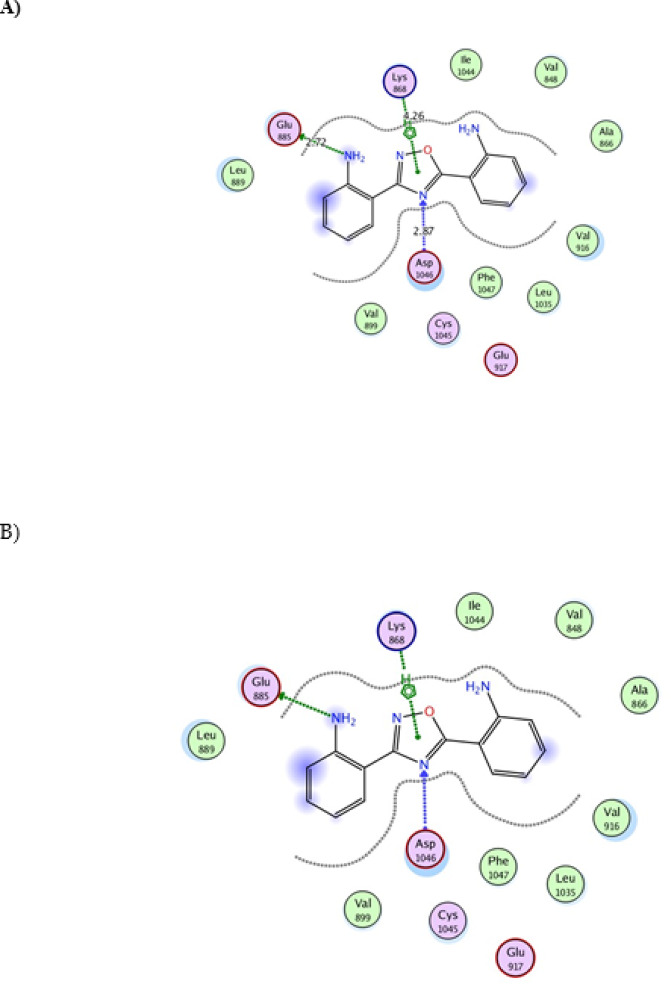 Figure 7
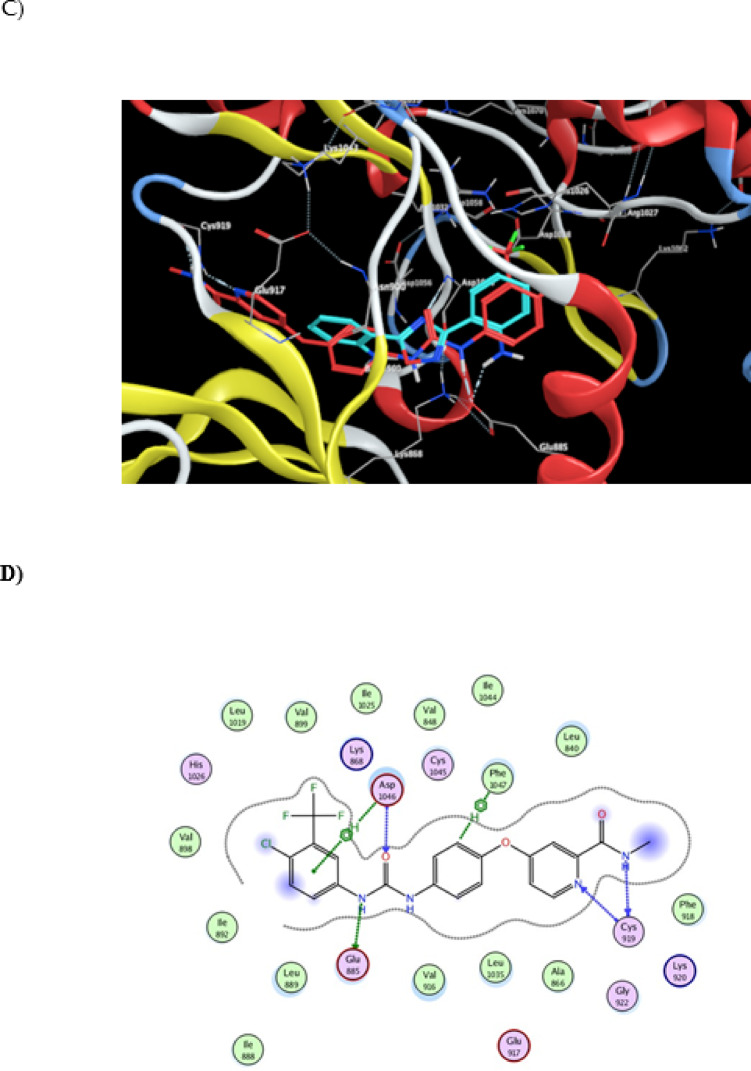 Figure 7
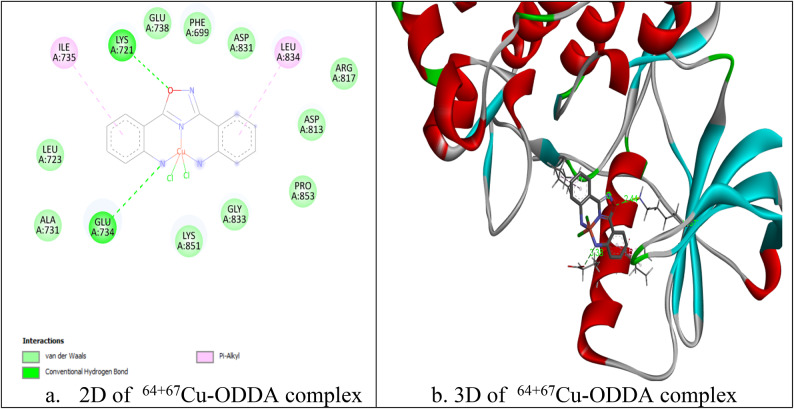 Figure 8
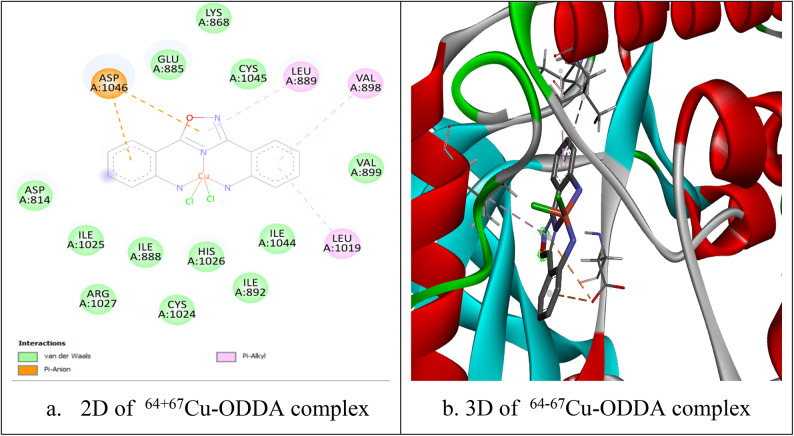 Figure 9
Peer Reviews
No public reviews on file for this paper yet. If you reviewed it on a platform where reviews are public (OpenReview, ICLR, NeurIPS, ICML), you can paste yours below so the community can read it here.
Videos
No videos yet. Explain this paper in a talk, walkthrough, or lecture? Add one.
Taxonomy
TopicsRadiopharmaceutical Chemistry and Applications · Medical Imaging Techniques and Applications · Peptidase Inhibition and Analysis