Computation of simple invariant solutions in fluid turbulence with the aid of deep learning
Jacob Page

TL;DR
This paper explores how deep learning helps find simple patterns in turbulent fluid flows, improving understanding and prediction of complex fluid motion.
Contribution
The paper introduces deep learning techniques to efficiently compute invariant solutions in turbulent flows, revealing significantly more solutions than previous methods.
Findings
Autoencoders provide low-order representations of turbulent flows linked to unstable invariant solutions.
Gradient-based optimization in deep learning accelerates discovery of periodic orbits in turbulence.
New methods find an order of magnitude more solutions in 2D turbulence than prior approaches.
Abstract
The dynamical systems view of a turbulent fluid flow provides a tantalizing connection between the self-sustaining nonlinear mechanics of turbulence and its more well-known statistical properties, and promises to open up new avenues in our ability to understand, predict and control complex fluid motion. However, successful application of these ideas to a high Reynolds number (Re) problem requires the discovery and convergence of an expansive library of simple invariant solutions (e.g. equilibria, periodic orbits). The key challenge for the field has been that algorithms to compute dynamically relevant structures struggle for a variety of reasons outside of the weakly turbulent regime. It is here that ideas from deep learning have started to show promise, and this review describes how various techniques from the machine learning community have accelerated progress. First, the use of…
Genes, proteins, chemicals, diseases, species, mutations and cell lines named across the full text — each resolved to its canonical identifier and authoritative record.
Click any figure to enlarge with its caption.
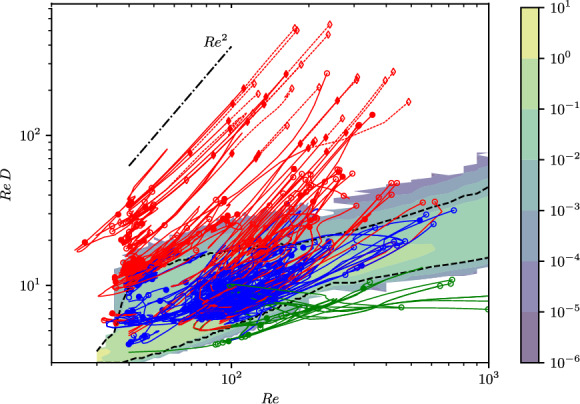 Figure 10
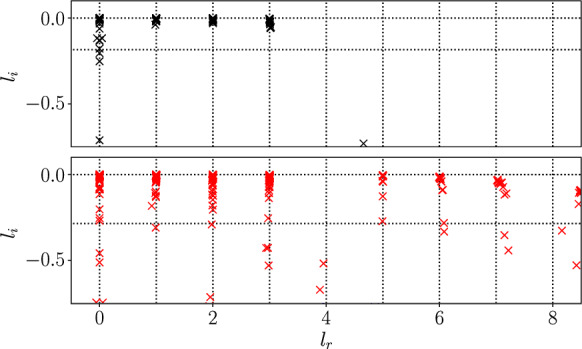 Figure 1
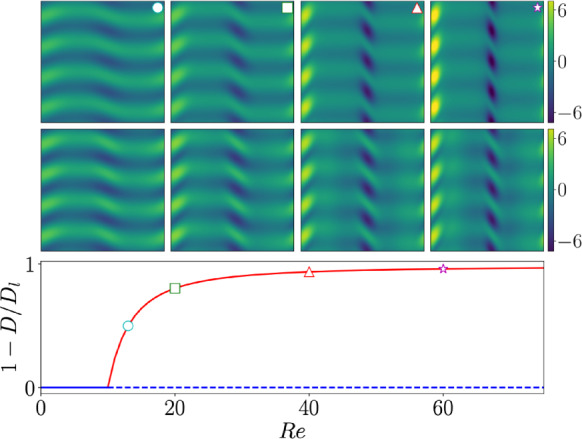 Figure 2
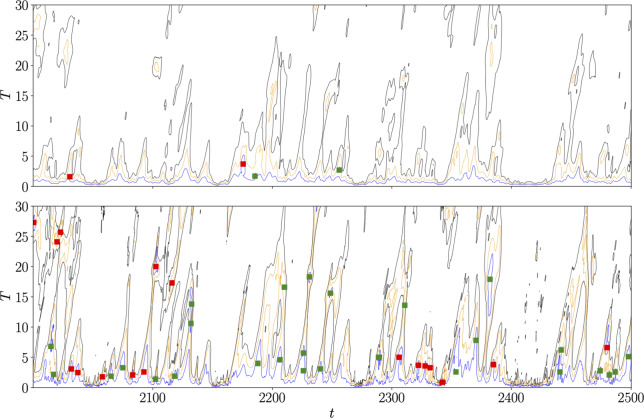 Figure 3
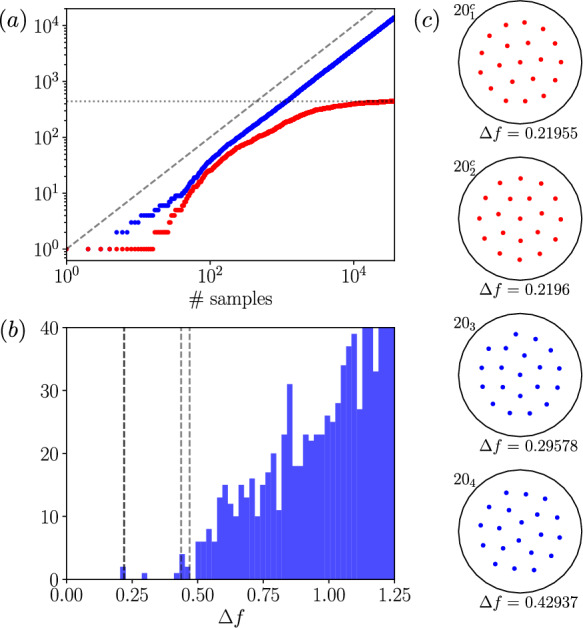 Figure 4
 Figure 5
 Figure 6
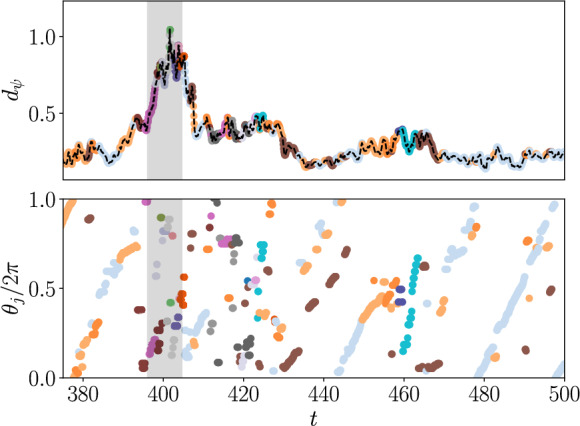 Figure 7
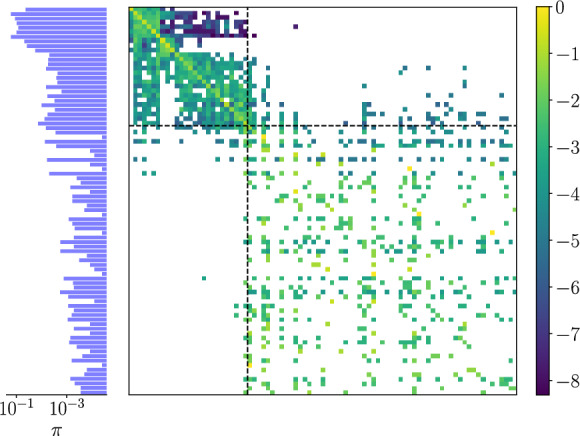 Figure 8
 Figure 9
Peer Reviews
No public reviews on file for this paper yet. If you reviewed it on a platform where reviews are public (OpenReview, ICLR, NeurIPS, ICML), you can paste yours below so the community can read it here.
Videos
No videos yet. Explain this paper in a talk, walkthrough, or lecture? Add one.
Taxonomy
TopicsModel Reduction and Neural Networks · Fluid Dynamics and Turbulent Flows · Nuclear Engineering Thermal-Hydraulics