Repeated Clozapine Administration Causes Extensive Changes to the Expression of Coding and Non-coding RNAs, Including miR-124, in the Mouse Frontal Cortex
Rabha Mussa Younis, Dalia Y. Al Saeedy, Mikhail G. Dozmorov, Fay M. Jahr, Shravani Malay, Sina Mahdiani, Bashir Idris, Joel Castillo, Patrick M. Beardsley, Joseph L. McClay

TL;DR
Clozapine, an antipsychotic drug, significantly alters RNA expression in the mouse frontal cortex, including miR-124, which may help explain its effectiveness in treating schizophrenia.
Contribution
The study reveals clozapine's extensive impact on both coding and non-coding RNA expression and links these changes to schizophrenia risk genes.
Findings
Clozapine caused significant changes in mRNA and lncRNA expression, especially in RNA processing and splicing pathways.
The microRNA 124 host gene (Mir124a-1hg) was upregulated, with increased levels of miR-124-3p observed after repeated clozapine administration.
Schizophrenia risk genes showed altered splicing, particularly in genes related to apical dendrite and distal axon functions.
Abstract
Clozapine is arguably the most effective antipsychotic drug for the treatment of schizophrenia, but the mechanisms underlying its efficacy are poorly understood. Therefore, we perform deep RNA sequencing to test for differential transcription and exon use resulting from clozapine’s effects in the mouse frontal cortex, and integrate our findings with known schizophrenia risk genes. We used a dose (4 mg/kg/day, i.p.) and duration (21 days) to approximate clinical exposure, followed by a 24-h washout to determine persistent changes resulting from biological remodeling. We observed significant (FDR < 0.05) differential expression of both mRNAs and long noncoding RNAs (lncRNAs), which were enriched in RNA processing and splicing pathways. Among the most significant lncRNAs, showing 2.3-fold upregulation, was the microRNA 124 host gene (Mir124a-1hg), a major source of miR-124, one of the most…
Genes, proteins, chemicals, diseases, species, mutations and cell lines named across the full text — each resolved to its canonical identifier and authoritative record.
Click any figure to enlarge with its caption.
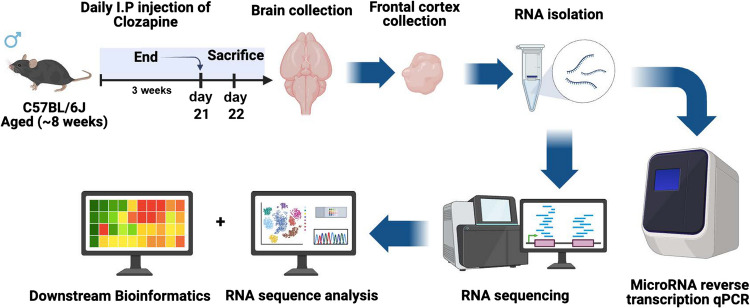 Figure 1
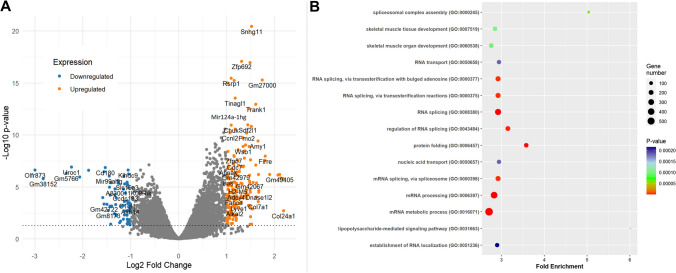 Figure 2
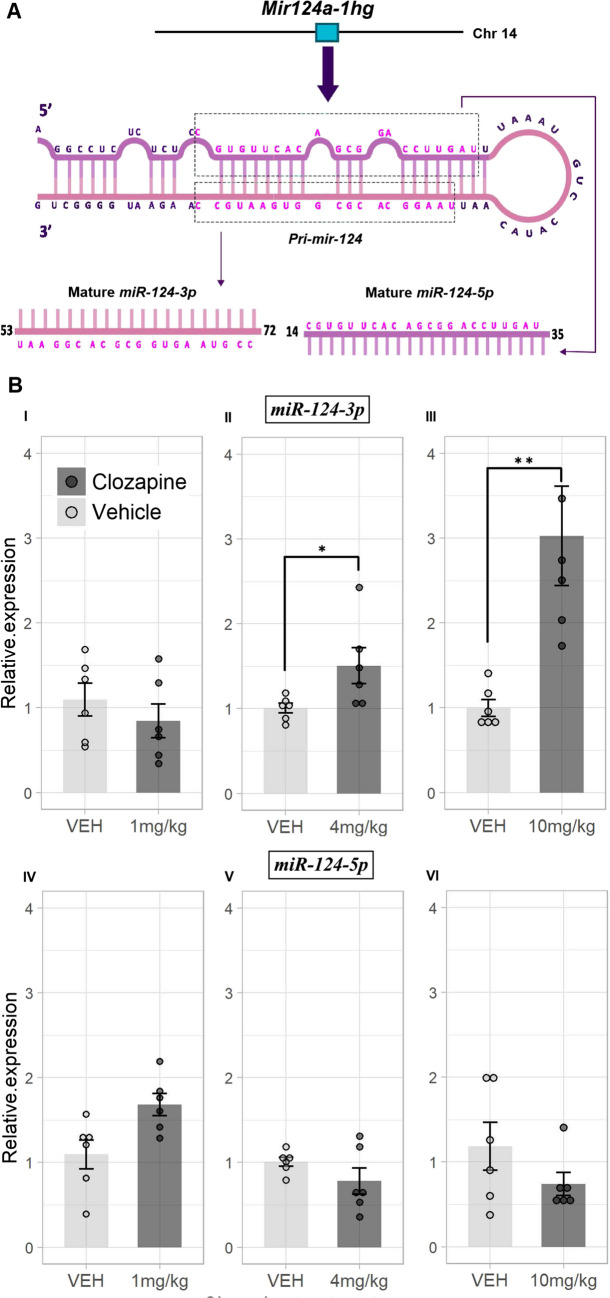 Figure 3
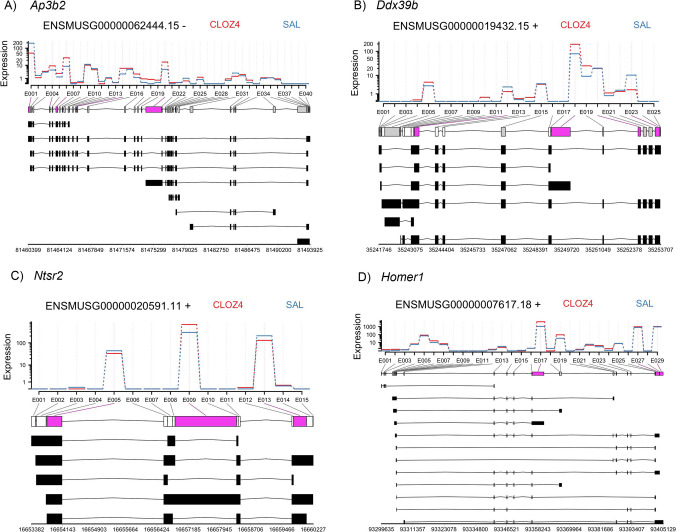 Figure 4
Peer Reviews
No public reviews on file for this paper yet. If you reviewed it on a platform where reviews are public (OpenReview, ICLR, NeurIPS, ICML), you can paste yours below so the community can read it here.
Videos
No videos yet. Explain this paper in a talk, walkthrough, or lecture? Add one.
Taxonomy
TopicsRNA Research and Splicing · MicroRNA in disease regulation · RNA regulation and disease