Increased Neuroplasticity in Frontal Cortex to Reduce Compulsive Behavior: A Preclinical tDCS Study in Male Rats
Manuela Olmedo-Córdoba, Angeles Prados-Pardo, Elena Martín-González, Margarita Moreno-Montoya

TL;DR
This study explores how tDCS affects compulsive behavior and brain plasticity in rats, finding increased neuroplasticity in the frontal cortex but no change in compulsive drinking.
Contribution
The study reveals that tDCS increases neuroplasticity gene expression in the frontal cortex of compulsive rats, despite no behavioral change.
Findings
tDCS increased neuroplasticity markers like Htr2a, Grin1, Bdnf, Ngf, and Scn2a in the frontal cortex of compulsive rats.
tDCS did not reduce compulsive drinking behavior in the schedule-induced polydipsia test.
No changes in neuroplasticity markers were observed in the amygdala after tDCS treatment.
Abstract
Compulsive behavior is a potential transdiagnostic symptom highly present in different neuropsychiatric disorders, including obsessive–compulsive disorder (OCD), anxiety, schizophrenia, and addiction. Transcranial direct current stimulation (tDCS), a non-invasive neurostimulation technique, has been proposed as an effective and safe therapeutic strategy for reducing compulsive behavior. However, its underlying molecular mechanisms remain unclear. In the present study, we assessed whether anodal tDCS treatment reduces compulsivity through neuroplasticity mechanisms in male Wistar rats selected by high compulsive drinking on schedule-induced polydipsia (SIP). Compulsive rats received low-intensity direct current stimulation (0.5 mA) over the frontal cortex (FC) once a day for 8 consecutive days for 20 min, compared to a sham group without stimulation. tDCS treatment did not induce a…
Genes, proteins, chemicals, diseases, species, mutations and cell lines named across the full text — each resolved to its canonical identifier and authoritative record.
Click any figure to enlarge with its caption.
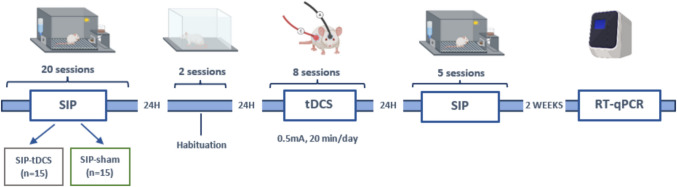 Figure 1
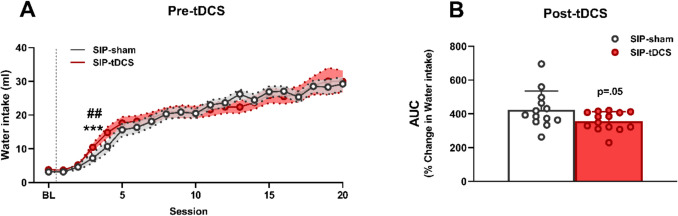 Figure 2
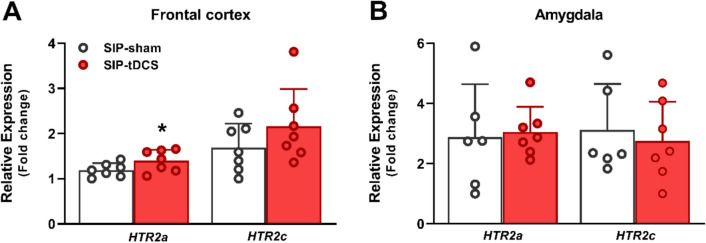 Figure 3
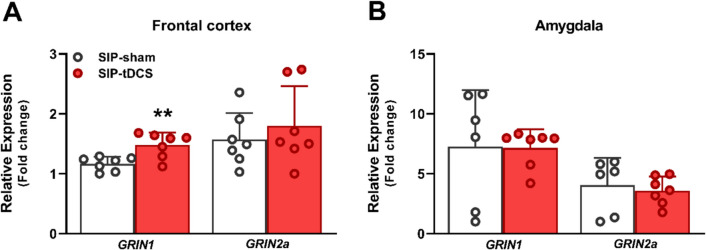 Figure 4
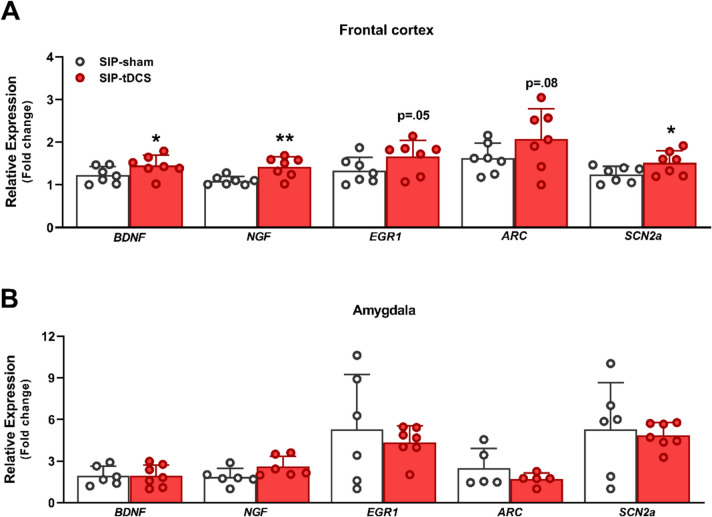 Figure 5
Peer Reviews
No public reviews on file for this paper yet. If you reviewed it on a platform where reviews are public (OpenReview, ICLR, NeurIPS, ICML), you can paste yours below so the community can read it here.
Videos
No videos yet. Explain this paper in a talk, walkthrough, or lecture? Add one.
Taxonomy
TopicsTranscranial Magnetic Stimulation Studies · Obsessive-Compulsive Spectrum Disorders · Attention Deficit Hyperactivity Disorder