Quasisymmetries of finitely ramified Julia sets
James Belk, Bradley Forrest

TL;DR
This paper explores quasisymmetries in fractal structures called Julia sets, showing how they can be used to understand and classify these complex shapes.
Contribution
The paper introduces a new theory of quasisymmetries for finitely ramified Julia sets and generalizes previous results on their symmetry groups.
Findings
Certain finitely ramified fractals have undistorted metrics that are quasisymmetrically equivalent.
Connected Julia sets for hyperbolic unicritical polynomials have infinitely many quasisymmetries.
Quasisymmetry groups of some Julia sets include Thompson’s group F.
Abstract
We develop a theory of quasisymmetries for finitely ramified fractals, with applications to finitely ramified Julia sets. We prove that certain finitely ramified fractals admit a naturally defined class of “undistorted metrics” that are all quasisymmetrically equivalent. As a result, piecewise-defined homeomorphisms of such a fractal that locally preserve the cell structure are quasisymmetries. This immediately gives a solution to the quasisymmetric uniformization problem for topologically rigid fractals such as the Sierpiński triangle. We show that our theory applies to many finitely ramified Julia sets, and we prove that any connected Julia set for a hyperbolic unicritical polynomial has infinitely many quasisymmetries, generalizing a result of Lyubich and Merenkov. We also prove that the quasisymmetry group of the Julia set for the rational function \documentclass[12pt]{minimal}…
Genes, proteins, chemicals, diseases, species, mutations and cell lines named across the full text — each resolved to its canonical identifier and authoritative record.
Click any figure to enlarge with its caption.
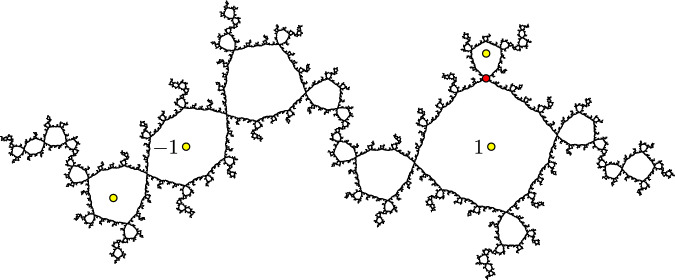 Figure 10
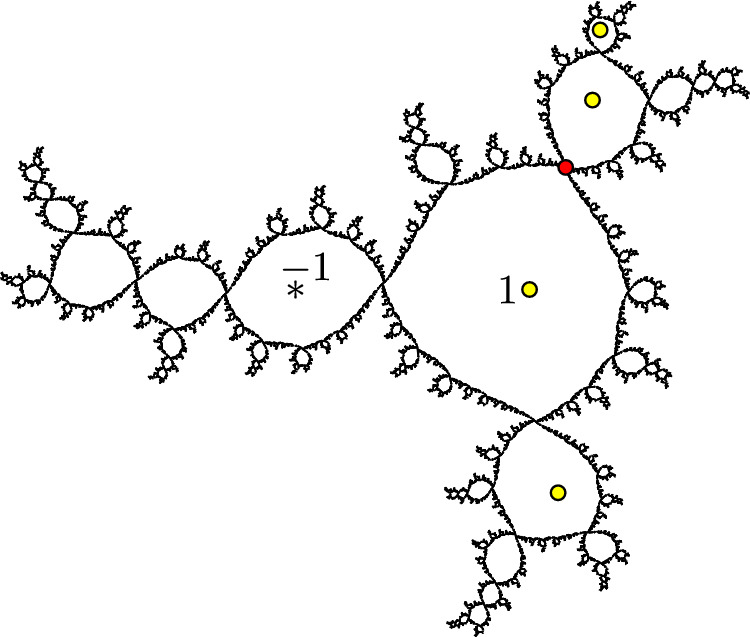 Figure 11
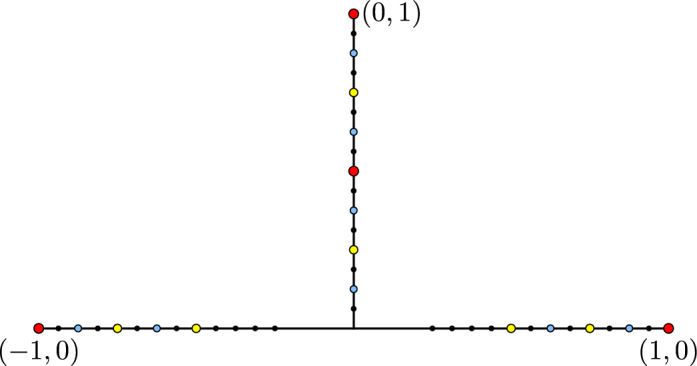 Figure 12
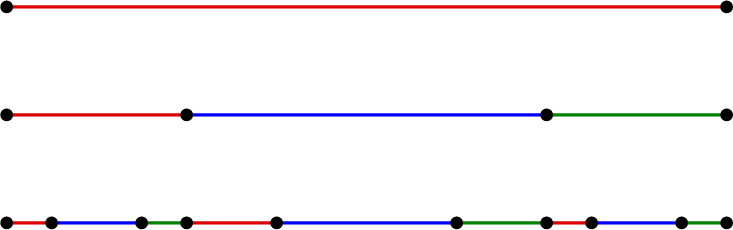 Figure 13
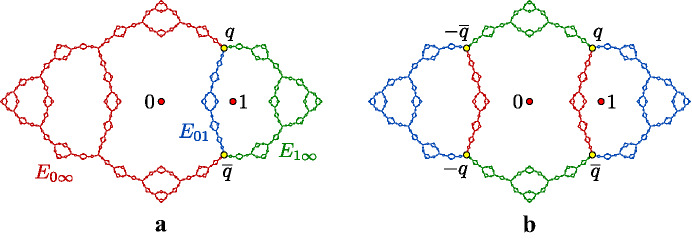 Figure 14
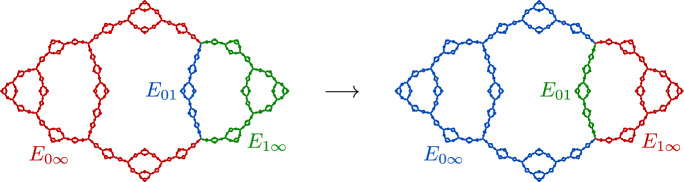 Figure 15
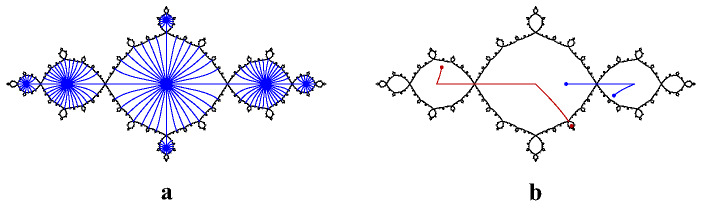 Figure 16
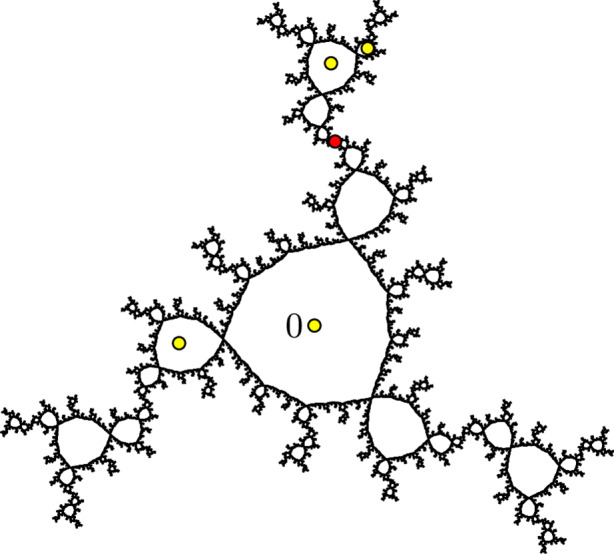 Figure 17
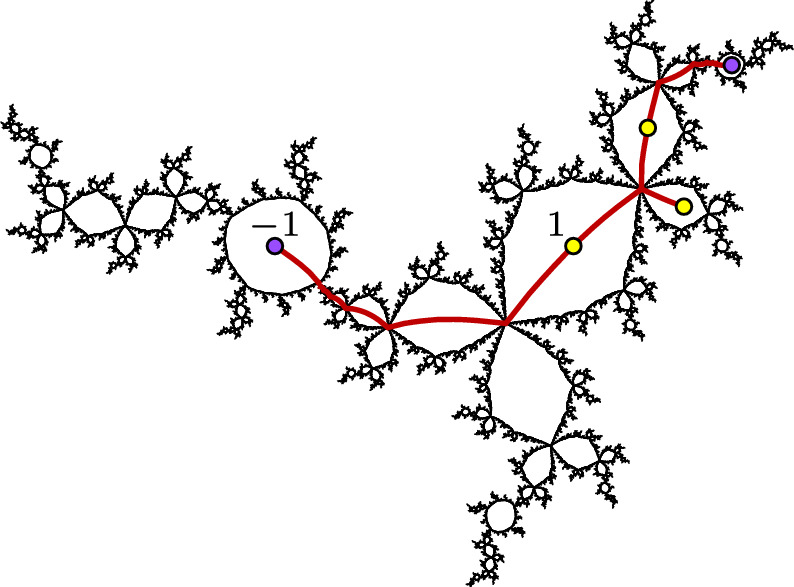 Figure 18
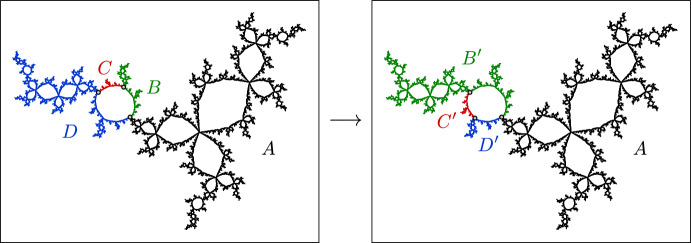 Figure 19
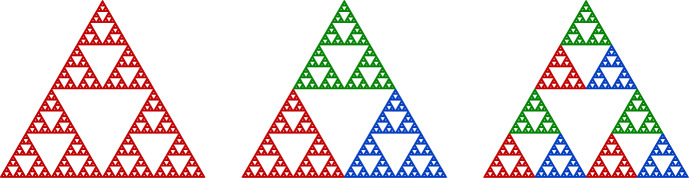 Figure 1
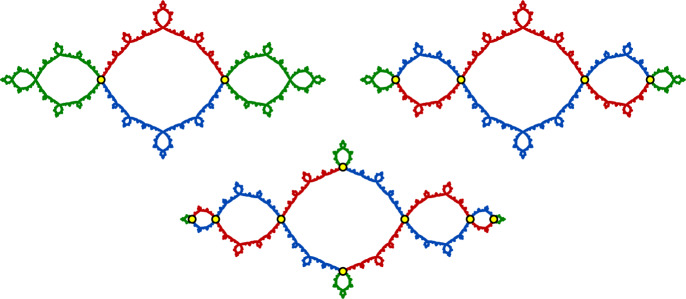 Figure 2
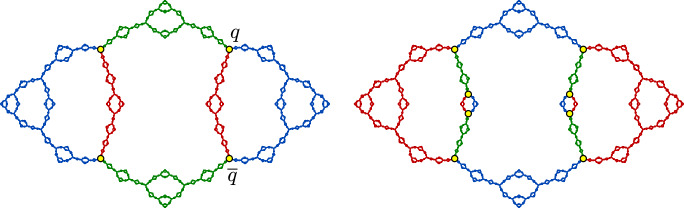 Figure 3
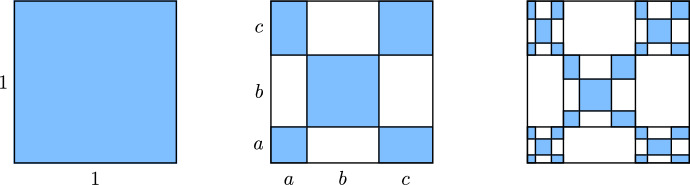 Figure 4
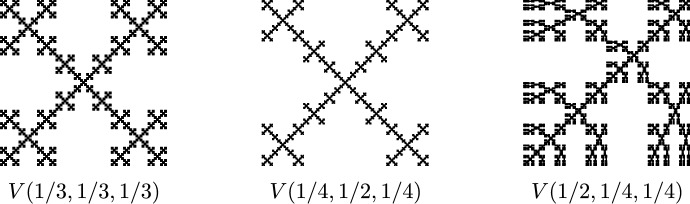 Figure 5
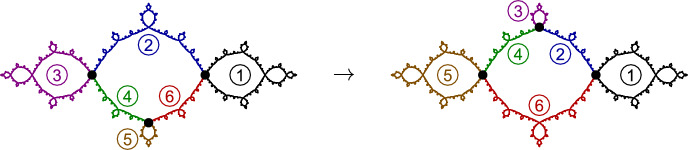 Figure 6
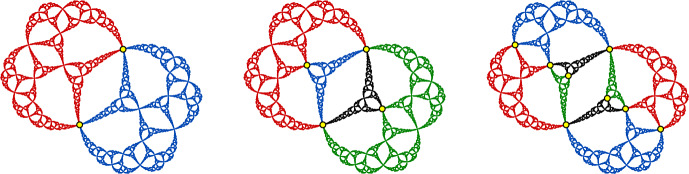 Figure 7
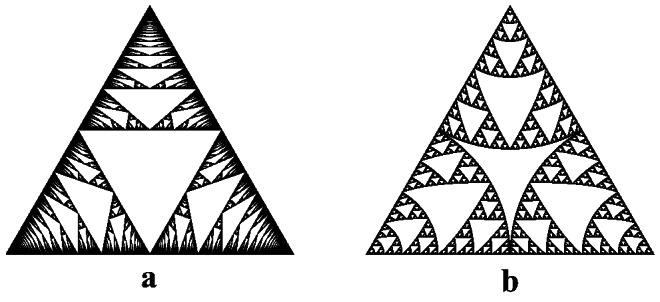 Figure 8
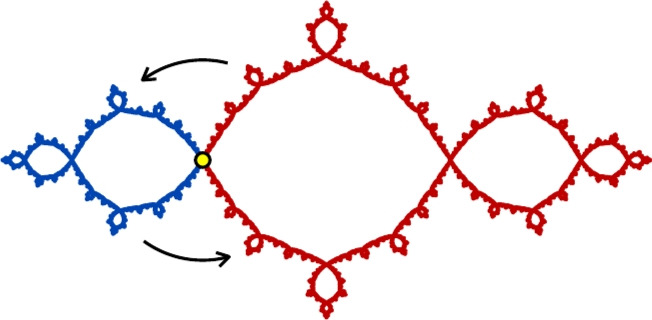 Figure 9
Peer Reviews
No public reviews on file for this paper yet. If you reviewed it on a platform where reviews are public (OpenReview, ICLR, NeurIPS, ICML), you can paste yours below so the community can read it here.
Videos
No videos yet. Explain this paper in a talk, walkthrough, or lecture? Add one.
Taxonomy
TopicsMathematical Dynamics and Fractals · Mathematics and Applications · Advanced Topology and Set Theory