Survival outcomes associated with antidepressant use in glioblastoma: a cohort study
Yifei Sun, Mohammad Hamo, Travis Atchley, James M. Markert, Burt Nabors, Dagoberto Estevez-Ordonez

TL;DR
This study found that using antidepressants after a glioblastoma diagnosis is linked to worse survival outcomes, suggesting a need to carefully weigh the risks and benefits of such treatments.
Contribution
The study provides real-world evidence that antidepressant use is associated with reduced survival in glioblastoma patients.
Findings
SSRIs, SNRIs, serotonin modulators, and atypical antidepressants were all linked to worse survival in glioblastoma patients.
Among SSRIs, escitalopram and citalopram were specifically associated with worse survival outcomes.
Antidepressant use was associated with worse survival even after adjusting for known clinical factors.
Abstract
Glioblastoma is the most common primary brain malignancy and carries significant mortality. Preclinical studies have highlighted the efficacy of antidepressant therapy in inhibiting glioblastoma progression; however, real-world evidence remains conflicting. We sought to investigate the impact of different commonly utilized antidepressant therapies on survival in patients with glioblastoma. In total, 1464 consecutive patients with glioblastoma treated at a single institution from 2008 to 2023 were included for analysis. Multivariate cox regression analysis with antidepressant usage modeled as a time varying covariate was used to assess the effect of antidepressants while controlling for a priori selected clinical variables with known relevance to survival. The median age at diagnosis was 62 (IQR 52–70) years with a median overall survival of 13.8 months. Of the cohort, 44% utilized…
Genes, proteins, chemicals, diseases, species, mutations and cell lines named across the full text — each resolved to its canonical identifier and authoritative record.
Click any figure to enlarge with its caption.
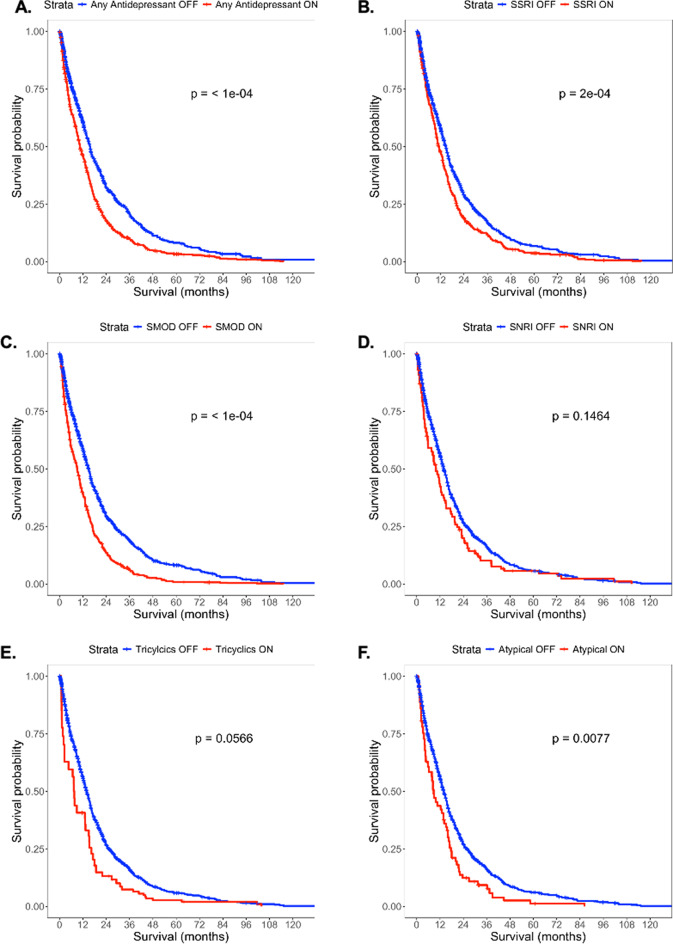 Figure 1
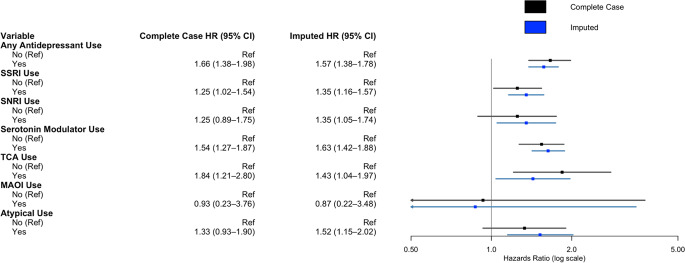 Figure 2
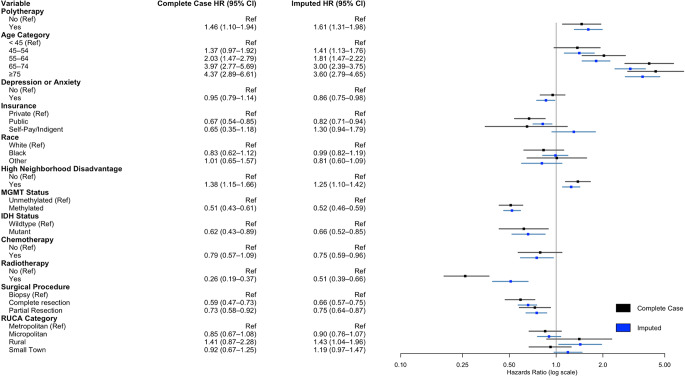 Figure 3
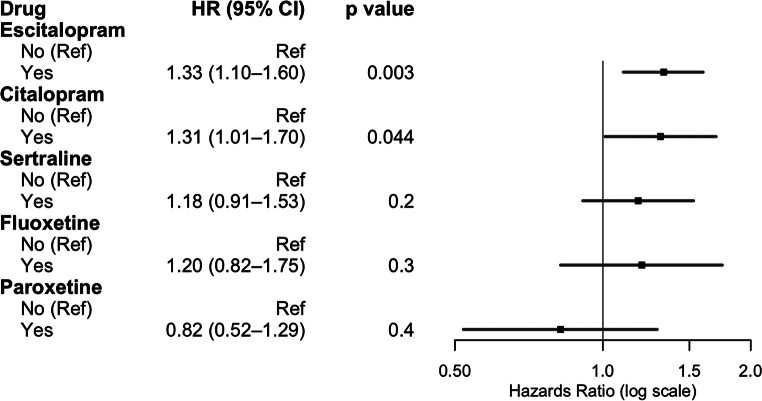 Figure 4
Peer Reviews
No public reviews on file for this paper yet. If you reviewed it on a platform where reviews are public (OpenReview, ICLR, NeurIPS, ICML), you can paste yours below so the community can read it here.
Videos
No videos yet. Explain this paper in a talk, walkthrough, or lecture? Add one.
Taxonomy
TopicsCancer, Stress, Anesthesia, and Immune Response · Glioma Diagnosis and Treatment · Cancer survivorship and care