Reward-seeking behaviors moderate the association between early life adversity and anhedonia 12 months later
Mai-Lan Tran, Uma Rao, Julienne Bower, Andrew Fuligni, Kate Ryan Kuhlman

TL;DR
Adolescents with early life adversity who have low reward-seeking behaviors are more likely to develop anhedonia and depression over time.
Contribution
This study identifies reward-seeking behaviors as a moderator of the link between early life adversity and future anhedonia in adolescents.
Findings
Adolescents with higher early life adversity reported more anhedonia 12 months later.
Low and average reward-seeking behaviors increased the risk of anhedonia in those with high early life adversity.
High reward-seeking behaviors buffered against anhedonia risk in adversity-exposed adolescents.
Abstract
Approximately 20% of adolescents report experiencing anhedonia, conferring high risk for the onset of adolescent depression. Early life adversity (ELA) is associated with anhedonia, and individual differences in reward motivation may inform this association. The current study examined whether reward-seeking behaviors moderated the prospective association between ELA and anhedonia 12-months later among adolescents. During a baseline visit, 74 participants, aged 11–17, completed the Balloon Analogue Risk Task (BART) to measure reward-seeking behaviors via adjusted average balloon pumps. Indeed, participation in the BART has been shown to activate the fronto-striatal neural circuits known to subserve reward-seeking. ELA was assessed continuously via parent-report using a 9-item Adverse Childhood Experiences questionnaire, with scores reflecting cumulative exposures to adversity prior to…
Genes, proteins, chemicals, diseases, species, mutations and cell lines named across the full text — each resolved to its canonical identifier and authoritative record.
Click any figure to enlarge with its caption.
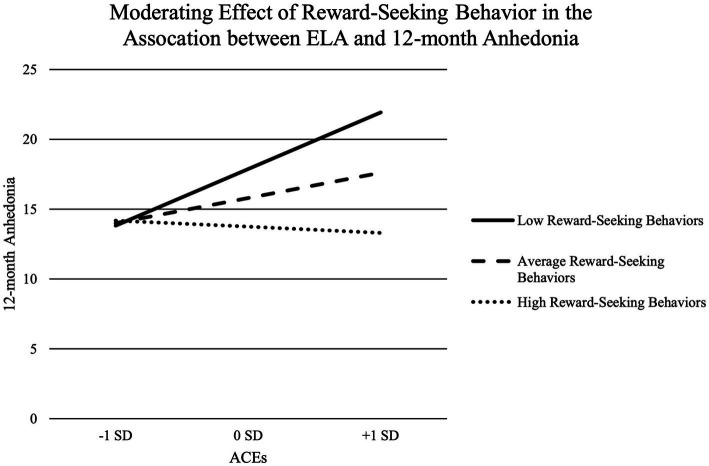 Figure 1
Peer Reviews
No public reviews on file for this paper yet. If you reviewed it on a platform where reviews are public (OpenReview, ICLR, NeurIPS, ICML), you can paste yours below so the community can read it here.
Videos
No videos yet. Explain this paper in a talk, walkthrough, or lecture? Add one.
Taxonomy
TopicsChild and Adolescent Psychosocial and Emotional Development · Child Abuse and Trauma · Stress Responses and Cortisol