Quantitative analysis of gait and balance using deep learning on monocular videos and the timed up and go test in idiopathic normal-pressure hydrocephalus
Hee-Jin Cho, Sangwook Kim, Hosang Yu, Sungmoon Jeong, Kyunghun Kang

TL;DR
This study uses deep learning on monocular videos to analyze gait and balance in idiopathic normal-pressure hydrocephalus patients, showing strong predictive power for fall risk.
Contribution
A vision-based gait analysis system using monocular videos and deep learning is validated for predicting fall risk in INPH patients.
Findings
TUG scores were negatively correlated with gait velocity, cadence, and stride length.
An automated machine learning model achieved an area under the curve of 0.979 for predicting falling risk.
Gait velocity was identified as the most important predictor of falling risk using SHapley Additive exPlanations.
Abstract
A vision-based gait analysis system using deep learning algorithms for simple monocular videos was validated to estimate temporo-spatial gait parameters in idiopathic normal-pressure hydrocephalus (INPH) patients. The Timed Up and Go (TUG) test has been used to reflect risk of falling in INPH patients. The aims of the study were (1) to investigate relationships between temporo-spatial gait parameters measured by a vision-based gait analysis system using monocular videos and TUG scores and (2) to determine whether an automated machine learning model based on these gait parameters could predict falling risk in INPH patients. Gait data from 59 patients were collected from the vision-based system. All patients were also evaluated with the TUG test. A TUG time of ≥13.5 s was used as a cut-off to identify potential fallers. Timed Up and Go scores were negatively correlated with gait…
Genes, proteins, chemicals, diseases, species, mutations and cell lines named across the full text — each resolved to its canonical identifier and authoritative record.
Click any figure to enlarge with its caption.
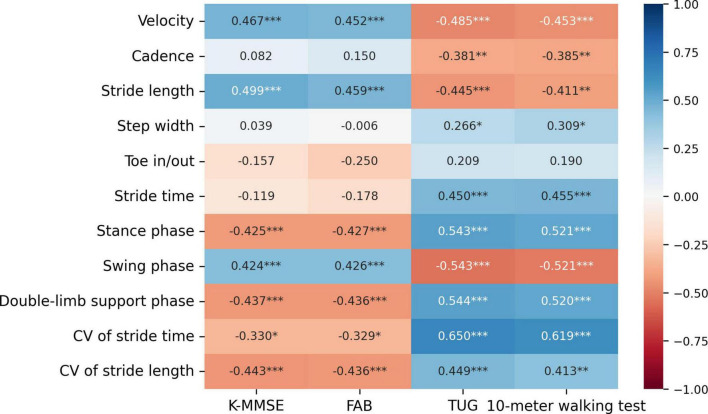 Figure 1
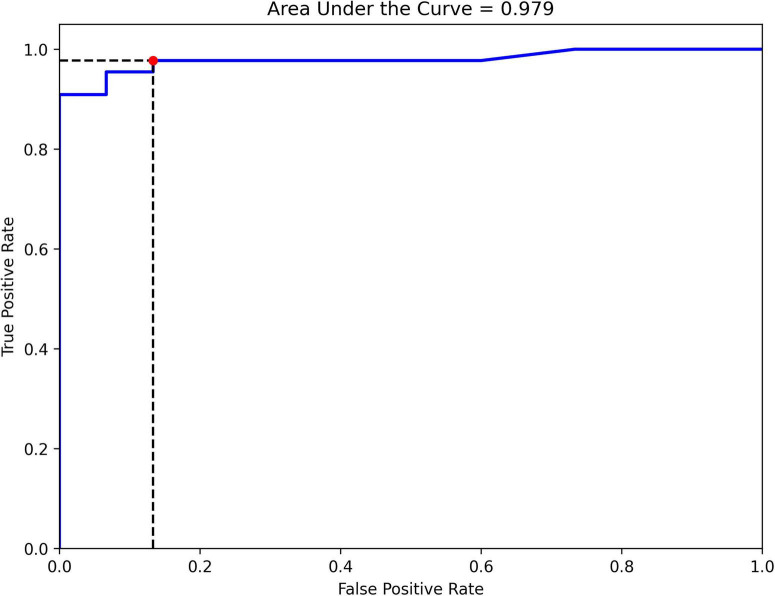 Figure 2
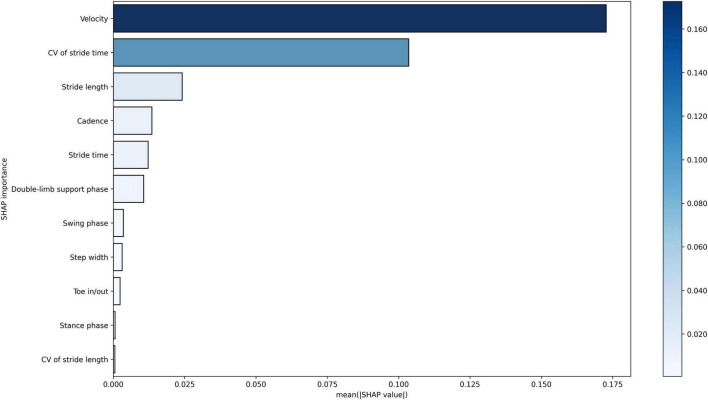 Figure 3
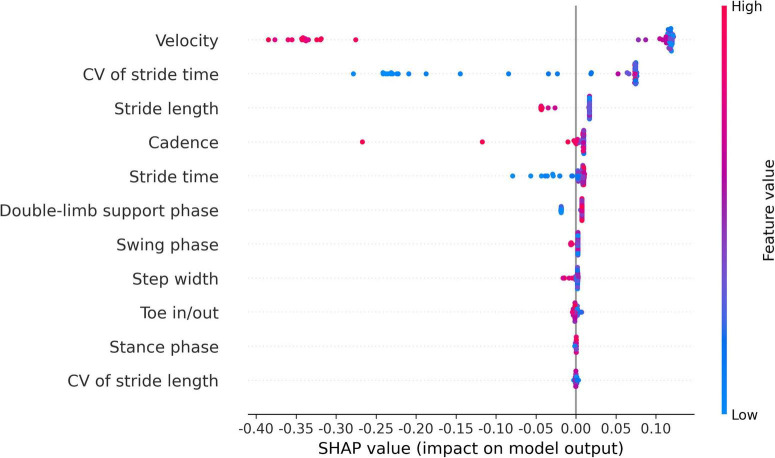 Figure 4
Peer Reviews
No public reviews on file for this paper yet. If you reviewed it on a platform where reviews are public (OpenReview, ICLR, NeurIPS, ICML), you can paste yours below so the community can read it here.
Videos
No videos yet. Explain this paper in a talk, walkthrough, or lecture? Add one.
Taxonomy
TopicsCerebrospinal fluid and hydrocephalus · Traumatic Brain Injury and Neurovascular Disturbances · Neonatal and fetal brain pathology