Antibiotic use in poultry farming: a cross-sectional study of veterinary practices in Tunisia
Mehdi Ben Ali, Badi Chtioui, Hamza Bouchrit, Hatem Laamiri, Hedia Attia El Hili

TL;DR
This study examines antibiotic use and veterinary practices in Tunisia's poultry farming, revealing high antibiotic consumption and poor waste management, which contribute to antimicrobial resistance.
Contribution
The study provides new insights into veterinary antibiotic prescribing and waste practices in Tunisia's poultry sector, highlighting gaps in AMR mitigation.
Findings
Enrofloxacin, florfenicol, and doxycycline were the most commonly prescribed antibiotics, often without microbiological confirmation.
Poor waste management practices, such as disposing of biological waste in regular trash, were prevalent among veterinarians.
A significant proportion of farmers engage in self-medication, exacerbating the risk of antimicrobial resistance.
Abstract
Antimicrobial resistance (AMR) in poultry production poses a growing public health threat due to the emergence of multidrug-resistant (MDR) bacteria and the risk of transmission to humans through direct or indirect contact with these germs. In Tunisia, limited data on antibiotic use and veterinary prescribing practices hinder the development of effective AMR mitigation strategies, particularly in a sector with high antibiotic consumption. A cross-sectional study was conducted among veterinarian prescribers in avian medicine in Tunisia to assess their antibiotic prescribing behaviours and related practices and to evaluate their potential contribution to AMR emergence and spread. The most frequently reported first and second-line antibiotics were enrofloxacin (20/52 and 14/52), florfenicol (14/52 and 14/52), and doxycycline (7/52 and 6/52). Colistin (10/52) was the most used third-line…
Genes, proteins, chemicals, diseases, species, mutations and cell lines named across the full text — each resolved to its canonical identifier and authoritative record.
Click any figure to enlarge with its caption.
 Figure 1
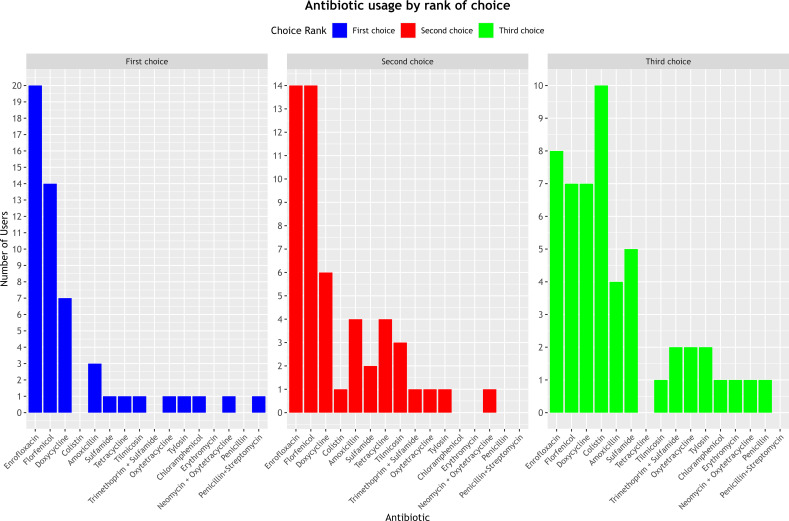 Figure 2
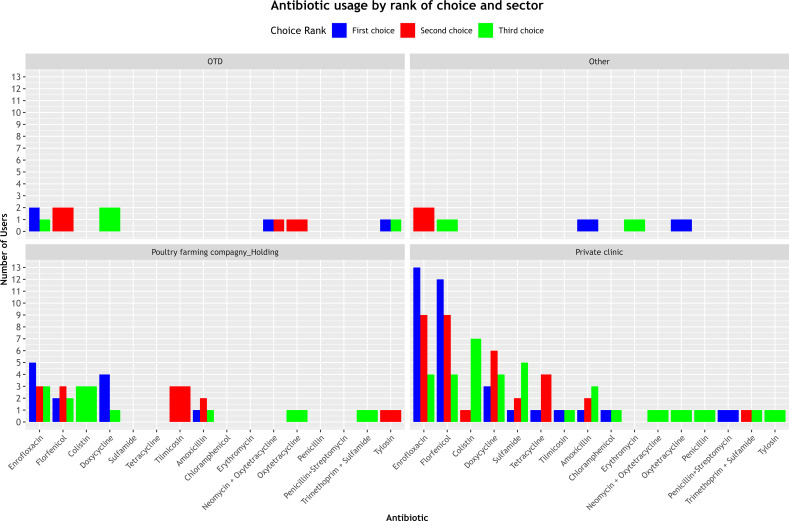 Figure 3
Peer Reviews
No public reviews on file for this paper yet. If you reviewed it on a platform where reviews are public (OpenReview, ICLR, NeurIPS, ICML), you can paste yours below so the community can read it here.
Videos
No videos yet. Explain this paper in a talk, walkthrough, or lecture? Add one.
Taxonomy
TopicsPharmaceutical and Antibiotic Environmental Impacts · Antibiotic Resistance in Bacteria · Salmonella and Campylobacter epidemiology