Molecular exploration of host-pathogen interactions in severe Pseudomonas aeruginosa infection through a multi-level data integration approach
Francesco Messina, Claudia Rotondo, Luiz Ladeira, Sara Crosetti, Michele Properzi, Valentina Dimartino, Benedetta Riccitelli, Bernard Staumont, Giovanni Chillemi, Liesbet Geris, Maria Grazia Bocci, Carla Fontana

TL;DR
This paper explores how Pseudomonas aeruginosa interacts with the human host during severe infections using integrated data to better understand sepsis outcomes.
Contribution
The study provides a comprehensive dataset of PA-human interactions and a molecular network for predicting clinical phenotypes in severe infections.
Findings
A dataset of 189 PA-human interactions involving 151 proteins/molecules was created.
Proinflammatory pathways were overexpressed in PA-infected lung samples.
The molecular network offers a foundation for dynamic computational models of clinical phenotypes.
Abstract
Understanding host-pathogen interactions is crucial for explaining the variability in sepsis outcomes, with Pseudomonas aeruginosa (PA) remaining a significant public health concern. In this work, we explored PA-human host interaction mechanisms through a data integration workflow, focusing on protein-protein and metabolite-protein interactions, along with pathway modulation in affected organs during severe infections. A scoping literature review enabled us to construct a domain-based infection network encompassing pathogenesis concepts, molecular interactions, and host response signatures, providing a wide view of the relevant mechanisms involved in severe bacterial infections. Our analysis yielded a literature-based comprehensive description of PA infection mechanisms and an annotated dataset of 189 PA-human interactions involving 151 proteins/molecules (109 human proteins, 3 human…
Genes, proteins, chemicals, diseases, species, mutations and cell lines named across the full text — each resolved to its canonical identifier and authoritative record.
Click any figure to enlarge with its caption.
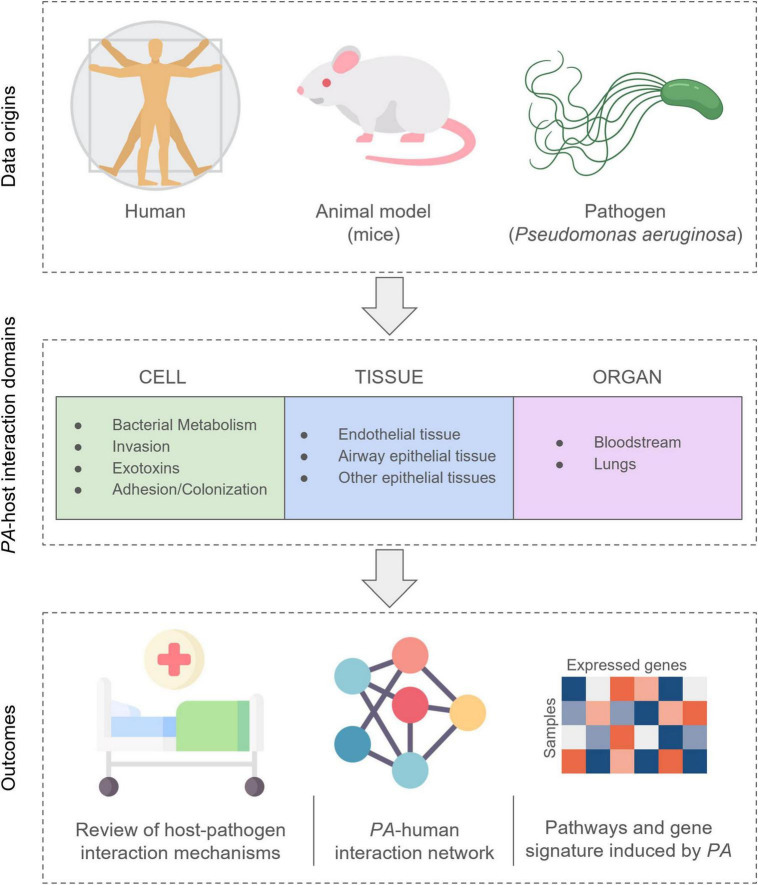 Figure 1
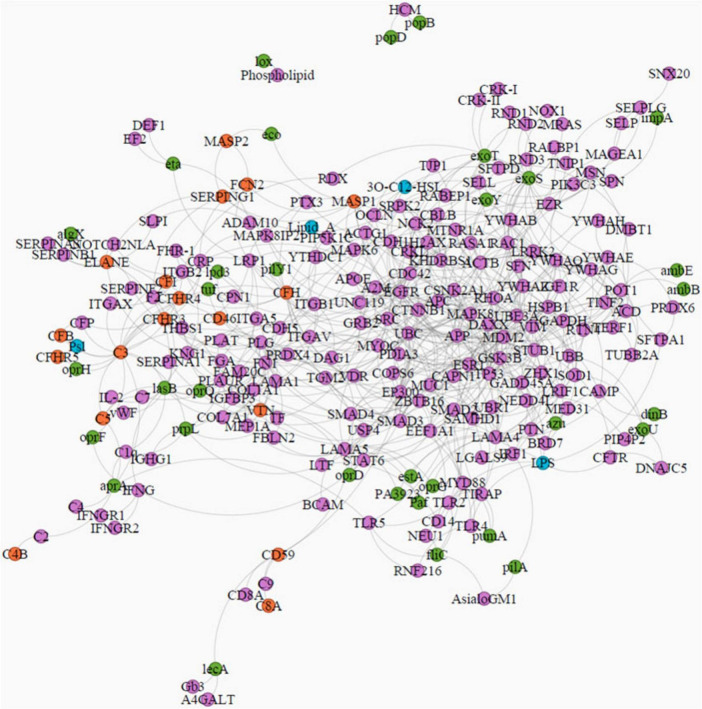 Figure 2
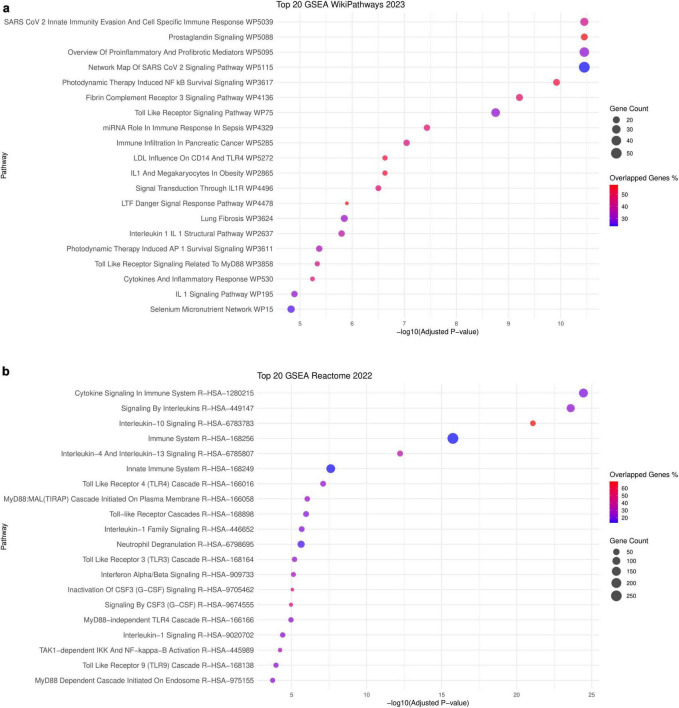 Figure 3
Peer Reviews
No public reviews on file for this paper yet. If you reviewed it on a platform where reviews are public (OpenReview, ICLR, NeurIPS, ICML), you can paste yours below so the community can read it here.
Videos
No videos yet. Explain this paper in a talk, walkthrough, or lecture? Add one.
Taxonomy
TopicsMachine Learning in Bioinformatics · Bacterial biofilms and quorum sensing · Gut microbiota and health