Effects of Glucose Oxidase and Sodium Stearoyl Lactate as a Compound Modifier on Improving the Quality of Wheat Dough and Its Steamed Bread
Yuan‐Bao Jin, Jin‐Ming Tan, Huan Yang, Ping Liu, Hong Wu, Bing Li

TL;DR
A compound modifier combining glucose oxidase and sodium stearoyl lactate improves dough and steamed bread quality by enhancing gluten structure and water retention.
Contribution
A novel compound modifier (GOD + SSL) is proposed to synergistically enhance dough and steamed bread quality with lower required amounts.
Findings
The compound modifier increased steamed bread specific volume by 9.62% and reduced hardness by 35.70%.
Dough water content improved by 21.46%, and gluten network structure was strengthened through disulfide bonds and secondary structure.
SEM and LF-NMR confirmed structural and rheological improvements due to the synergistic effect of SSL and GOD.
Abstract
Modifiers are widely used in flour products; however, a certain modifier often exhibits limited efficacy or requires a high addition amount to achieve the desired improvement. The use of compound modifier (CM) is an alternative strategy to address this problem. In this paper, the effects of glucose oxidase (GOD) and sodium stearoyl lactate (SSL) as a CM on the properties of the dough, as well as the quality of the steamed bread were investigated. The results revealed that CM significantly ameliorated the specific volume (by 9.62%, p ≤ 0.05) and texture (by 35.70% for hardness, p ≤ 0.05) of the steamed bread, compared with the control group. The CM dough exhibited an increased bound water content (by 21.46%, p ≤ 0.05) and improved rheological properties relative to the control. Moreover, CM improves the gluten network in dough by increasing the number of disulfide bonds and strengthening…
Genes, proteins, chemicals, diseases, species, mutations and cell lines named across the full text — each resolved to its canonical identifier and authoritative record.
Click any figure to enlarge with its caption.
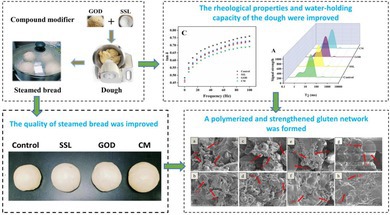 Figure 1
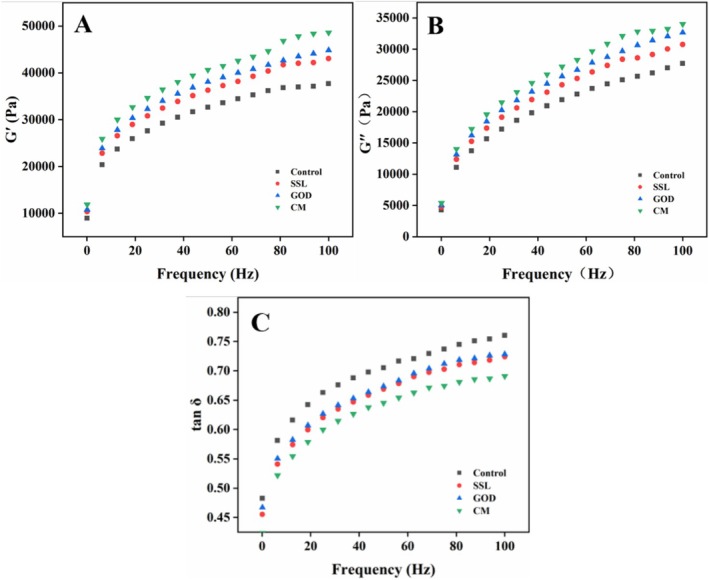 Figure 2
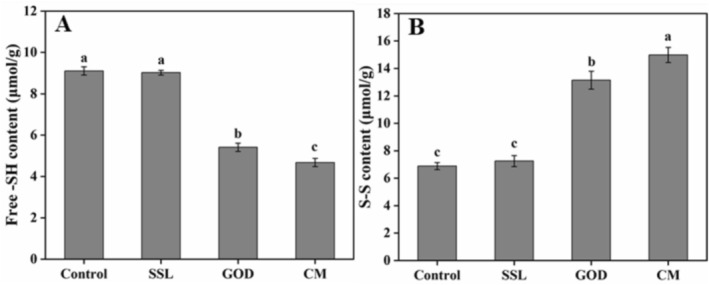 Figure 3
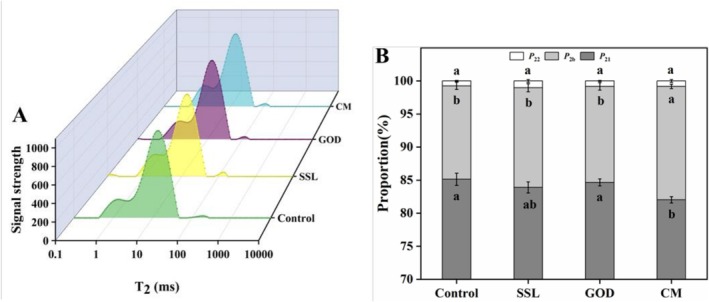 Figure 4
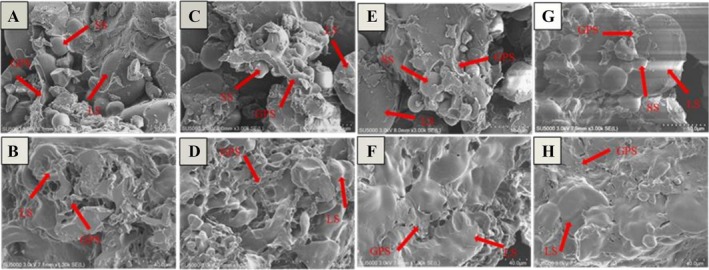 Figure 5
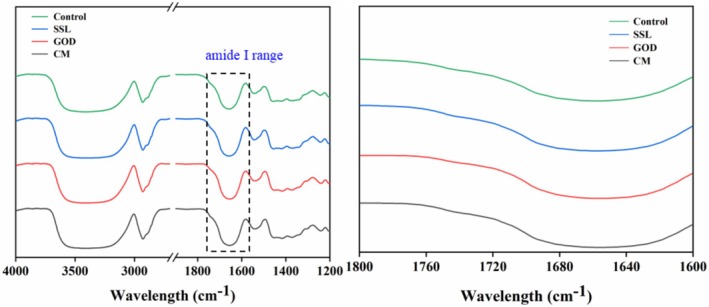 Figure 6
Peer Reviews
No public reviews on file for this paper yet. If you reviewed it on a platform where reviews are public (OpenReview, ICLR, NeurIPS, ICML), you can paste yours below so the community can read it here.
Videos
No videos yet. Explain this paper in a talk, walkthrough, or lecture? Add one.
Taxonomy
TopicsFood composition and properties · Polysaccharides Composition and Applications · Proteins in Food Systems