Low-dose emapalumab treatment in refractory macrophage activation syndrome secondary to adult onset still’s disease/systemic lupus erythematosus: insights from nine cases
Jie Chen, Liling Zhao, Yanwei Lin, Xinyue Lian, Haiting Wang, Liyang Gu, Ran Wang, Xiaodong Wang, Shuang Ye, Qiong Fu

TL;DR
This study shows that low-dose emapalumab can effectively treat severe macrophage activation syndrome in patients unresponsive to other therapies.
Contribution
Demonstrates low-dose emapalumab efficacy in refractory macrophage activation syndrome in a Chinese patient cohort.
Findings
88.9% of patients achieved complete remission after low-dose emapalumab treatment.
Clinical and laboratory improvements were observed with reduced steroid use.
No serious adverse events were reported despite a 85.5% reduction in prednisone-equivalent dose.
Abstract
Macrophage activation syndrome (MAS) is frequently secondary to rheumatic diseases, with features including a cytokine storm and hemophagocytosis. Emapalumab is a monoclonal antibody that targets interferon-γ and has the ability to precisely regulate cytokines. This study aimed to investigate the efficacy and safety of low-dose emapalumab for patients with refractory MAS in the Chinese population. From January 2022 to July 2024, 9 patients with MAS secondary to adult-onset Still’s disease (AOSD) or systemic lupus erythematosus (SLE) received low-dose emapalumab following no response to prior conventional therapies. The laboratory parameters, therapeutic response, and safety were assessed following low-dose emapalumab-based treatment. Of the nine MAS patients, 5 patients were secondary to AOSD and 4 patients were secondary to SLE. The overall response rate was 66.7% (6/9), 77.8% (7/9),…
Genes, proteins, chemicals, diseases, species, mutations and cell lines named across the full text — each resolved to its canonical identifier and authoritative record.
Click any figure to enlarge with its caption.
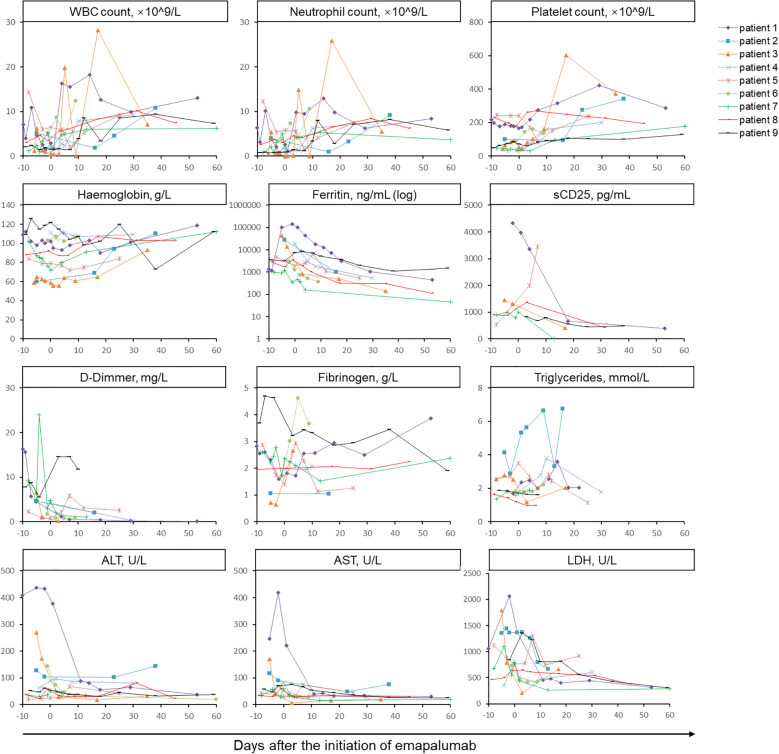 Figure 1
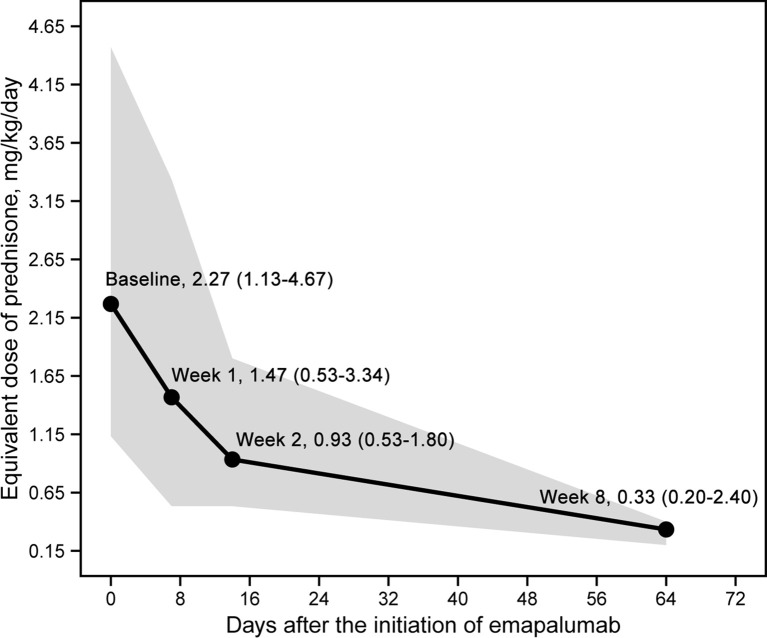 Figure 2
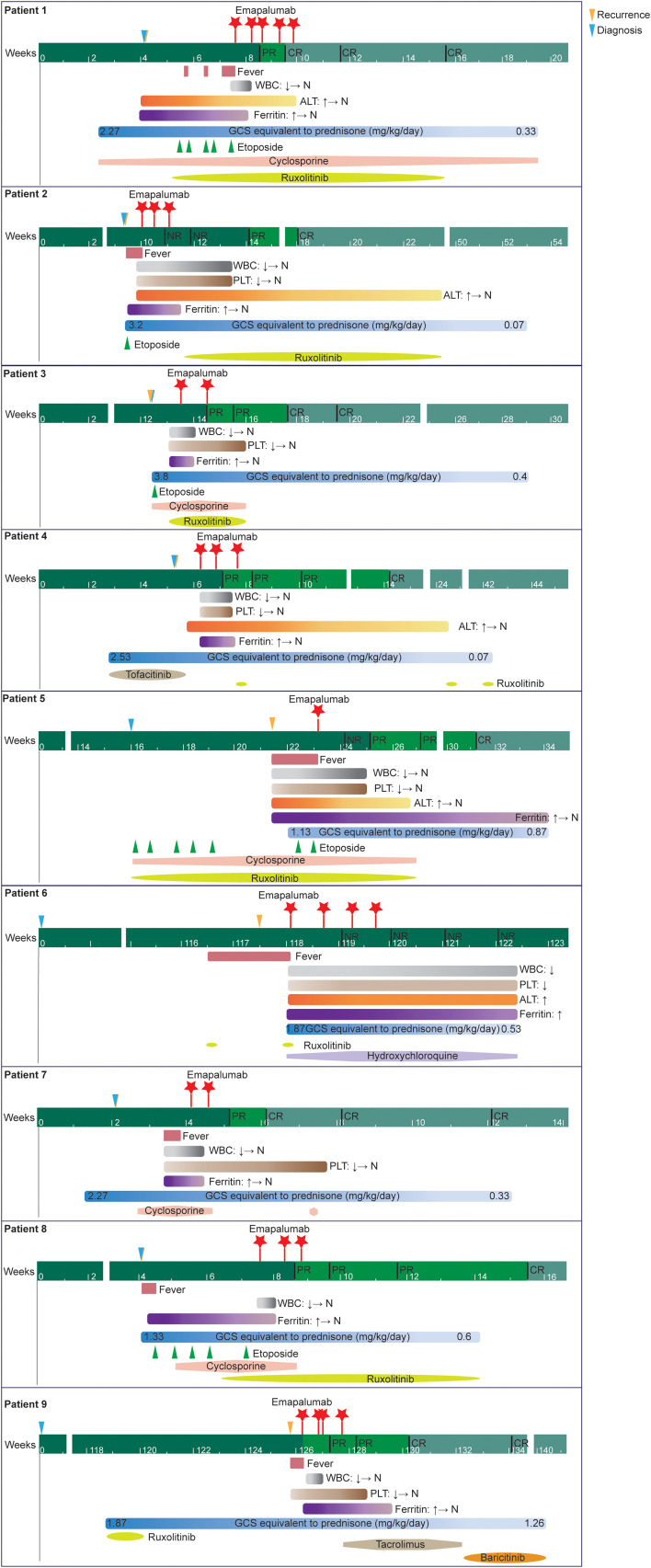 Figure 3
Peer Reviews
No public reviews on file for this paper yet. If you reviewed it on a platform where reviews are public (OpenReview, ICLR, NeurIPS, ICML), you can paste yours below so the community can read it here.
Videos
No videos yet. Explain this paper in a talk, walkthrough, or lecture? Add one.
Taxonomy
TopicsAutoimmune and Inflammatory Disorders Research · Adolescent and Pediatric Healthcare · Kawasaki Disease and Coronary Complications