Survival outcomes of intrathoracic vs. cervical anastomosis post-esophagectomy in middle and lower thoracic esophageal squamous cell carcinoma: a retrospective propensity score matching analysis
Xueqiang Wei, Jie Mao, Yuncheng Bai, Hao Yang, Yizhou Peng, Jin Liu, Zhenghai Shen, Shengguai Gao, Huiqiao Wang, Xiaobo Chen, Ying Chen, Jiapeng Yang, Yunchao Huang

TL;DR
This study compares long-term survival outcomes of two surgical techniques for esophageal cancer and finds that initial survival benefits of one technique disappear after adjusting for other factors.
Contribution
The novel contribution is the use of propensity score matching to assess the true impact of anastomotic technique on survival in esophageal cancer patients.
Findings
Cervical anastomosis initially showed better survival outcomes compared to intrathoracic anastomosis.
After adjusting for confounding factors, the survival advantage of cervical anastomosis disappeared.
Tumor stage and lymphovascular invasion were stronger predictors of survival than anastomotic technique.
Abstract
This study aimed to compare long-term survival outcomes between cervical anastomosis (CA) and intrathoracic anastomosis (IA) in patients with middle and lower thoracic esophageal squamous cell carcinoma (ESCC). A retrospective cohort analysis was conducted on 571 patients who underwent esophagectomy at a single institution. Patients were stratified into CA and IA groups based on anastomotic technique. Propensity score matching (PSM, 1:1) was applied to balance baseline covariates. Overall survival (OS) and disease-free survival (DFS) were evaluated using Kaplan-Meier analysis and Cox regression. Secondary outcomes included postoperative complications. In the unmatched cohort, CA demonstrated superior OS (median: 51.17 vs. 34.50 months; HR: 1.368, 95% CI: 1.062–1.763; p=0.015) and DFS (median: 45.07 vs. 28.87 months; HR: 1.289, 95% CI: 1.013–1.641; p=0.039) compared to IA. However,…
Genes, proteins, chemicals, diseases, species, mutations and cell lines named across the full text — each resolved to its canonical identifier and authoritative record.
Click any figure to enlarge with its caption.
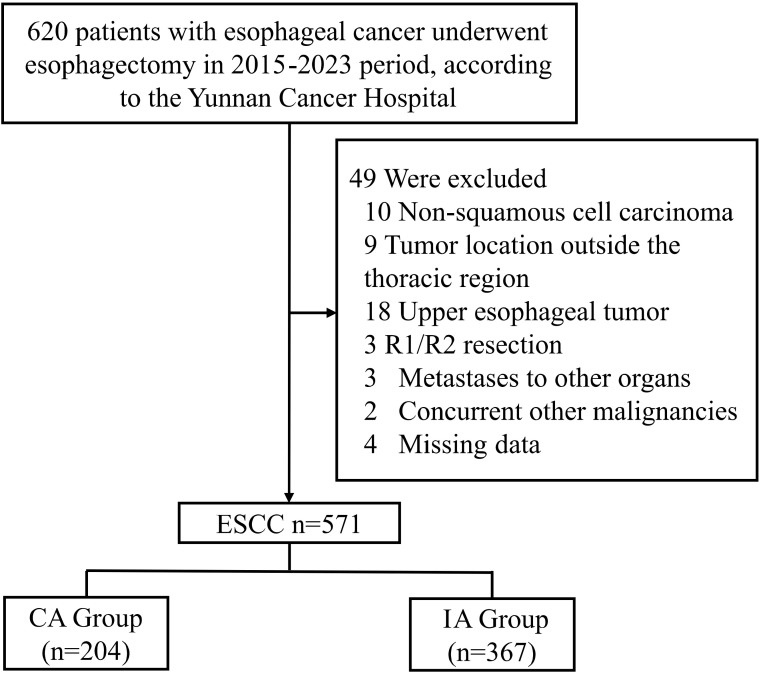 Figure 1
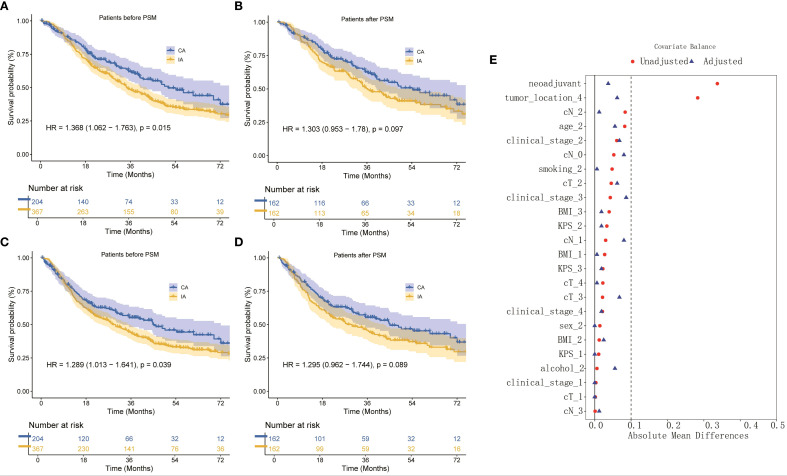 Figure 2
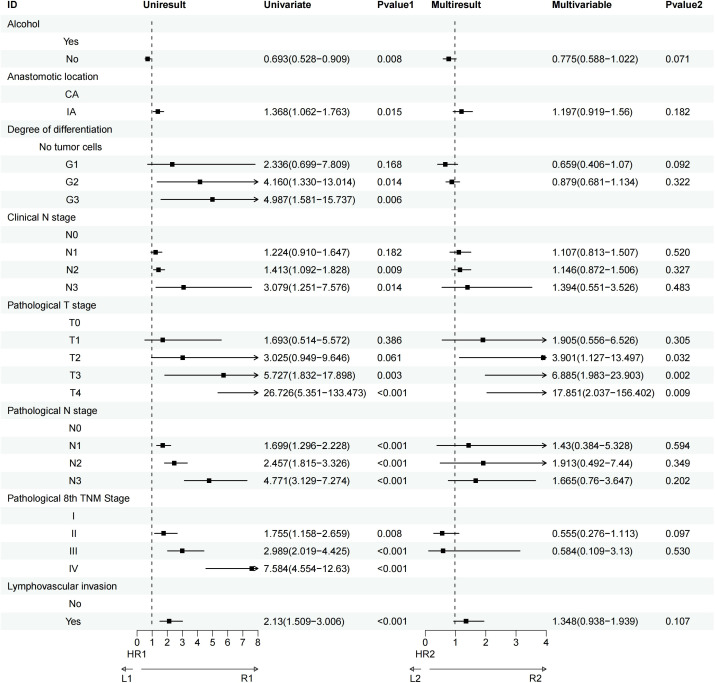 Figure 3
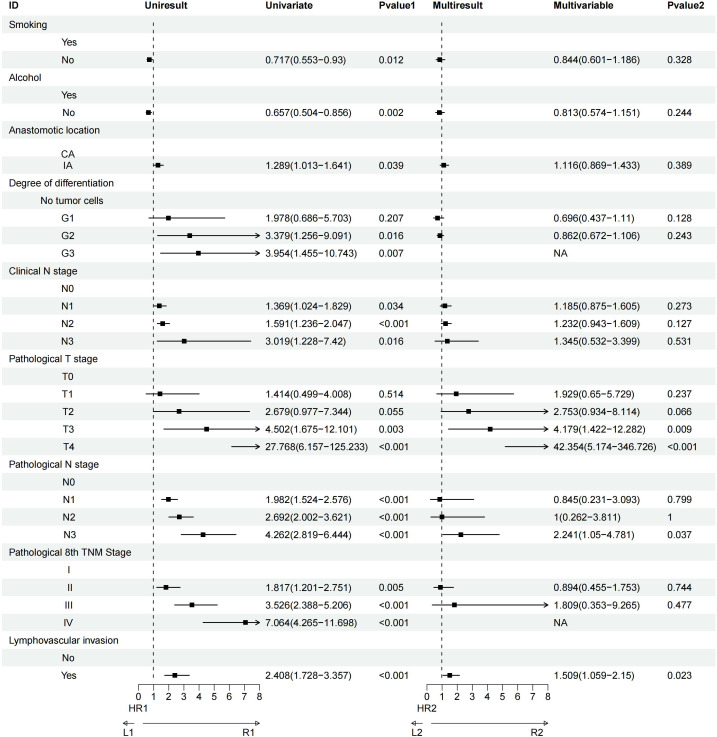 Figure 4
Peer Reviews
No public reviews on file for this paper yet. If you reviewed it on a platform where reviews are public (OpenReview, ICLR, NeurIPS, ICML), you can paste yours below so the community can read it here.
Videos
No videos yet. Explain this paper in a talk, walkthrough, or lecture? Add one.
Taxonomy
TopicsEsophageal Cancer Research and Treatment · Esophageal and GI Pathology · Gastric Cancer Management and Outcomes