Microvascular changes in children with MIS-C: a monocentric exploratory study using comparative nailfold capillaroscopy
Sema Nur Taşkın, Şeyda Doğantan, Esra Esen, Pınar Garipçin Sarı, Benhur Şirvan Çetin, Ayşenur Paç Kısaarslan, Muammer Hakan Poyrazoğlu

TL;DR
This study finds microvascular changes in children with MIS-C using nailfold capillaroscopy, suggesting it could be a useful non-invasive diagnostic tool.
Contribution
The study provides a systematic evaluation of microvascular alterations in pediatric MIS-C, offering a unique reference for future research.
Findings
MIS-C patients showed higher rates of capillary tortuosity, crossing, and dilatation compared to healthy controls.
Nailfold capillaroscopy revealed reduced apical loop width and increased disorganization in MIS-C patients.
The study highlights NFC as a potential non-invasive tool for detecting endothelial dysfunction in MIS-C.
Abstract
Multisystem Inflammatory Syndrome in Children (MIS-C) is a severe hyperinflammatory condition that arises after SARS-CoV-2 infection and may lead to endothelial dysfunction and microvascular damage. Despite increasing knowledge on systemic manifestations, microcirculatory involvement in MIS-C remains underexplored. To evaluate nailfold capillaroscopy (NFC) findings in children diagnosed with MIS-C and compare them with age- and sex-matched healthy controls, thereby assessing subclinical microvascular alterations associated with MIS-C. In this cross-sectional study, 25 MIS-C patients meeting CDC criteria and 29 age-/sex-matched controls underwent standardized NFC at 200× magnification by a blinded examiner. Eight fingers (excluding thumbs) were imaged. Morphological parameters (tortuosity, crossing, dilatation, neoangiogenesis, etc.) and quantitative measures (capillary density,…
Genes, proteins, chemicals, diseases, species, mutations and cell lines named across the full text — each resolved to its canonical identifier and authoritative record.
Click any figure to enlarge with its caption.
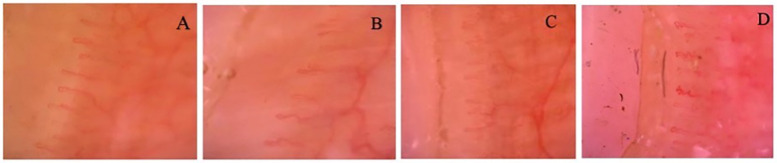 Figure 1
Peer Reviews
No public reviews on file for this paper yet. If you reviewed it on a platform where reviews are public (OpenReview, ICLR, NeurIPS, ICML), you can paste yours below so the community can read it here.
Videos
No videos yet. Explain this paper in a talk, walkthrough, or lecture? Add one.
Taxonomy
TopicsKawasaki Disease and Coronary Complications · Vascular anomalies and interventions · Abdominal vascular conditions and treatments