RAPSN-Associated Congenital Myasthenic Syndrome due to Biallelic Single Nucleotide Variants at the Same Position
Laura Keehan, Jennefer N. Carter, Elijah Kravets, Matthew T. Wheeler, Jonathan A. Bernstein, Ricardo A. Maselli, Jacinda B. Sampson, Suha Bachir

TL;DR
A 4-year-old boy with muscle weakness and breathing issues was found to have a rare genetic disorder caused by two identical mutations in the RAPSN gene, which can be treated with specific drugs.
Contribution
This is the first report of facial malformations in RAPSN-associated CMS and highlights challenges in detecting multiallelic variants in sequencing.
Findings
Biallelic single nucleotide variants at the same position in RAPSN were identified in a patient with CMS.
The paternally inherited variant (c.264C > G) had not been previously reported.
Facial malformations were observed in this patient, a novel feature for RAPSN-associated CMS.
Abstract
Biallelic pathogenic variants in RAPSN cause a form of congenital myasthenic syndrome (CMS), which is typically characterized by fatiguable muscle weakness, hypotonia, and feeding difficulties that present in the neonatal period or early childhood. RAPSN-associated CMS can be treated with acetylcholinesterase inhibitors. Here, we present a 4-year-old male with a history of neonatal respiratory distress, hypotonia, and muscle weakness exacerbated by illness who underwent trio genome sequencing and was found to have biallelic single nucleotide variants at the same position in RAPSN, encoding NM_005055.5:c.264C > A p.(N88K) and NM_005055.5:c.264C > G p.(N88K). The paternally inherited c.264C > G variant has not been previously reported. Interestingly, only the maternally inherited c.264C > A variant was reported on the patient's prior clinical exome sequencing, which delayed diagnosis and…
Genes, proteins, chemicals, diseases, species, mutations and cell lines named across the full text — each resolved to its canonical identifier and authoritative record.
Click any figure to enlarge with its caption.
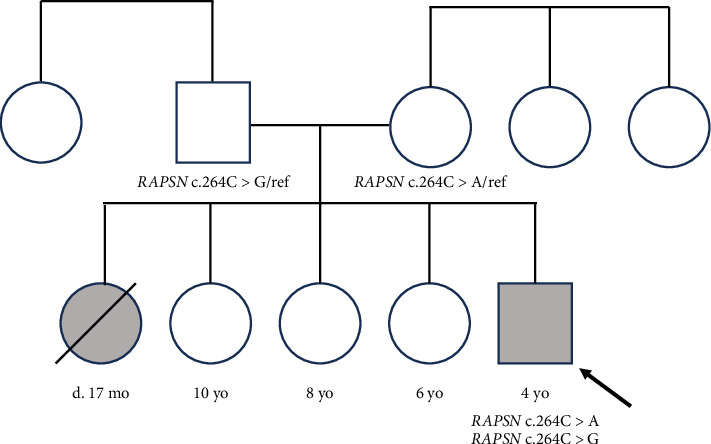 Figure 1
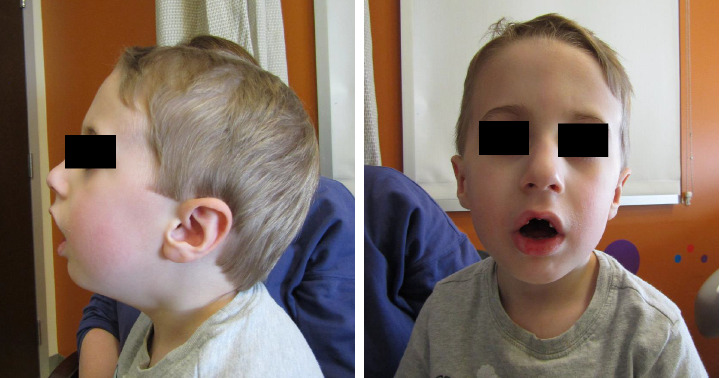 Figure 2
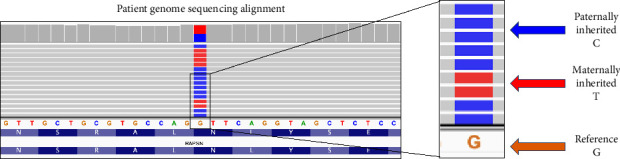 Figure 3
 Figure 4
Peer Reviews
No public reviews on file for this paper yet. If you reviewed it on a platform where reviews are public (OpenReview, ICLR, NeurIPS, ICML), you can paste yours below so the community can read it here.
Videos
No videos yet. Explain this paper in a talk, walkthrough, or lecture? Add one.
Taxonomy
TopicsMyasthenia Gravis and Thymoma · Cellular transport and secretion · Glycogen Storage Diseases and Myoclonus