Role of S100 family proteins in colorectal cancer (CRC): an overview of their potential function as new biomarkers and therapeutic agents
Hamideh Raeisi, Leili Rejali, Nayeralsadat Fatemi, Amir Sadeghi, Zahra Sadeghloo, Mohammad Reza Zali, Ehsan Nazemalhosseini Mojarad

TL;DR
This review explores how S100 family proteins contribute to colorectal cancer and their potential as biomarkers and therapeutic targets.
Contribution
The paper provides a comprehensive overview of S100 proteins' roles in CRC progression and their therapeutic potential.
Findings
S100 proteins influence CRC through pathways like NF-κB, affecting proliferation and metastasis.
Altered S100 expression is linked to tumourigenesis and cancer progression in CRC.
S100 proteins show promise as biomarkers and therapeutic agents for CRC treatment.
Abstract
Colorectal cancer (CRC) is the second deadliest cancer worldwide, posing a great threat to human health and a social burden. Various genetic and epigenetic alterations can activate tumourigenesis-related signalling pathways, leading to CRC development and progression. Over the past two decades, the understanding of the role of S100 family proteins in different types of cancer has received great attention. S100 proteins, as intracellular and extracellular, play important roles in regulating various cellular processes, such as calcium homeostasis, apoptosis, tumour cell proliferation, invasion and motility. It is well documented that alteration in expression of S100 proteins can be associated with tumourigenesis and cancer progression. These proteins play important roles in CRC carcinogenesis by activating different signalling pathways, especially the nuclear factor kappa B (NF-κB)…
Genes, proteins, chemicals, diseases, species, mutations and cell lines named across the full text — each resolved to its canonical identifier and authoritative record.
Click any figure to enlarge with its caption.
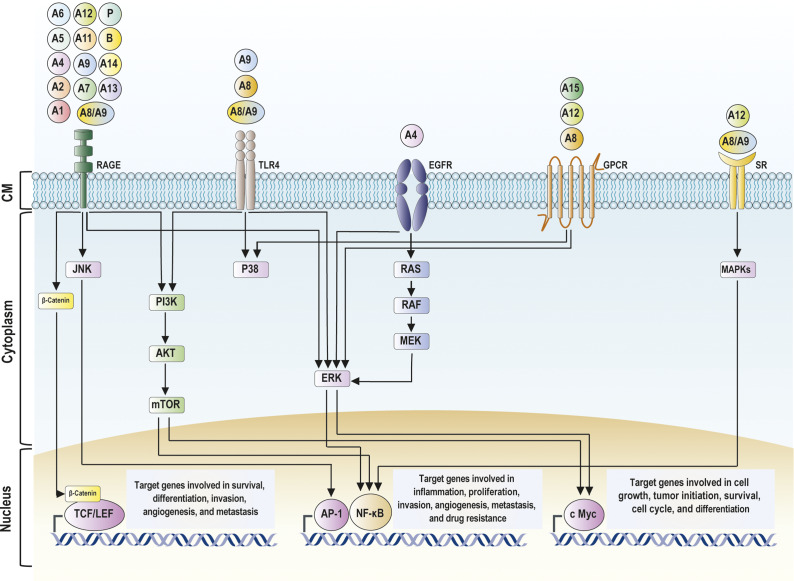 Figure 1
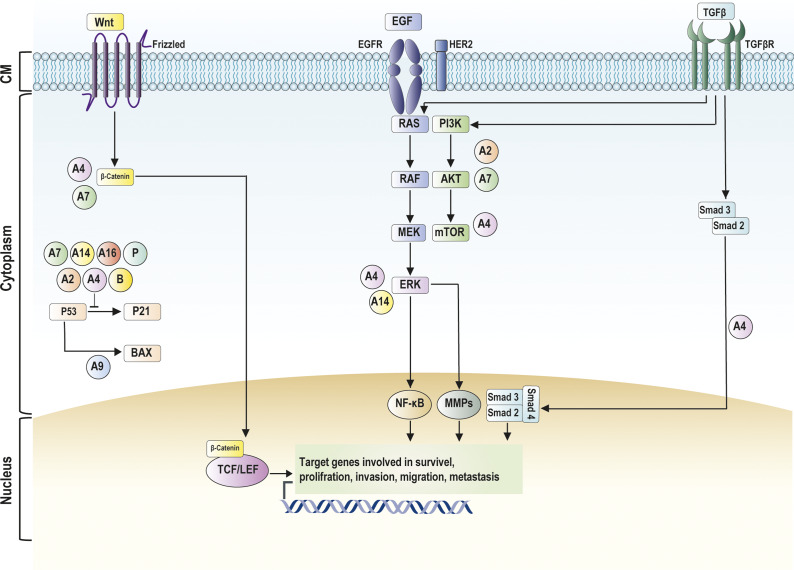 Figure 2
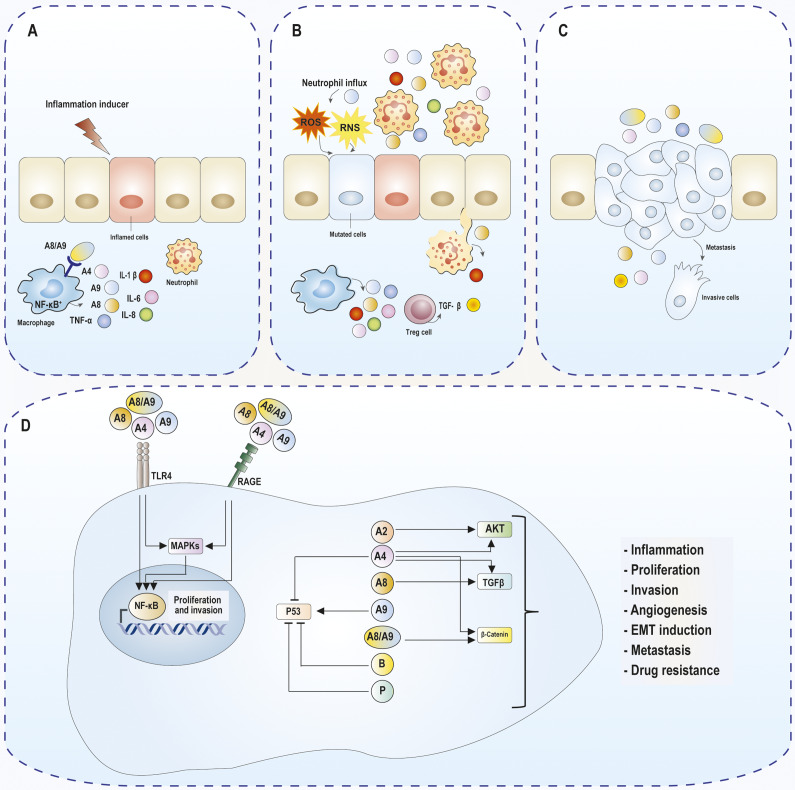 Figure 3
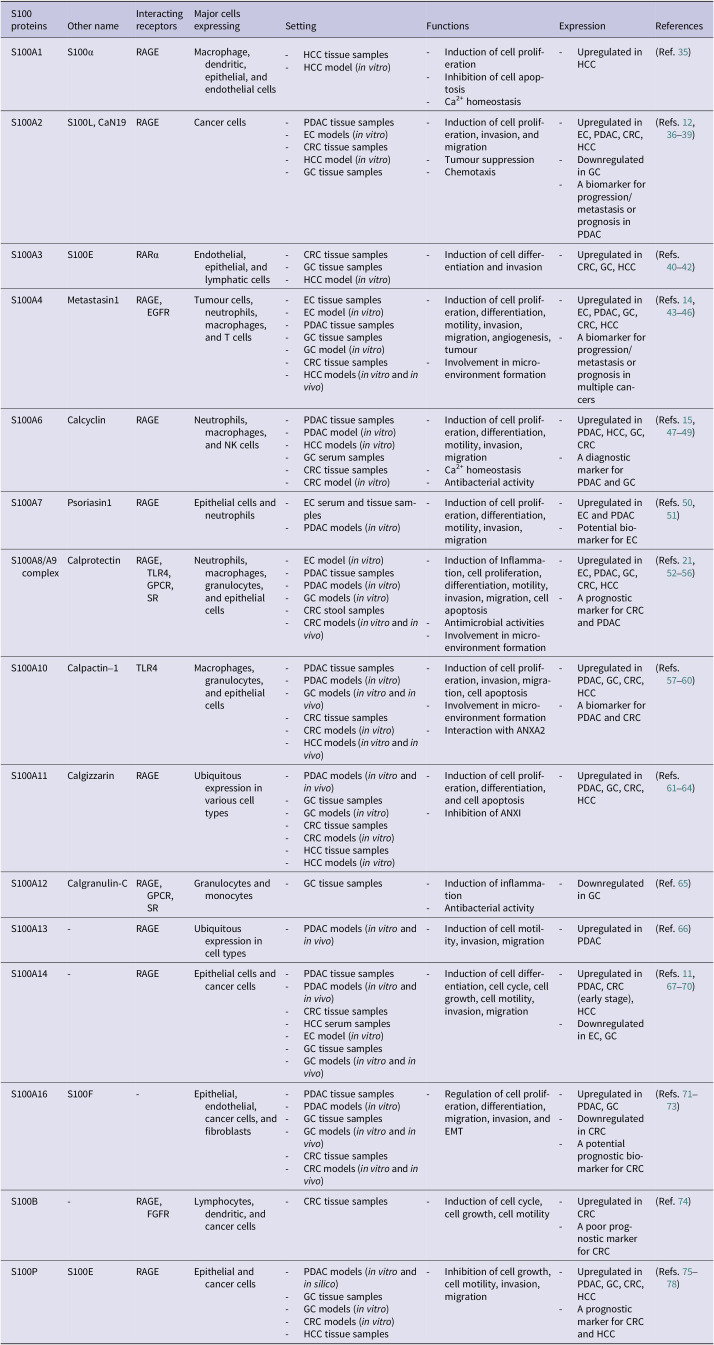 Figure 4
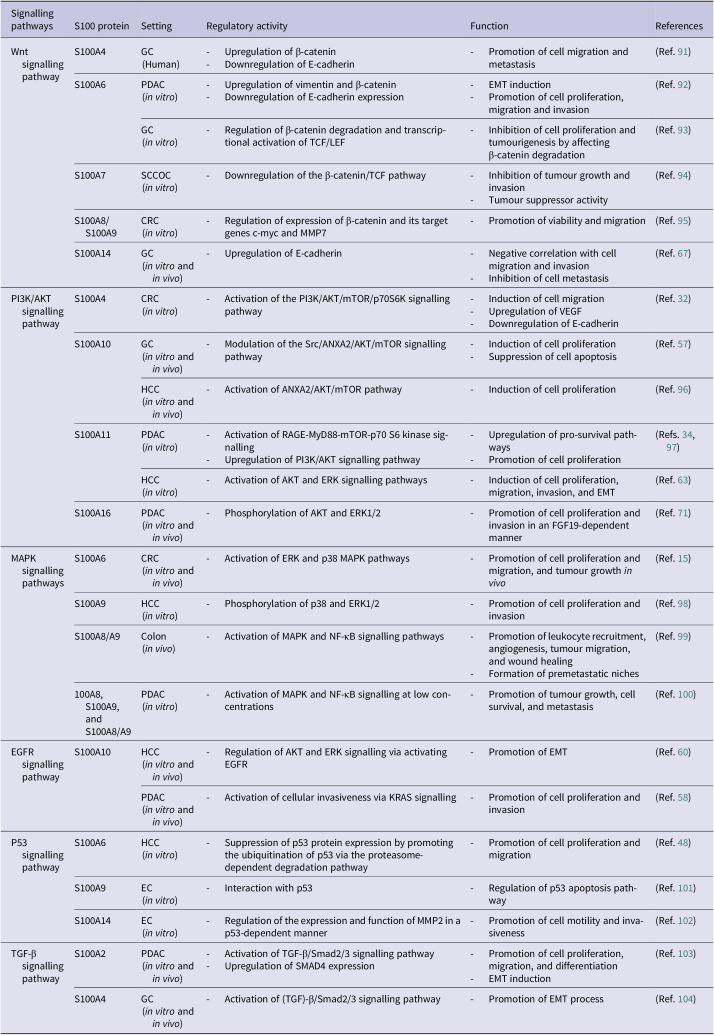 Figure 5
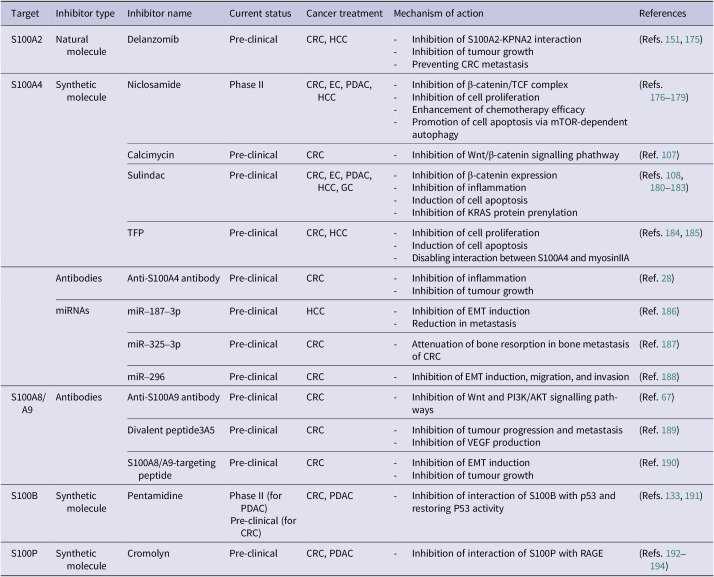 Figure 6
Peer Reviews
No public reviews on file for this paper yet. If you reviewed it on a platform where reviews are public (OpenReview, ICLR, NeurIPS, ICML), you can paste yours below so the community can read it here.
Videos
No videos yet. Explain this paper in a talk, walkthrough, or lecture? Add one.
Taxonomy
TopicsS100 Proteins and Annexins · Biomarkers in Disease Mechanisms · Clusterin in disease pathology