Cohort-resolved excess mortality in Germany (2000-2024): Patterns and implications for the SARS-CoV-2 era
Robert Rockenfeller, Michael Günther, Kin Israel Notarte, Kin Israel Notarte, Kin Israel Notarte

TL;DR
This study examines age-specific mortality patterns in Germany from 2000 to 2024, revealing hidden trends during the SARS-CoV-2 pandemic that are not visible in overall population data.
Contribution
The paper introduces a cohort-resolved framework to detect age-specific excess and under-mortality patterns in Germany over two decades.
Findings
Sustained excess mortality was observed in adults aged 75-79 and 35-49 from late 2021 to 2024.
Persistent under-mortality was found in cohorts aged 30-34 and 55-59.
Excess mortality in older age groups in previous years suggests generational vulnerabilities linked to early-life adversity.
Abstract
Understanding the impact of the SARS-CoV-2 pandemic on mortality requires more than aggregate statistics. While whole-population indicators have informed policy, they risk concealing subgroup-specific patterns. We analysed all-cause mortality in Germany from 2000 to 2024 using a weekly, cohort-resolved framework across 15 age groups to detect excess and under-mortality before, during, and after the pandemic. Expected mortality was modelled using exponential trends from two decades of pre-pandemic data. Deviations from expectation were quantified as normalised excess all-cause mortality rates (NEAMR), enabling the identification of significant, age-specific anomalies. We found sustained NEAMR in adults aged 75-79 and 35-49 from late 2021 through 2024—patterns absent in whole-population trends. Conversely, cohorts aged 30-34 and 55-59 showed persistent under-mortality. Earlier excess…
Genes, proteins, chemicals, diseases, species, mutations and cell lines named across the full text — each resolved to its canonical identifier and authoritative record.
Click any figure to enlarge with its caption.
 Figure 1
 Figure 2
 Figure 3
 Figure 4
 Figure 5
 Figure 6
 Figure 7
 Figure 8
 Figure 9
 Figure 10
 Figure 11
 Figure 12
 Figure 13
 Figure 14
 Figure 15
 Figure 16
 Figure 17
 Figure 18
 Figure 19
 Figure 20
 Figure 21
 Figure 22
 Figure 23
 Figure 24
 Figure 25
 Figure 26
 Figure 27
 Figure 28
 Figure 29
 Figure 30
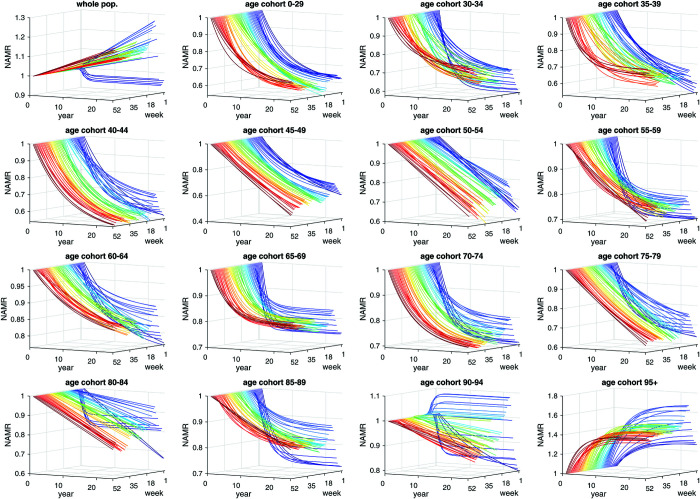 Figure 31
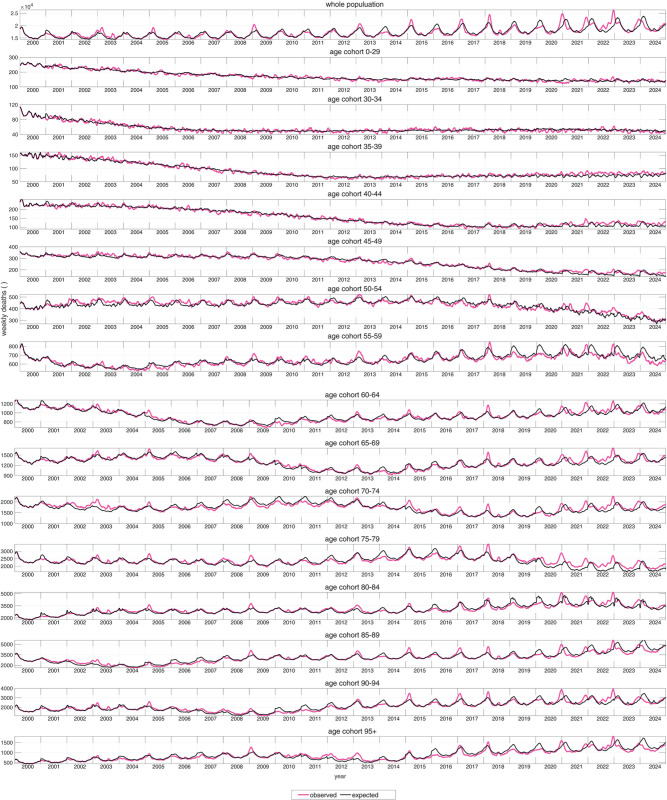 Figure 32
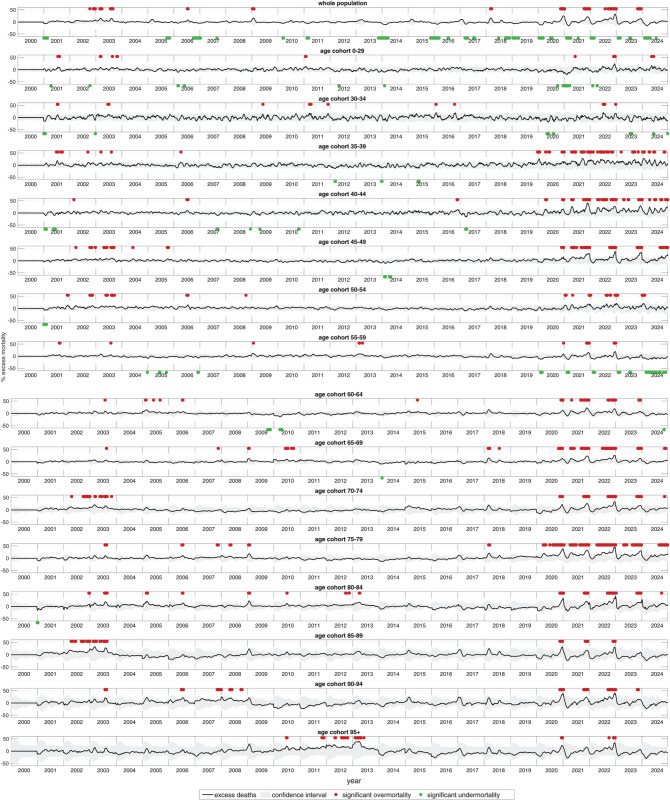 Figure 33
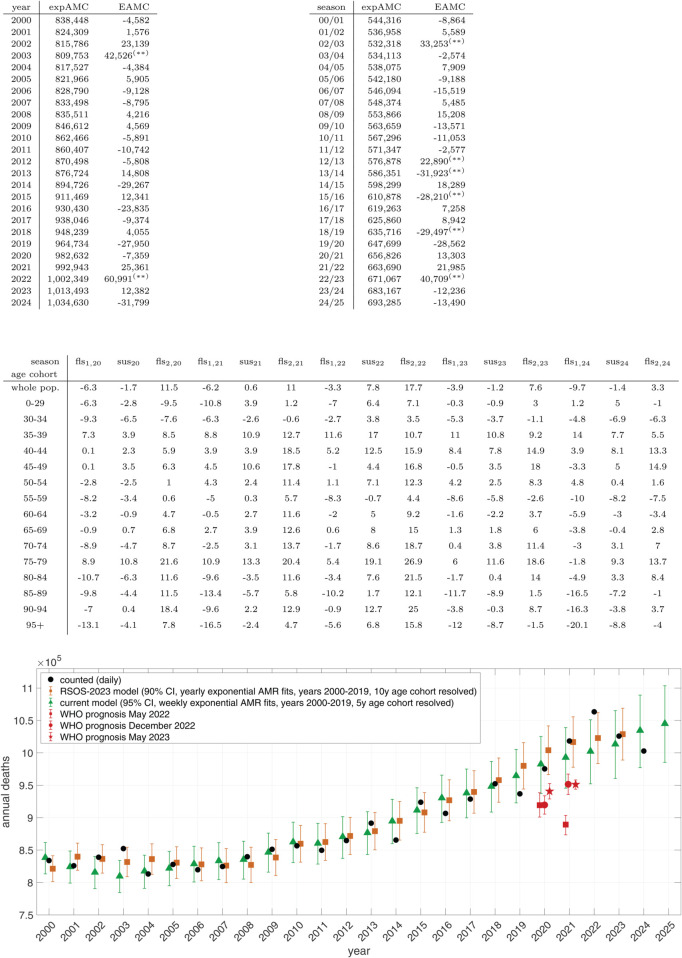 Figure 34
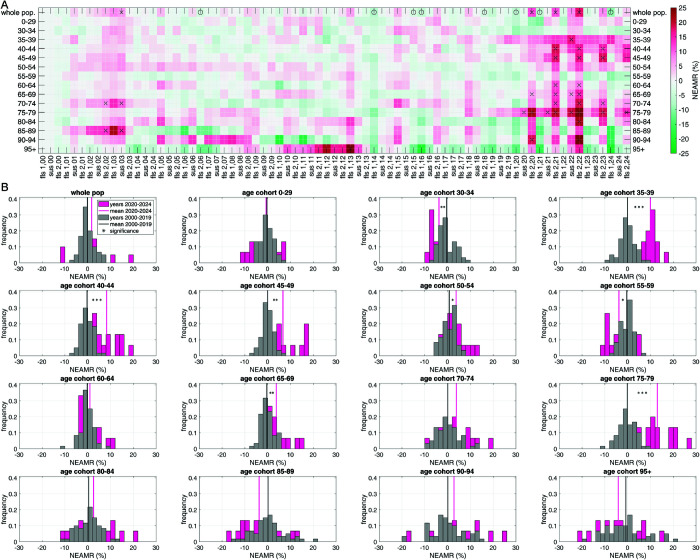 Figure 35
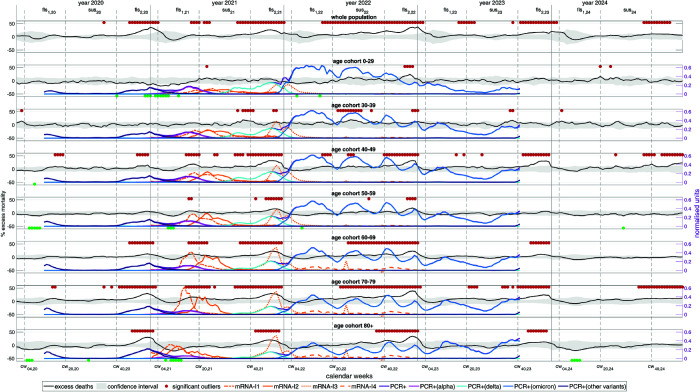 Figure 36
 Figure 37
 Figure 38
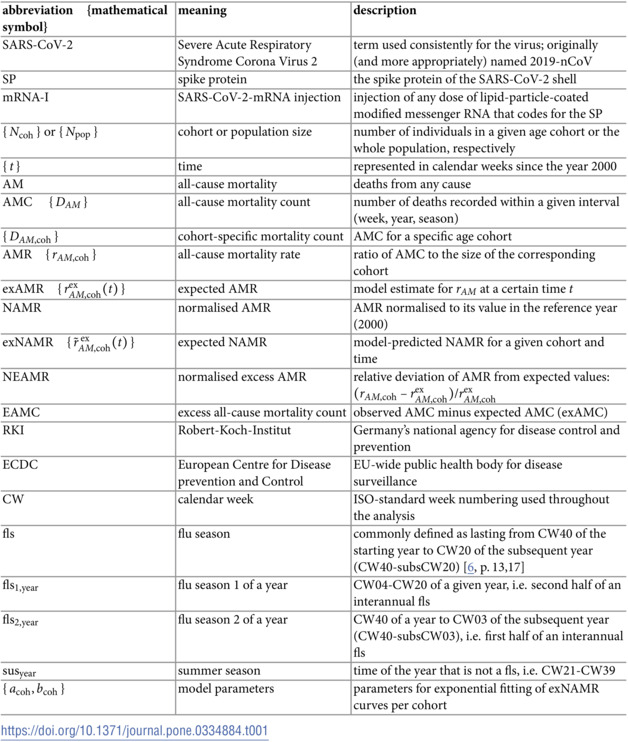 Figure 39
Peer Reviews
No public reviews on file for this paper yet. If you reviewed it on a platform where reviews are public (OpenReview, ICLR, NeurIPS, ICML), you can paste yours below so the community can read it here.
Videos
No videos yet. Explain this paper in a talk, walkthrough, or lecture? Add one.
Taxonomy
TopicsHealth disparities and outcomes · Global Health Care Issues · Climate Change and Health Impacts