Minimally invasive detection of early-stage opisthorchiasis-associated cholangiocarcinoma using label-free surface-enhanced Raman spectroscopy (SERS) of hamster serum
Apisit Chaidee, Suppakrit Kongsintaweesuk, Thatsanapong Pongking, Keerapach Tunbenjasiri, Aye Myat Mon, Chawalit Pairojkul, Pakornkiat Tanasuka, Tullayakorn Plengsuriyakarn, Kesara Na-Bangchang, Naruechar Charoenram, David Blair, Somchai Pinlaor

TL;DR
This study shows that a non-invasive technique using Raman spectroscopy and machine learning can detect early signs of a deadly bile duct cancer in hamsters.
Contribution
A label-free SERS-based method for early detection of CCA in a hamster model is proposed and validated.
Findings
SERS combined with machine learning achieved 93% sensitivity and 95% specificity for detecting CCA and precancerous lesions.
The method showed an accuracy of ≥67% with an AUC exceeding 0.67 for early-stage detection.
Histopathology confirmed the progression from inflammation to CCA in the hamster model.
Abstract
Cholangiocarcinoma (CCA) is a deadly cancer often detected late. Current diagnostic methods, such as ultrasound and invasive biopsies, have limitations; there is a critical need for a rapid, minimally invasive and effective strategy for the early diagnosis and staging of CCA. We aimed to address this need using serum samples and label-free surface-enhanced Raman spectroscopy (SERS) combined with machine learning. CCA development was induced in hamsters using a combination of Opisthorchis viverrini infection and administration of N-nitrosodimethylamine, with induction time courses spanning 1–5 month(s). Normal and pathological stages (inflammation, precancerous lesion, and CCA) were assigned based on histopathological features, as well as the expression of cytokeratin 19 and alpha-fetoprotein. Raman spectra were subjected to dimensionality reduction using principal component analysis,…
Genes, proteins, chemicals, diseases, species, mutations and cell lines named across the full text — each resolved to its canonical identifier and authoritative record.
Click any figure to enlarge with its caption.
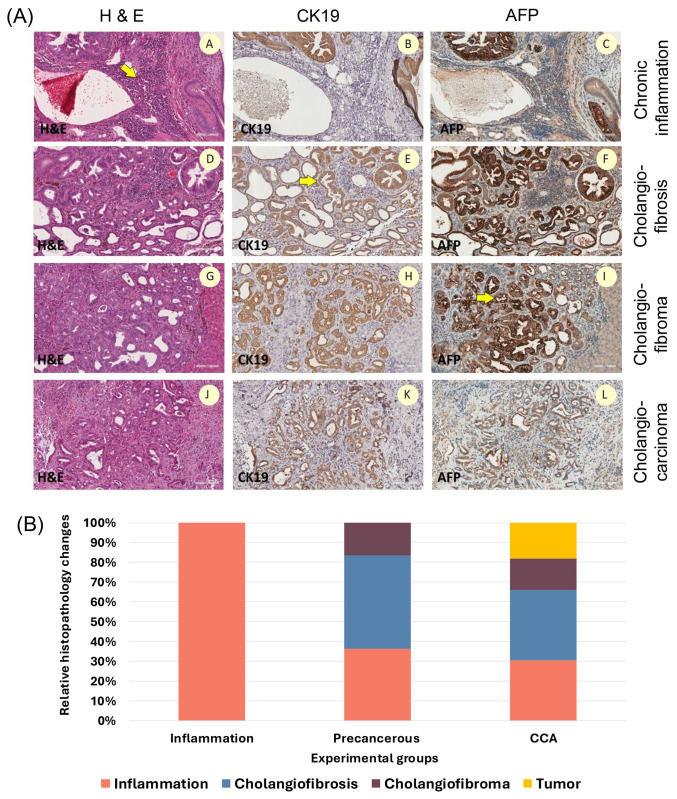 Figure 1
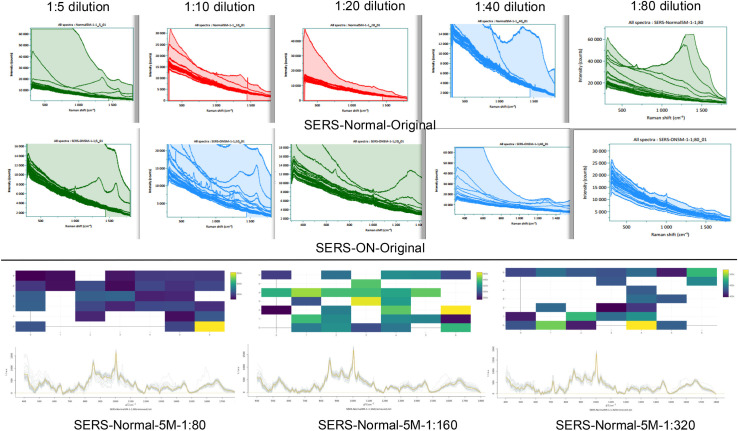 Figure 2
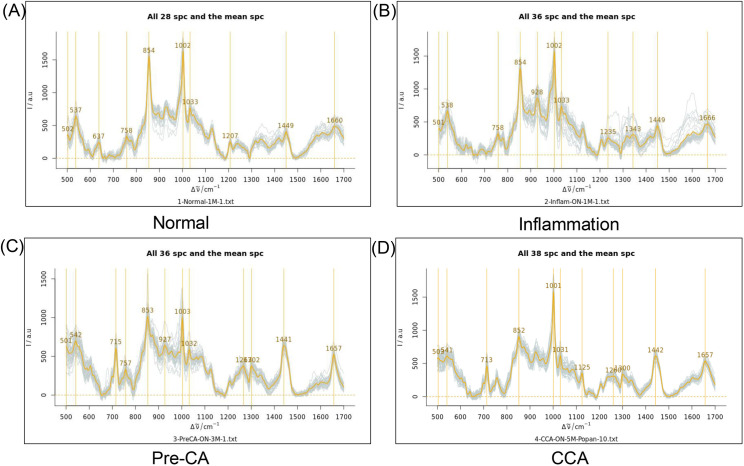 Figure 3
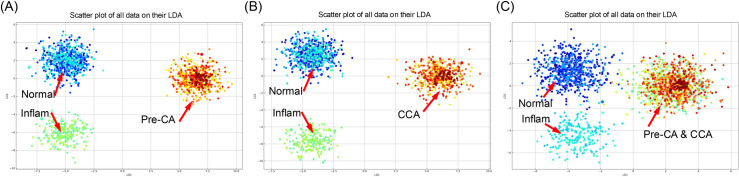 Figure 4
 Figure 5
 Figure 6
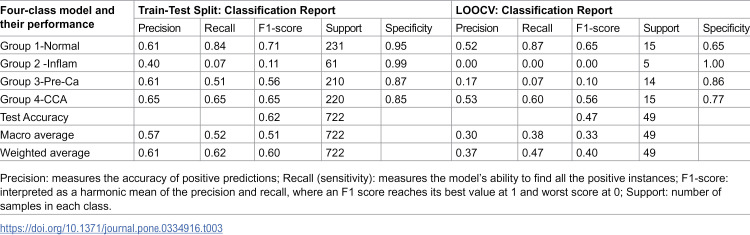 Figure 7
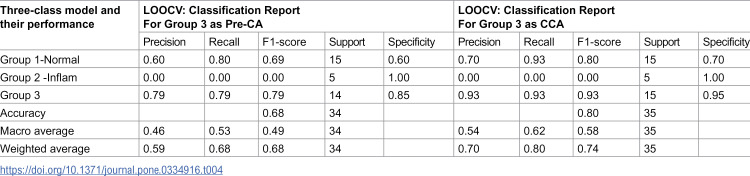 Figure 8
Peer Reviews
No public reviews on file for this paper yet. If you reviewed it on a platform where reviews are public (OpenReview, ICLR, NeurIPS, ICML), you can paste yours below so the community can read it here.
Videos
No videos yet. Explain this paper in a talk, walkthrough, or lecture? Add one.
Taxonomy
TopicsCholangiocarcinoma and Gallbladder Cancer Studies · Organ Transplantation Techniques and Outcomes · Gallbladder and Bile Duct Disorders