Exosomes combined with extra virgin olive oil reduces lipogenesis, oxidative stress, and inflammation in non-alcoholic fatty liver disease model
Bassam F. Alowaiesh, Doaa Ibrahim, Ayman A. Saleh, Haifa A. S. Alhaithloul, Abdulsalam A. M. Alkhaldi, Ahmed Abdelfattah-Hassan, Hualin Wang, Hualin Wang, Hualin Wang, Hualin Wang

TL;DR
Combining exosomes and extra virgin olive oil improves liver health in a model of fatty liver disease by reducing fat buildup and inflammation.
Contribution
This study demonstrates that combining exosomes with extra virgin olive oil provides better treatment outcomes for NAFLD than either treatment alone.
Findings
Exosomes combined with extra virgin olive oil improved plasma lipid profiles and antioxidant levels.
The combination reduced liver lipid accumulation and preserved liver architecture.
Gene expression related to lipogenesis and inflammation was normalized in the combined treatment group.
Abstract
In response to high-fat-diet, excessive lipid accumulation in the liver results in chronic damage and inflammation. Olive oil has been studied for its health beneficial effects in hyperlipidemia (mainly has lipids lowering and antioxidative potential) while mesenchymal stem cells derived exosomes (MSCs-Exo) are investigated mainly for their tissue regenerative and anti-inflammatory potential. In the present study we aimed to combine the beneficial effects of Extra Virgin Olive Oil (EVOO) and MSCs-Exo on a model of high-fat-diet induced Non-Alcoholic Fatty Liver Disease (NAFLD, which still lacks effective treatment protocols) and detect whether an improved response could be achieved from this combination. Sprague Dawley rats (n = 40) were randomly assigned to five groups (n = 8/group), control, hyperlipidemia (HL), HL+EVOO, HL + Exo and HL + Exo+EVOO. Our results show that better…
Genes, proteins, chemicals, diseases, species, mutations and cell lines named across the full text — each resolved to its canonical identifier and authoritative record.
Click any figure to enlarge with its caption.
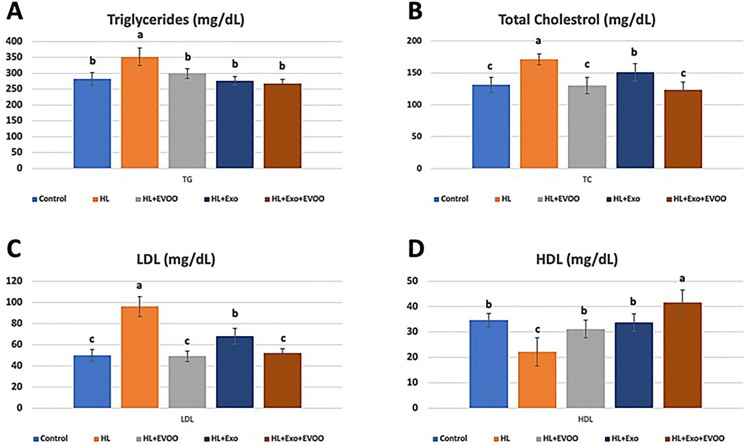 Figure 1
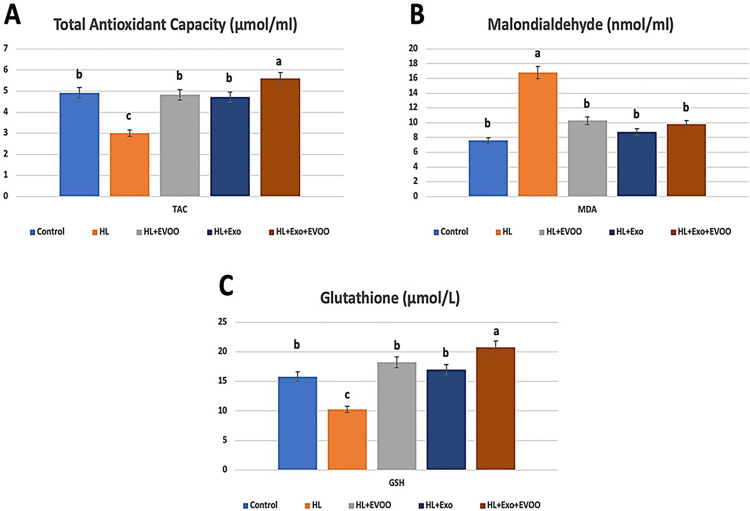 Figure 2
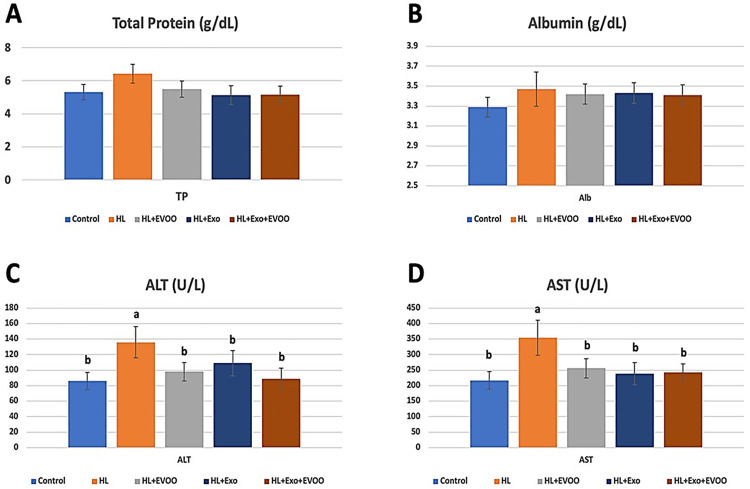 Figure 3
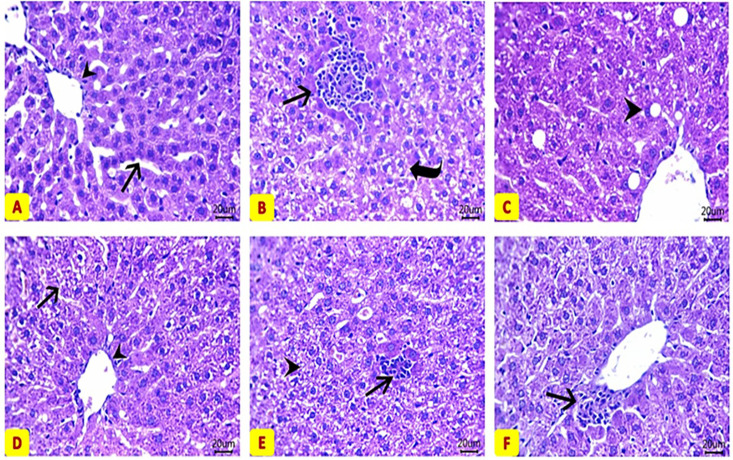 Figure 4
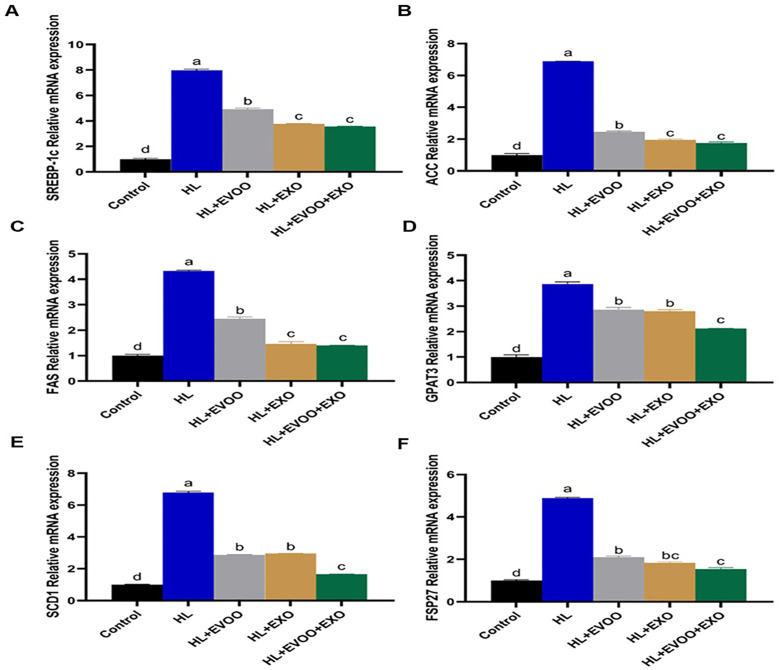 Figure 5
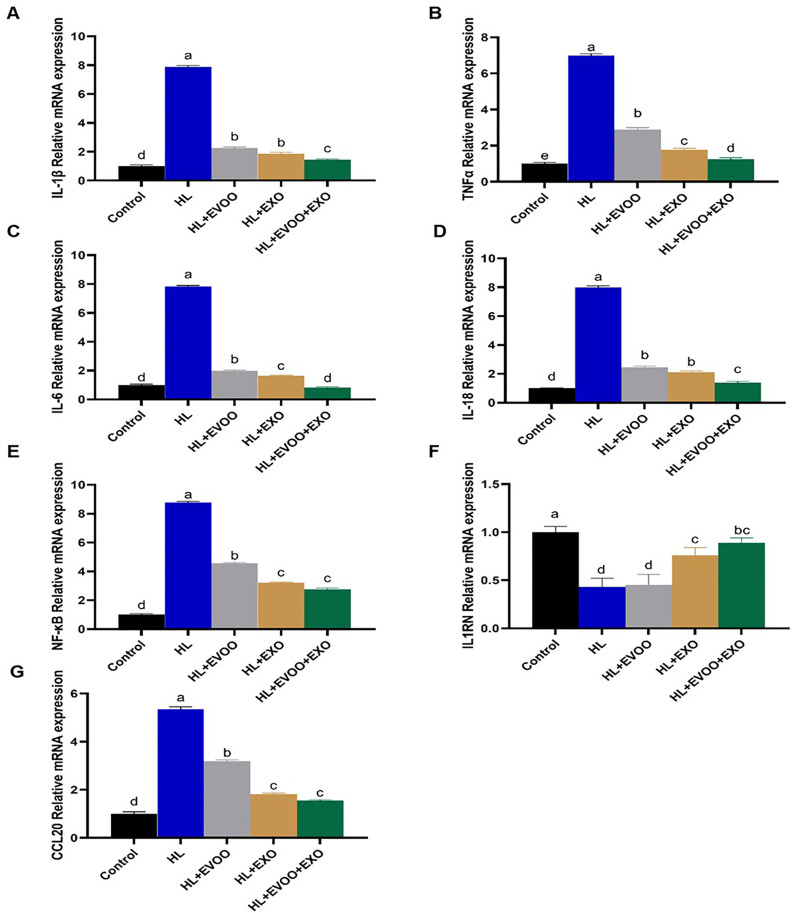 Figure 6
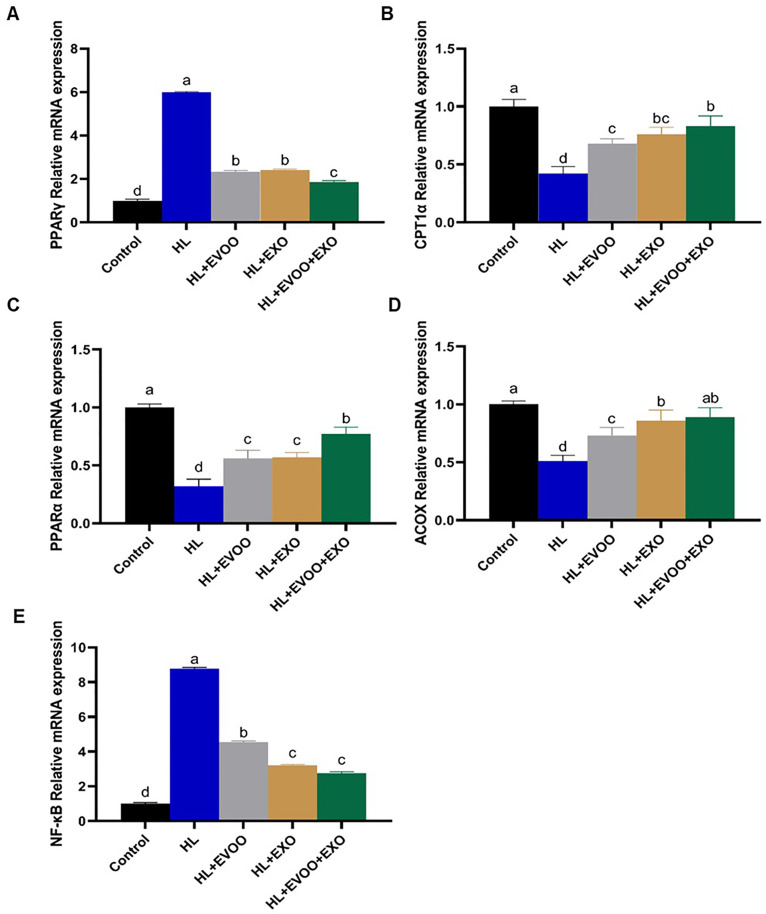 Figure 7
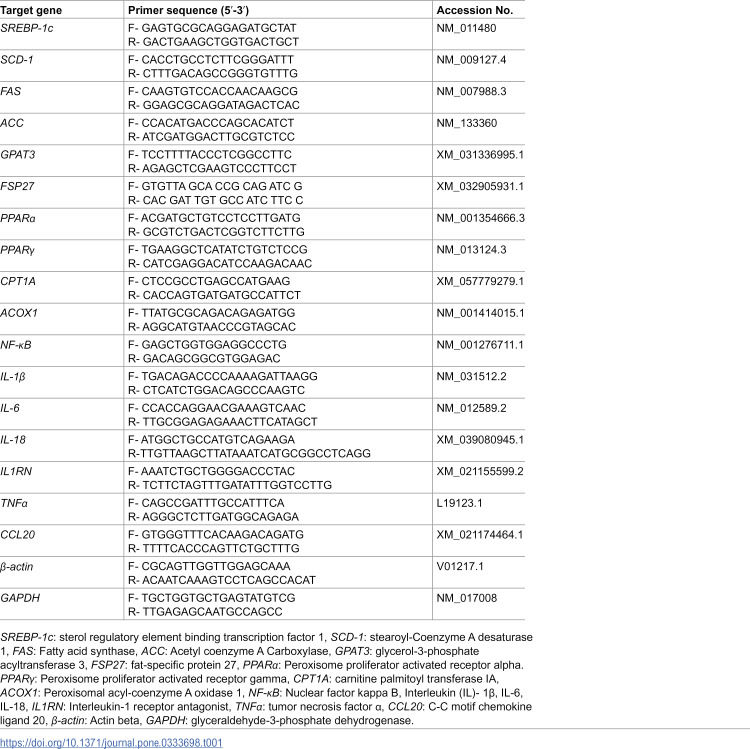 Figure 8
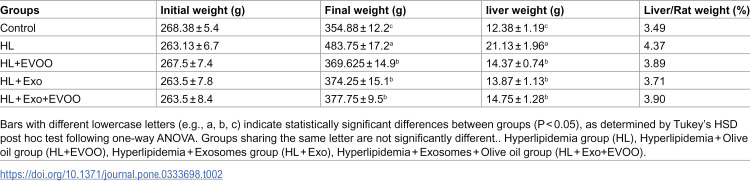 Figure 9
Peer Reviews
No public reviews on file for this paper yet. If you reviewed it on a platform where reviews are public (OpenReview, ICLR, NeurIPS, ICML), you can paste yours below so the community can read it here.
Videos
No videos yet. Explain this paper in a talk, walkthrough, or lecture? Add one.
Taxonomy
TopicsLiver Disease Diagnosis and Treatment · Cholesterol and Lipid Metabolism · Edible Oils Quality and Analysis