Standardized protocol for laboratory rearing and breeding of the Lymnaeidae snail, Radix natalensis (Krauss, 1848)
Agrippa Dube, Chester Kalinda, Tawanda Manyangadze, Tendai Makoni, Moses John Chimbari, Sthefane D'ávila, Clement Ameh Yaro, Clement Ameh Yaro, Clement Ameh Yaro

TL;DR
This study developed a cost-effective method for breeding Radix natalensis snails in the lab, which are important in the spread of a parasitic disease.
Contribution
A standardized, low-cost protocol for rearing and breeding Radix natalensis snails in laboratory settings.
Findings
Group B snails had the lowest mortality (13%) and highest offspring production (500 F1).
Group C provided a cost-effective alternative with comparable egg mass production.
Spring water increased breeding costs, making group C's method more practical for large-scale breeding.
Abstract
Freshwater lymnaeid snails are involved in the transmission of fascioliasis in tropical and subtropical Africa, Asia, as well as in temperate regions. This study improved and standardized laboratory rearing and breeding of first-generation (F1) R. natalensis using field-collected F0 snails. Ninety field-collected R. natalensis adult snails with shell heights of 4–5 mm were divided into three experimental treatment groups: A, B, and C. Each experimental treatment group comprised of ten (10) 2L containers, with each containing 3 snails. Group A, the control, was fed Elodea sp. weed powder and Cyperus papyrus twigs from snail-sampling sites as oviposition material. Group A containers were filled with water from the snail sample sites. Spring-watered snails in experimental group B were fed with dried lettuce, fish flakes, and eggshells. In experimental group C, snails were fed with algal…
Genes, proteins, chemicals, diseases, species, mutations and cell lines named across the full text — each resolved to its canonical identifier and authoritative record.
Click any figure to enlarge with its caption.
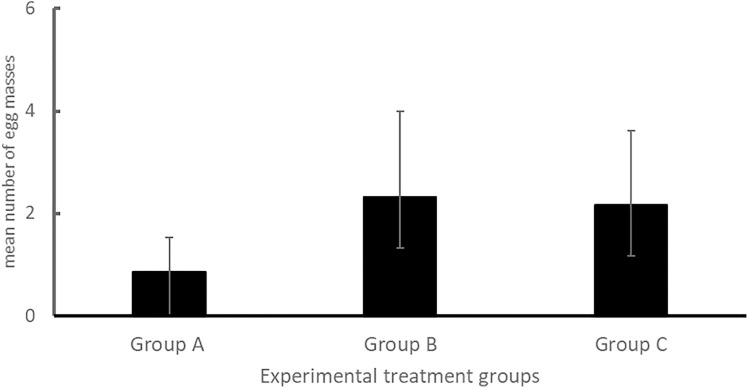 Figure 1
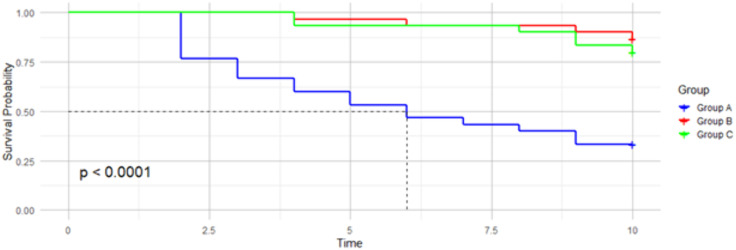 Figure 2
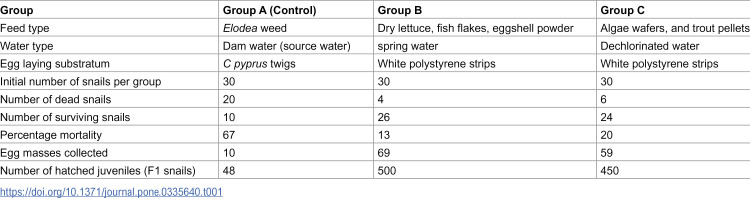 Figure 3
 Figure 4
 Figure 5
Peer Reviews
No public reviews on file for this paper yet. If you reviewed it on a platform where reviews are public (OpenReview, ICLR, NeurIPS, ICML), you can paste yours below so the community can read it here.
Videos
No videos yet. Explain this paper in a talk, walkthrough, or lecture? Add one.
Taxonomy
TopicsMollusks and Parasites Studies · Helminth infection and control · Parasite Biology and Host Interactions