Prediction of immunogenicity of Rh antigens using in silico analysis of binding to human leukocyte antigen peptide, Basic/Translational Research
Hee-Jeong Youk, Yong-Joon Cho, Yong-Hyun Han, Seong Who Kim, Dae-Hyun Ko

TL;DR
This study uses computer analysis to predict how likely certain blood group antigens are to cause immune reactions based on their interaction with HLA proteins.
Contribution
The study introduces a novel in silico approach to predict the immunogenicity of Rh antigens through HLA peptide binding analysis.
Findings
RhD and RhCE antigens showed distinct hotspots for HLA class II peptides.
Hotspot distribution varied across HLA loci and ethnic groups.
The study identified specific amino acid regions and substitutions linked to immunogenicity.
Abstract
The association between human leukocyte antigen (HLA) types and blood group alloimmunization remains unclear. Previous studies have predominantly focused on predicting immunization events in cancer immunotherapy, but not blood group antigens. In this study, we investigated whether HLA peptide binding could predict the immunogenicity of blood group antigens. We performed in silico binding analysis of Rh antigens and representative HLA class II alleles using NetMHCpan-4.1 and NetMHCIIpan-4.1 algorithms. The distribution of strong binding regions (hotspots) differed across HLA loci and ethnic groups. In particular, the RhD and RhCE antigens showed several distinct hotspots for the HLA-DRB, -DQA-DQB, and -DPA-DPB HLA class II peptides. A hotspot of RHD*01W.1 in HLA-DRB had a substitution in p.Val270Gly. The number of hotspots and core amino acids was different for each HLA locus, and the…
Genes, proteins, chemicals, diseases, species, mutations and cell lines named across the full text — each resolved to its canonical identifier and authoritative record.
Click any figure to enlarge with its caption.
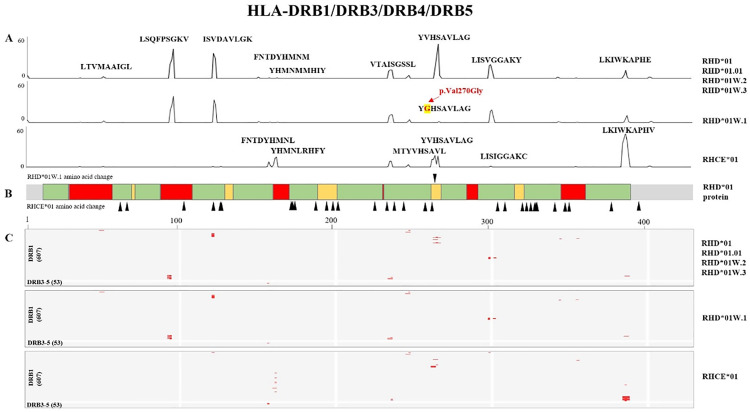 Figure 1
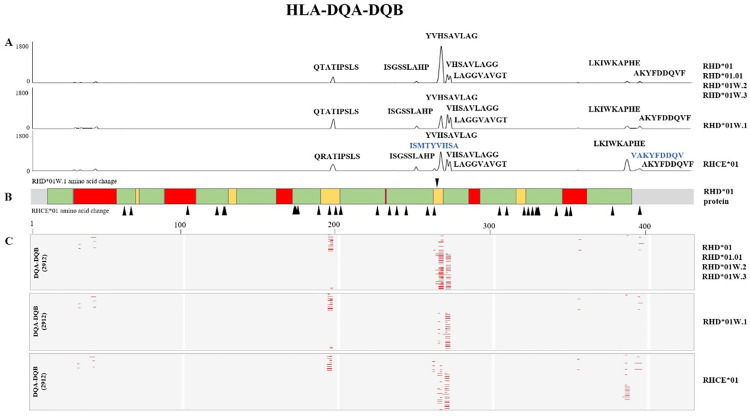 Figure 2
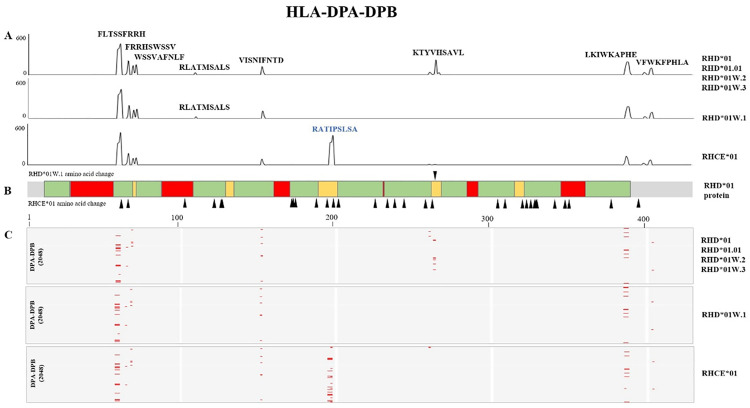 Figure 3
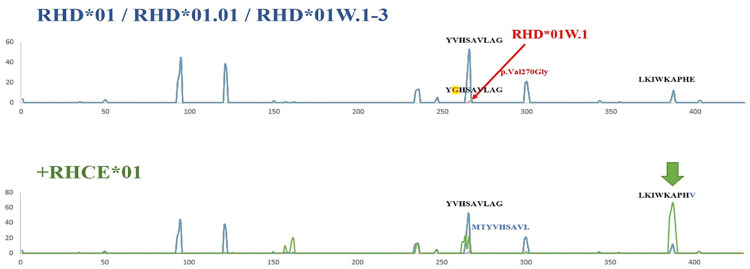 Figure 4
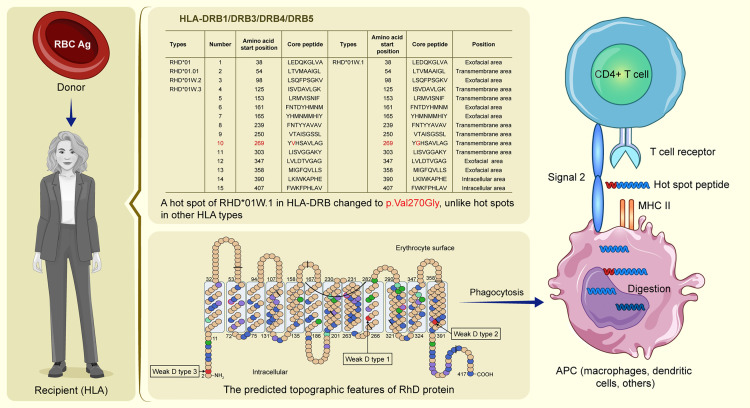 Figure 5
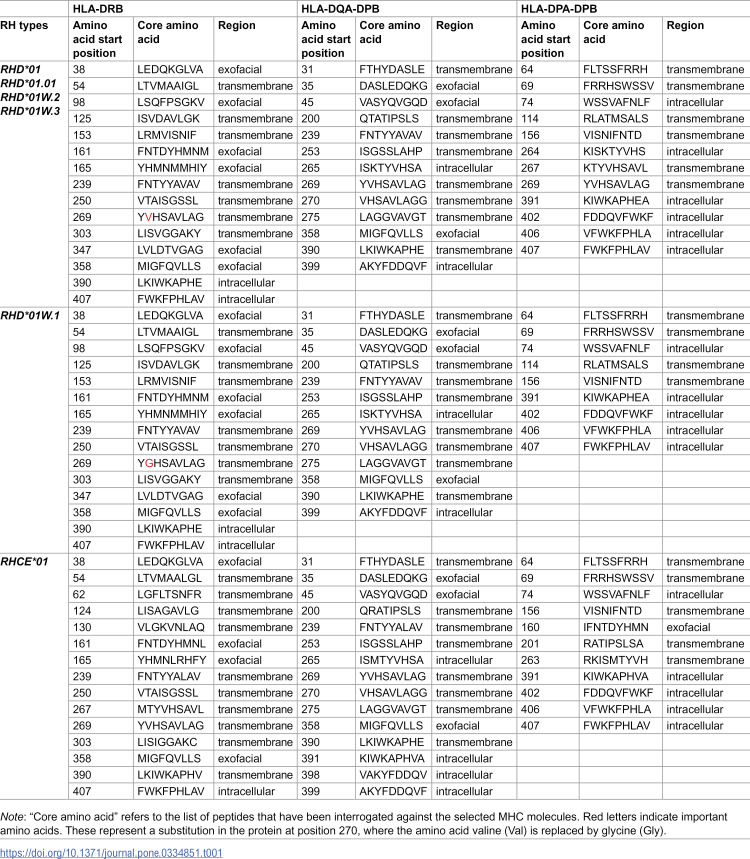 Figure 6
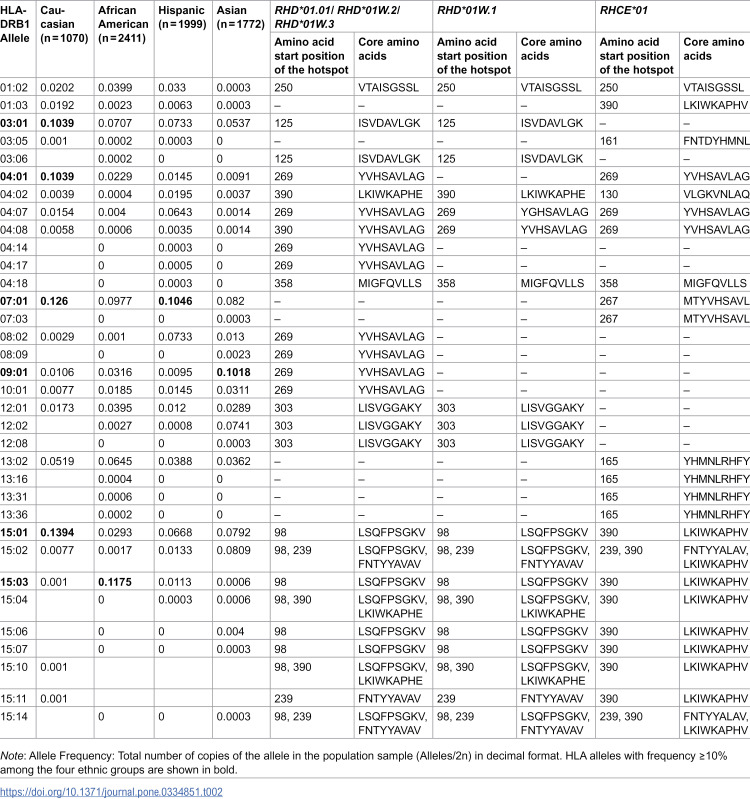 Figure 7
Peer Reviews
No public reviews on file for this paper yet. If you reviewed it on a platform where reviews are public (OpenReview, ICLR, NeurIPS, ICML), you can paste yours below so the community can read it here.
Videos
No videos yet. Explain this paper in a talk, walkthrough, or lecture? Add one.
Taxonomy
TopicsBlood groups and transfusion · Hepatitis B Virus Studies · Microbial infections and disease research