Genomic variance in Yucatan pigs and detection of donor-derived cell-free DNA after heart transplantation
Michelle Mendiola Pla, Joseph A. Prinz, Kishen Mitra, Franklin H. Lee, Matthew F. Smith, Alejandro Alvarez Lobo, Carmelo A. Milano, Dawn E. Bowles, Devjanee Swain-Lenz

TL;DR
This study explores genetic differences in Yucatan pigs and uses cell-free DNA to detect organ rejection after heart transplants.
Contribution
The study provides a detailed genomic characterization of Yucatan pigs and validates cfDNA as a tool for detecting donor-derived DNA in transplant recipients.
Findings
Yucatan pigs exhibit genomic variance comparable to humans, making them suitable for preclinical organ transplant studies.
Donor-derived cell-free DNA can be detected and distinguished in the blood of transplant recipients.
cfDNA analysis offers a non-invasive method for monitoring acute rejection after heart transplantation.
Abstract
Acute rejection, one of the most devastating complications that can occur following organ transplantation, is caused by antigenic differences between the organ donor and the recipient. Following cardiac transplantation, an estimated 12% of patients will experience at least one episode of moderate or severe acute rejection in the first year after transplantation. To better understand the genetic mechanisms underlying acute rejection, Yucatan pigs (YP) serve as an ideal preclinical model. Translatability of the YP preclinical model relies on the fidelity observed between preclinical and clinical pathologies. Cell-free DNA (cfDNA) analysis has emerged as a blood-based, non-invasive screening tool for acute rejection of solid organs following transplantation. We present a detailed characterization of the genomic variance in YPs. The degree of variance matches that observed in humans,…
Genes, proteins, chemicals, diseases, species, mutations and cell lines named across the full text — each resolved to its canonical identifier and authoritative record.
Click any figure to enlarge with its caption.
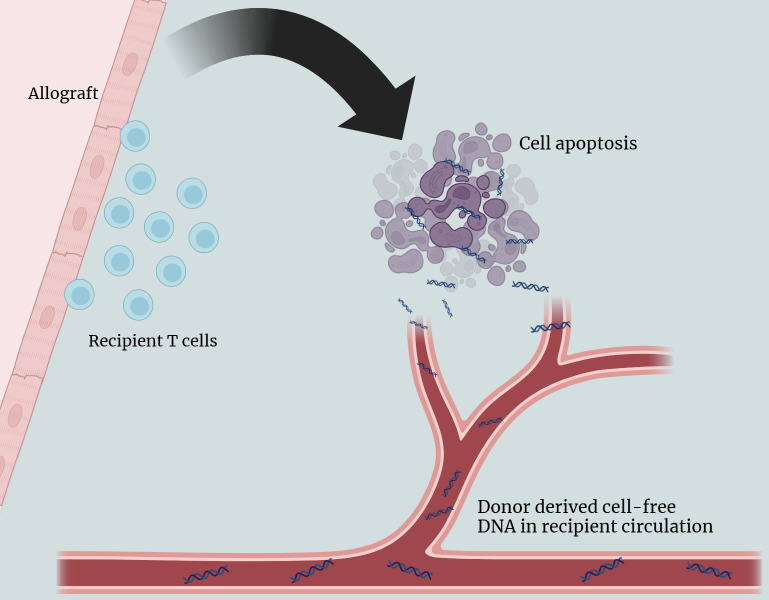 Figure 1
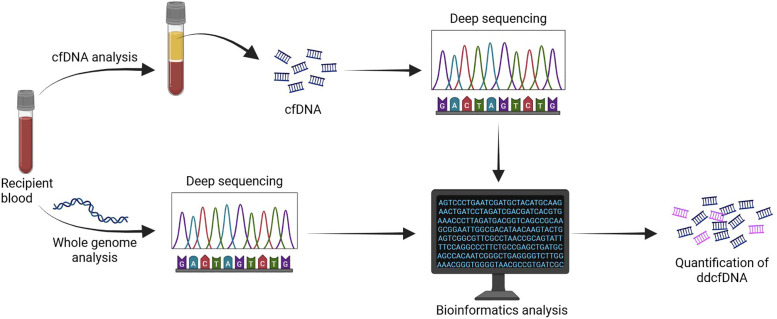 Figure 2
 Figure 3
 Figure 4
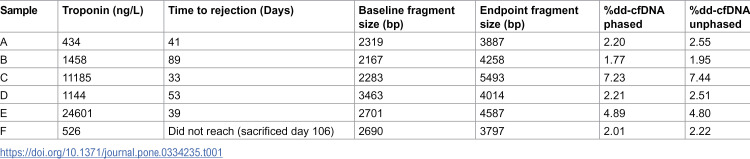 Figure 5
Peer Reviews
No public reviews on file for this paper yet. If you reviewed it on a platform where reviews are public (OpenReview, ICLR, NeurIPS, ICML), you can paste yours below so the community can read it here.
Videos
No videos yet. Explain this paper in a talk, walkthrough, or lecture? Add one.
Taxonomy
TopicsTransplantation: Methods and Outcomes · Animal Virus Infections Studies · Organ Transplantation Techniques and Outcomes