Extended Directed Fuzzy Social Network Analysis: A framework and application to curriculum networks in Chinese vocational education
Borui Zuo, Keqi Shang, Jie Zhang, Manyu Peng, Zhiming Zhu

TL;DR
This paper introduces a new framework for analyzing fuzzy social networks, applied to curriculum networks in Chinese vocational education to identify core courses and highlight differences between majors.
Contribution
The paper proposes the Extended Directed Fuzzy Social Network Analysis Framework (EFDSNAF) and introduces the Total Fuzzy Intensity of Path (TFIP) for improved network analysis.
Findings
EFDSNAF effectively identifies core courses in vocational education curriculum networks.
The framework captures essential disciplinary differences between two urban rail transit majors.
Optimized fuzzy centrality measures demonstrate improved efficacy in analyzing network relationships.
Abstract
Due to the differences in node types and the diversity of network relationships, Fuzzy Social Network Analysis (FSNA) needs to specifically address the issues of network heterogeneity and relationship ambiguity. To address this challenge, we propose a new analytical framework called Extended Directed Fuzzy Social Network Analysis Framework (EFDSNAF), which establishes the Typical Connections to assist in evaluating the fuzzy network. Meanwhile, in the area of fuzzy centrality measures, we enhance the variability of the Fuzzy Intensity of Path and propose the term “Total Fuzzy Intensity of Path” (TFIP), considering the distinct characteristics of different networks may lead to variations in path intensity expressions and differences in closeness relationships. Based on this, we optimize the computational methods for fuzzy betweenness centrality and fuzzy closeness centrality, with the…
Genes, proteins, chemicals, diseases, species, mutations and cell lines named across the full text — each resolved to its canonical identifier and authoritative record.
Click any figure to enlarge with its caption.
 Figure 1
 Figure 2
 Figure 3
 Figure 4
 Figure 5
 Figure 6
 Figure 7
 Figure 8
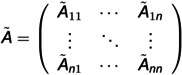 Figure 9
 Figure 10
 Figure 11
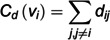 Figure 12
 Figure 13
 Figure 14
 Figure 15
 Figure 16
 Figure 17
 Figure 18
 Figure 19
 Figure 20
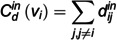 Figure 21
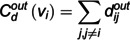 Figure 22
 Figure 23
 Figure 24
 Figure 25
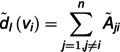 Figure 26
 Figure 27
 Figure 28
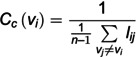 Figure 29
 Figure 30
 Figure 31
 Figure 32
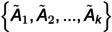 Figure 33
 Figure 34
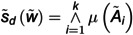 Figure 35
 Figure 36
 Figure 37
 Figure 38
 Figure 39
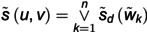 Figure 40
 Figure 41
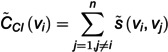 Figure 42
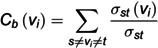 Figure 43
 Figure 44
 Figure 45
 Figure 46
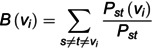 Figure 47
 Figure 48
 Figure 49
 Figure 50
Peer Reviews
No public reviews on file for this paper yet. If you reviewed it on a platform where reviews are public (OpenReview, ICLR, NeurIPS, ICML), you can paste yours below so the community can read it here.
Videos
No videos yet. Explain this paper in a talk, walkthrough, or lecture? Add one.
Taxonomy
TopicsComplex Network Analysis Techniques · Online Learning and Analytics · Innovative Teaching and Learning Methods