Sequencing and analysis of 131 SARS-CoV-2 isolates in previously sampled and unsampled regions of Jordan from 2020 to 2023
Rame Khasawneh, Andrew W. Bartlow, Shirin Almharat, Abdullah Almuhasen, Ali Alhuniti, Lena Hajaya, Al Anood Al Habashneh, Osama Alshudefat, Mohammad Dojan, Abdelghani Tbakhi, Zeena Shaheen, Eiad Atwa, Colin PS Kruse, Osama Alsmadi, Samuel I. Koehler, Nihad Al-Rashedi

TL;DR
This paper presents 131 new SARS-CoV-2 genomes from Jordan between 2020 and 2023, enhancing genomic databases and pandemic understanding.
Contribution
The study adds genomes from underrepresented regions in Jordan and highlights the use of the EDGE COVID-19 bioinformatics platform.
Findings
Phylogenetic analysis reveals changing clade dominance and identifies new lineages in less-sequenced Jordanian cities.
Symptom patterns align with global and Jordanian pandemic trends despite incomplete patient records.
The use of the EDGE platform streamlines genomic analysis and supports Jordan’s sequencing capabilities.
Abstract
The Hashemite Kingdom of Jordan remains an understudied country for next generation sequencing analysis of SARS-CoV-2 genomes collected during the 2019 pandemic. Here we provide 131 additional reference genomes collected between 2020–2023 from SARS-CoV-2-positive patients across Jordan. Phylogenetic analysis supports existing pandemic narratives of changing clade dominance over time and adds genomes in novel Jordanian locations and timepoints to make Jordan SARS-CoV-2 databases more comprehensive. Samples from the less-sequenced cities of Ajloun, Jaresh, Karak, and Madaba identified previously unreported lineages while Amman, Irbid, and Zarqa have existing sequencing efforts bolstered. Despite many incomplete patient records and a relatively small sample size, we observe interesting symptom patterns that support existing global and Jordanian pandemic narratives. We note how in-country…
Genes, proteins, chemicals, diseases, species, mutations and cell lines named across the full text — each resolved to its canonical identifier and authoritative record.
Click any figure to enlarge with its caption.
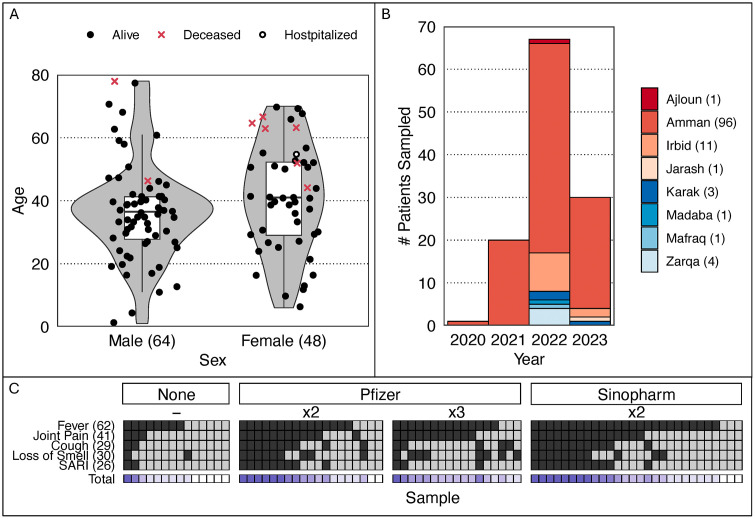 Figure 1
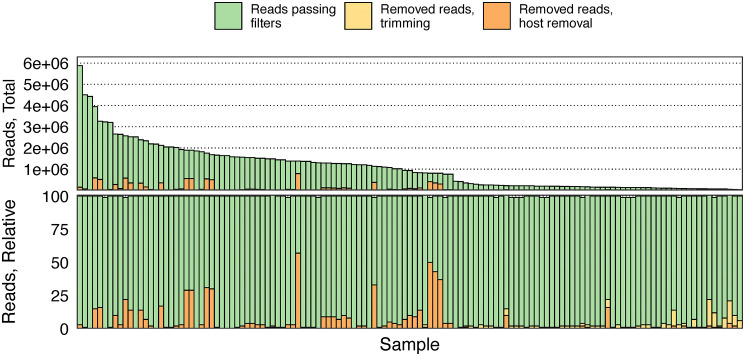 Figure 2
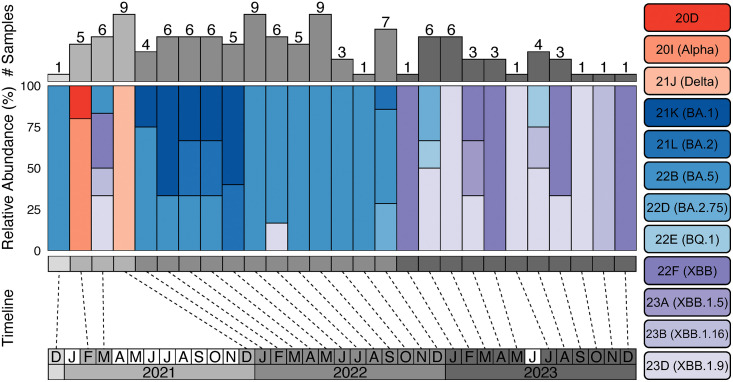 Figure 3
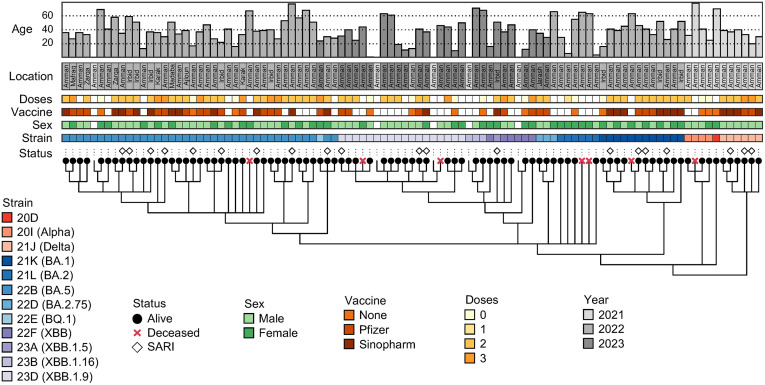 Figure 4
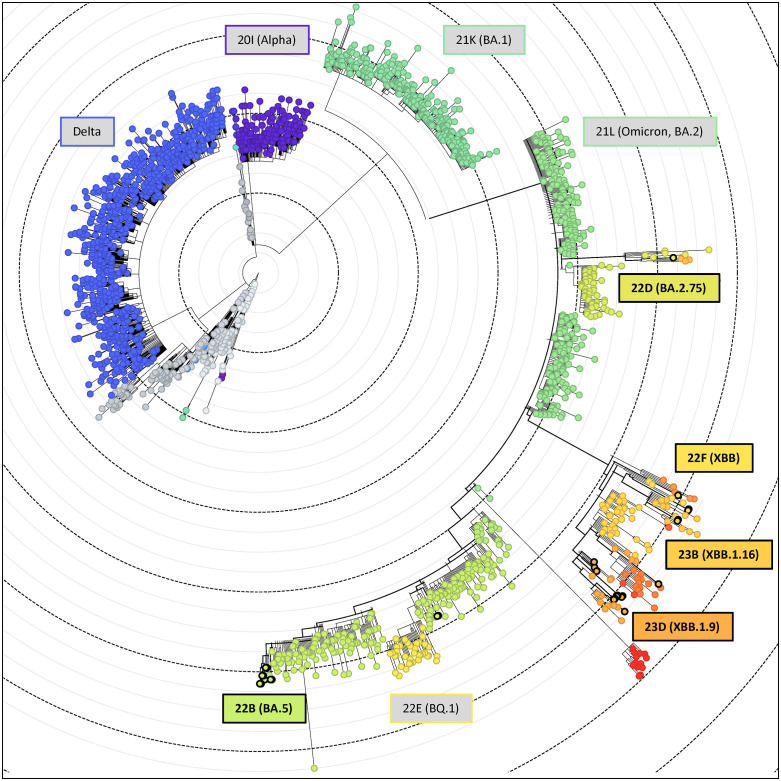 Figure 5
Peer Reviews
No public reviews on file for this paper yet. If you reviewed it on a platform where reviews are public (OpenReview, ICLR, NeurIPS, ICML), you can paste yours below so the community can read it here.
Videos
No videos yet. Explain this paper in a talk, walkthrough, or lecture? Add one.
Taxonomy
TopicsSARS-CoV-2 and COVID-19 Research · COVID-19 diagnosis using AI · COVID-19 epidemiological studies