Genome-wide analysis identifies susceptibility loci for heart failure and nonischemic cardiomyopathy subtype in the East Asian populations
Yi Han, Yun Hong, Yan Gao, Jiapeng Lu, Bowang Chen, Lihua Zhang, Xiaofang Yan, Ying Sun, Liping Zhang, Jiangling Liu, Hao Dai, Libo Hou, Xi Li, Jing Li

TL;DR
This study identifies genetic variants linked to heart failure and nonischemic cardiomyopathy in East Asian populations, revealing sex-specific and biological insights.
Contribution
The study identifies a low-frequency East-Asian enriched coding variant near MYBPC3 and a NICM-specific locus, SVIL, with sex-specific effects.
Findings
A low-frequency East-Asian enriched coding variant near MYBPC3 is associated with heart failure, showing male-specific effects.
SVIL deficiency worsens cardiomyocyte hypertrophy and apoptosis in PE-treated H9C2 cells, suggesting a role in NICM pathogenesis.
RNA-sequencing suggests SVIL influences heart muscle regulation and differentiation pathways.
Abstract
Heart failure (HF) is a serious cardiovascular condition resulting from abnormalities in multiple biological processes, affecting over 64 million people worldwide. We sought to expand our understanding of the genetic basis of HF and more specific NICM subtype in the East Asian populations and evaluate the biological pathways underlying subclinical left ventricular dysfunction. We conducted a meta-analysis of genome-wide association studies (GWAS) for all-cause HF in the East Asian populations (N cases ~ 13,385) and a more precise definition of nonischemic cardiomyopathy (NICM) subtype in multi-ancestry populations (N cases~3,603). We identified a low-frequency East-Asian enriched coding variant near MYBPC3 and a NICM specific locus. Follow up analyses demonstrated male-specific HF association at the MYBPC3 locus, and highlighted SVIL as a candidate causal gene for NICM. Moreover, we…
Genes, proteins, chemicals, diseases, species, mutations and cell lines named across the full text — each resolved to its canonical identifier and authoritative record.
Click any figure to enlarge with its caption.
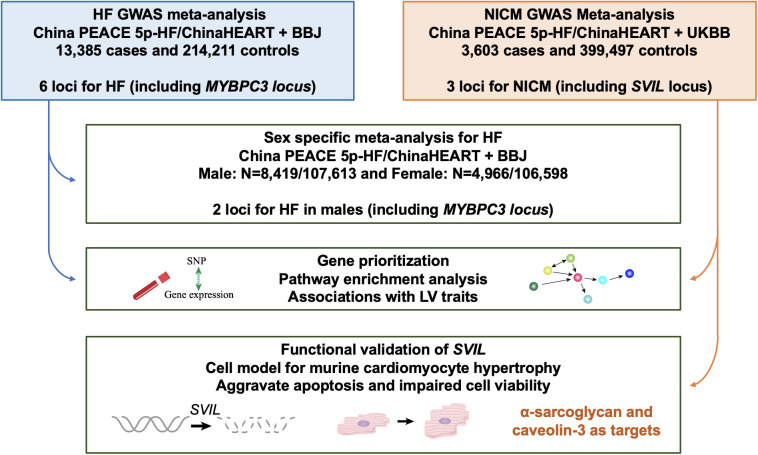 Figure 1
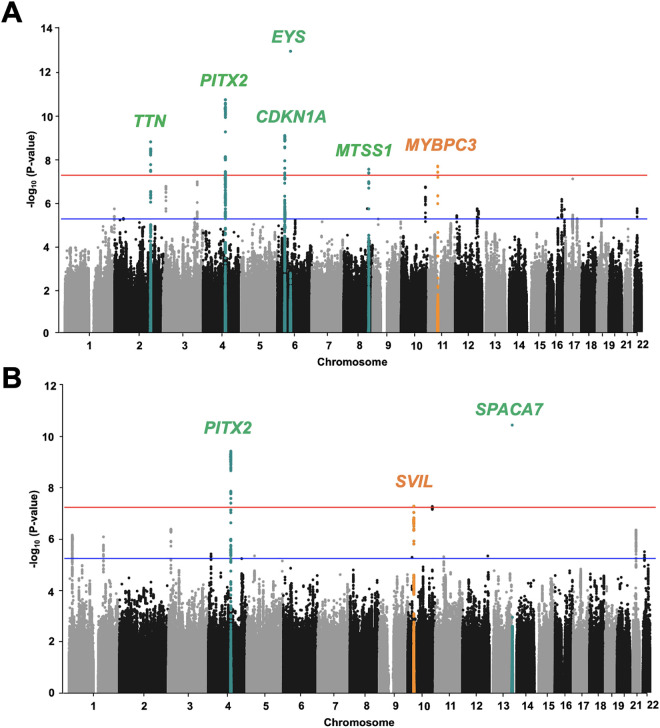 Figure 2
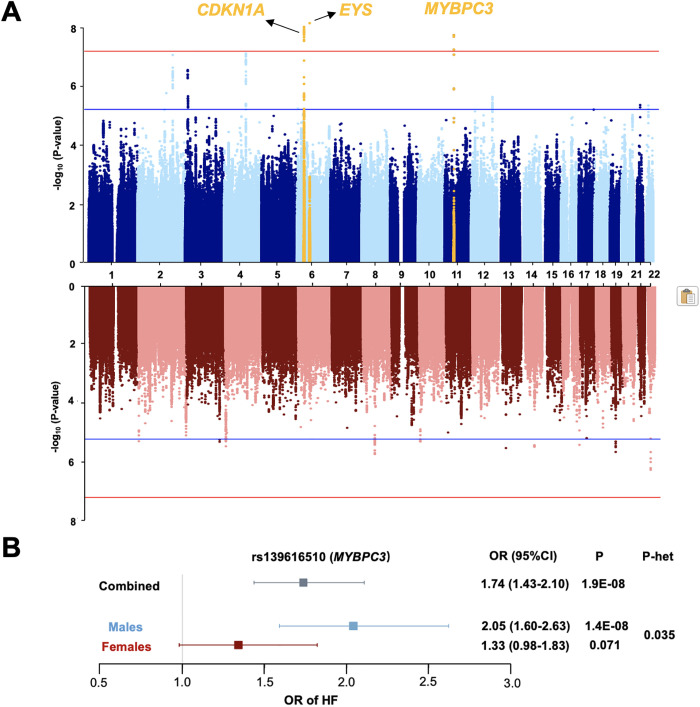 Figure 3
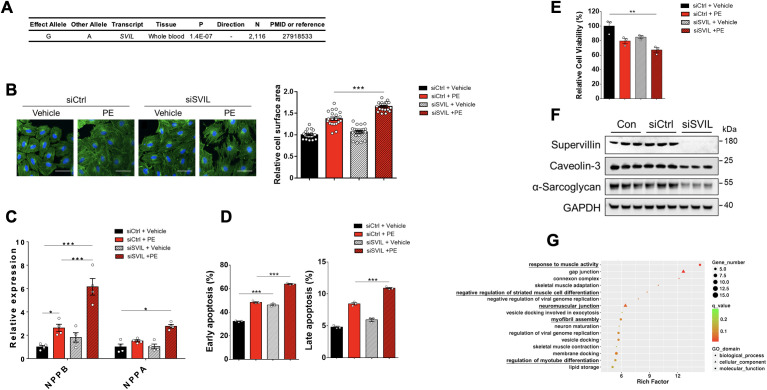 Figure 4
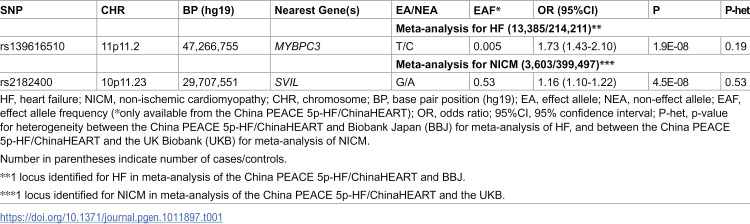 Figure 5
Peer Reviews
No public reviews on file for this paper yet. If you reviewed it on a platform where reviews are public (OpenReview, ICLR, NeurIPS, ICML), you can paste yours below so the community can read it here.
Videos
No videos yet. Explain this paper in a talk, walkthrough, or lecture? Add one.
Taxonomy
TopicsCardiomyopathy and Myosin Studies · Genetic Associations and Epidemiology · RNA and protein synthesis mechanisms