Prevalence and burden of anhedonia among patients with major depressive disorder in South Korea: A cross-sectional, observational study
Bolam Lee, YoungDoe Kim, HeeKyung Eum, Ja Seo Koo, Keira Herr, Lawrence Vandervoort, Jung Goo Lee

TL;DR
This study in South Korea finds that anhedonia is common in major depressive disorder patients and significantly impacts their quality of life and treatment satisfaction.
Contribution
The first study in South Korea to estimate anhedonia prevalence in MDD patients and highlight treatment goal disparities between patients and physicians.
Findings
61.5% of MDD patients in South Korea reported anhedonia, with MDD-ANH patients showing worse quality of life and higher healthcare resource use.
MDD-ANH patients prioritized sleep improvement, while physicians focused on preventing suicidal thoughts.
Both patients and physicians reported low satisfaction with regaining interest in hobbies and sexual satisfaction.
Abstract
Anhedonia (ANH), a key symptom of major depressive disorder (MDD), has a substantial societal and economic burden. In South Korea, while MDD is prevalent, the evidence regarding anhedonia remains scarce. This study investigated the prevalence and impact of anhedonia in patients with MDD in South Korea, including patient and physician perceived goals and satisfaction with MDD treatment. This cross-sectional study (April-May 2023) included two surveys, one specific to patients (aged ≥18 years) with self-reported physician diagnosis of MDD and 9-item Patient Health Questionnaire (PHQ-9) score≥10, and another to physicians treating MDD. The MDD group was classified as MDD-ANH (Snaith-Hamilton Pleasure Scale [SHAPS] score≥3) and MDD non-ANH (SHAPS score≤2). Multiple regression models were employed to evaluate the effect of anhedonia on health-related quality of life (HRQoL), work…
Genes, proteins, chemicals, diseases, species, mutations and cell lines named across the full text — each resolved to its canonical identifier and authoritative record.
Click any figure to enlarge with its caption.
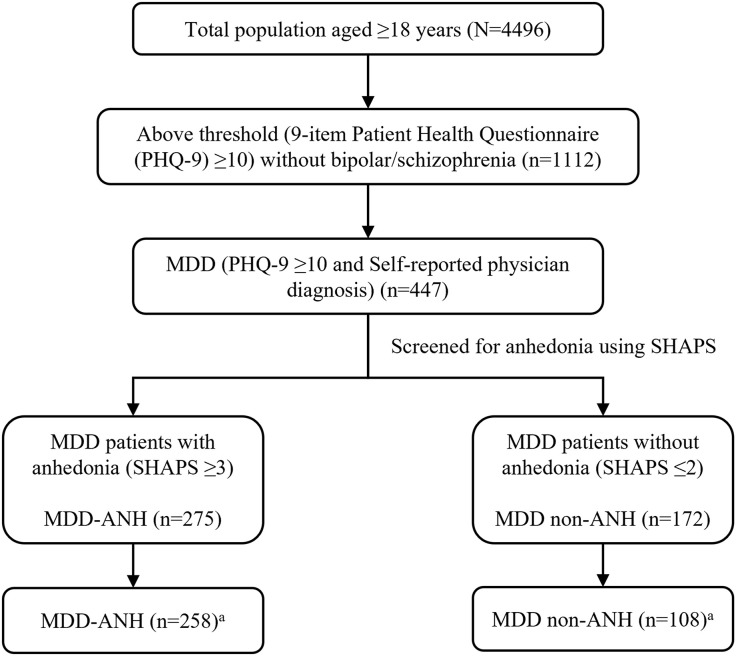 Figure 1
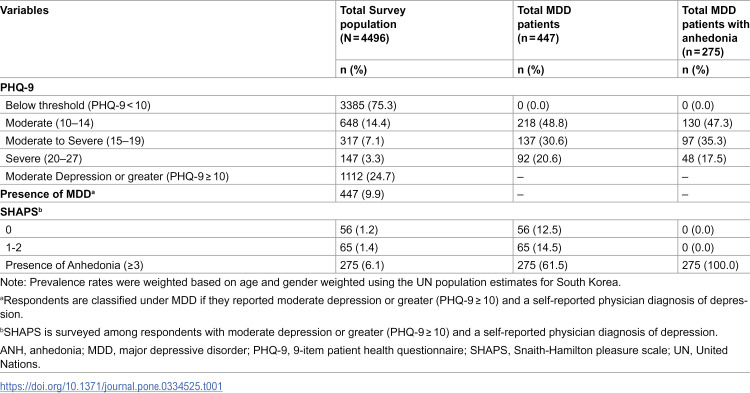 Figure 2
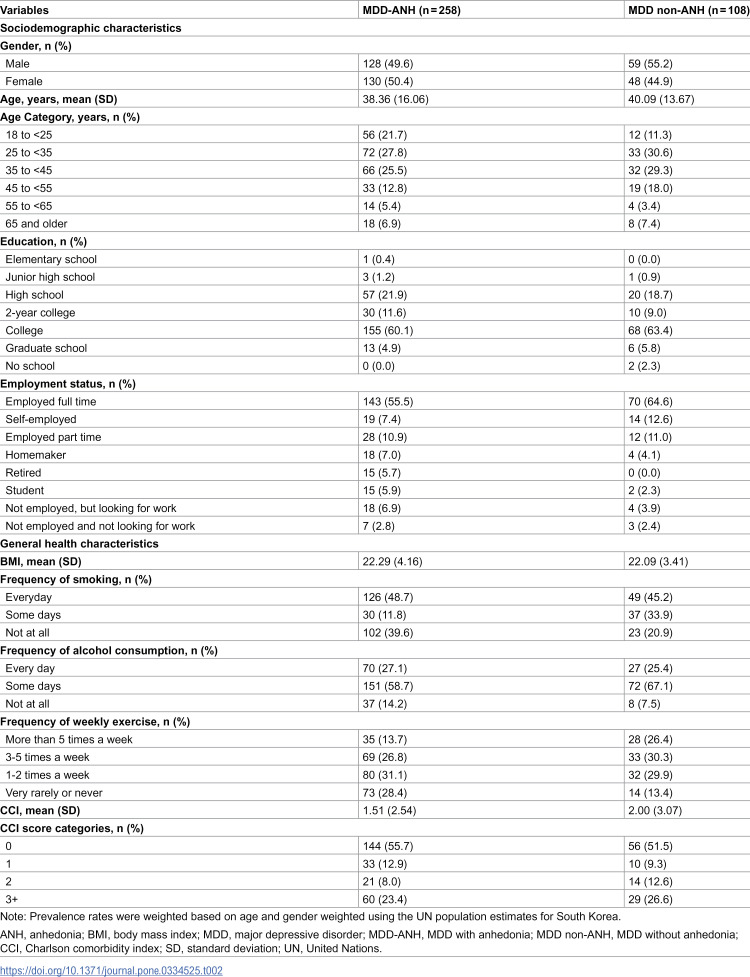 Figure 3
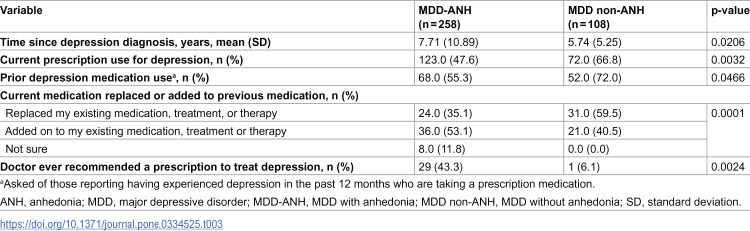 Figure 4
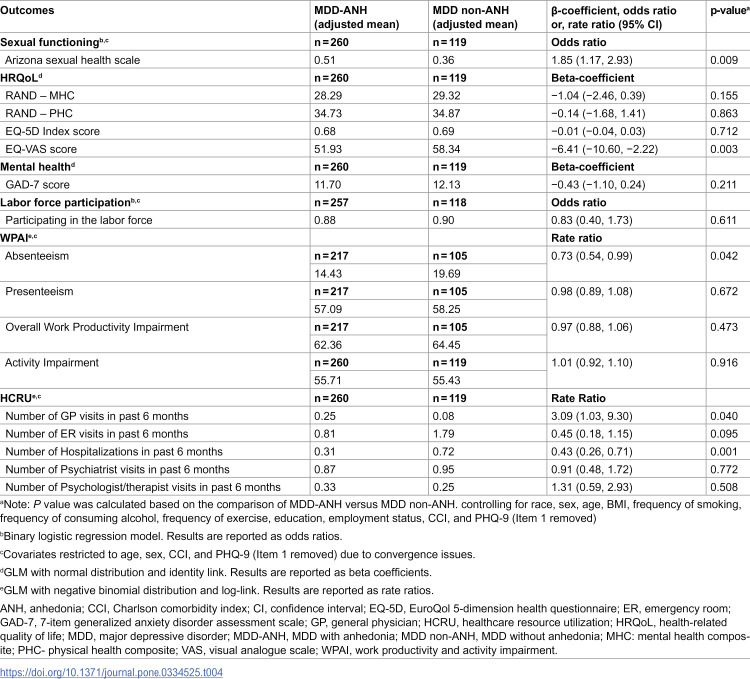 Figure 5
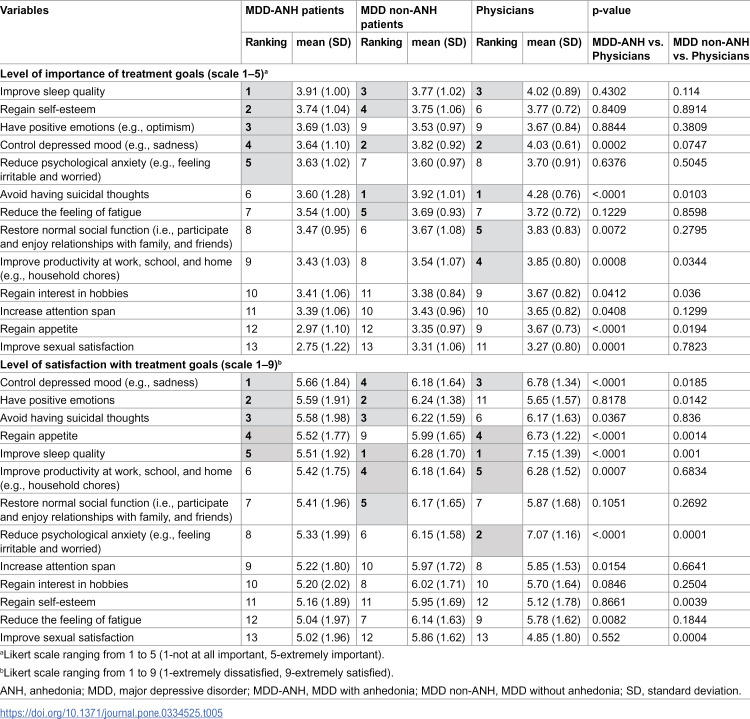 Figure 6
Peer Reviews
No public reviews on file for this paper yet. If you reviewed it on a platform where reviews are public (OpenReview, ICLR, NeurIPS, ICML), you can paste yours below so the community can read it here.
Videos
No videos yet. Explain this paper in a talk, walkthrough, or lecture? Add one.
Taxonomy
TopicsMental Health Treatment and Access · Anxiety, Depression, Psychometrics, Treatment, Cognitive Processes · Maternal Mental Health During Pregnancy and Postpartum