Multimodal emotion recognition via adaptive high-order transforme network
Yuanyuan Lu, Hao Feng, Shuai Liu, Shuai Liu, Shuai Liu

TL;DR
This paper introduces a new method for emotion recognition using multiple data types, which improves accuracy by reducing redundancy and enhancing feature learning.
Contribution
The novel contribution is the Adaptive High-order Transformer Network (AHOT) with AST and CMFF blocks for better multimodal feature fusion.
Findings
AHOT improves emotion recognition accuracy on IEMOCAP and CMU-MOSEI datasets.
Ablation studies confirm the effectiveness of the proposed modules in AHOT.
Abstract
Multimodal emotion recognition leverages multiple modalities to capture emotional cues more comprehensively, thereby improving the accuracy and robustness of emotion recognition. From the perspective of multimodal data and feature learning, reducing information redundancy in multimodal data and enhancing the discriminability of deep feature co-learning can effectively boost recognition performance. Based on this, this paper proposes a multimodal emotion recognition method based on an Adaptive High-order Transformer Network (AHOT). This method constructs Adaptive Selection Transformer block (AST) and Cross-modal Feature Fusion block (CMFF) for each modality branch, aiming to fully capture non-redundant feature representations from each modality and the interactions between modalities. In addition, a sparse high-order feature learning module is designed to enable the learning of highly…
Genes, proteins, chemicals, diseases, species, mutations and cell lines named across the full text — each resolved to its canonical identifier and authoritative record.
Click any figure to enlarge with its caption.
 Figure 1
 Figure 2
 Figure 3
 Figure 4
 Figure 5
 Figure 6
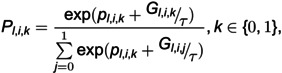 Figure 7
 Figure 8
 Figure 9
 Figure 10
 Figure 11
 Figure 12
 Figure 13
 Figure 14
 Figure 15
 Figure 16
 Figure 17
 Figure 18
 Figure 19
 Figure 20
 Figure 21
 Figure 22
 Figure 23
 Figure 24
 Figure 25
 Figure 26
 Figure 27
 Figure 28
 Figure 29
 Figure 30
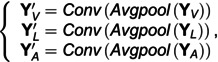 Figure 31
 Figure 32
 Figure 33
 Figure 34
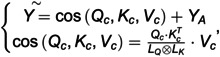 Figure 35
 Figure 36
 Figure 37
 Figure 38
 Figure 39
 Figure 40
 Figure 41
 Figure 42
 Figure 43
 Figure 44
 Figure 45
 Figure 46
 Figure 47
 Figure 48
 Figure 49
 Figure 50
Peer Reviews
No public reviews on file for this paper yet. If you reviewed it on a platform where reviews are public (OpenReview, ICLR, NeurIPS, ICML), you can paste yours below so the community can read it here.
Videos
No videos yet. Explain this paper in a talk, walkthrough, or lecture? Add one.
Taxonomy
TopicsEmotion and Mood Recognition · Face recognition and analysis · Sentiment Analysis and Opinion Mining