Hematological toxicity of anti-tumor antibody-drug conjugates: A retrospective pharmacovigilance study using the FDA adverse event reporting system
Mei Rao, Lihua Wu, Hong Chen, Xiaohui Wu, Huiying Wang, Yangyi Chen, Chunmei Chen

TL;DR
This study uses FDA data to show that antibody-drug conjugates often cause serious blood-related side effects, with some drugs having higher risks than others.
Contribution
The study identifies new hematotoxicity signals not previously disclosed in drug specifications for several ADCs.
Findings
Brentuximab vedotin and sacituzumab govitecan are more likely to cause serious hematotoxicity.
Cytopenia, febrile bone marrow aplasia, and myelosuppression were prominent hematotoxicity signals for specific ADCs.
The time-to-onset of hematotoxicity varied significantly among different ADCs.
Abstract
Although antibody-drug conjugates (ADCs) have shown significant efficacy in cancer treatment, hematotoxicity remains a serious issue. This study aims to investigate the relationship between ADCs and hematological toxicity. Our study was conducted using data extracted from the U.S. Food and Drug Administration Adverse Events Reporting System (FAERS) from the third quarter of 2011 to the second quarter of 2024. We used four disproportionality analysis methods to measure risk signals. In addition, we analyzed the time-to-onset of hematotoxicity adverse events (AEs). A total of 4,803 cases of hematotoxicity AEs associated with ADCs were identified, the median age of patients was 60 years (IQR: 47–72). Different ADCs have different hematotoxicity profiles, among which brentuximab vedotin (BV) and sacituzumab govitecan (SG) were more likely to lead to serious outcomes. The median…
Genes, proteins, chemicals, diseases, species, mutations and cell lines named across the full text — each resolved to its canonical identifier and authoritative record.
Click any figure to enlarge with its caption.
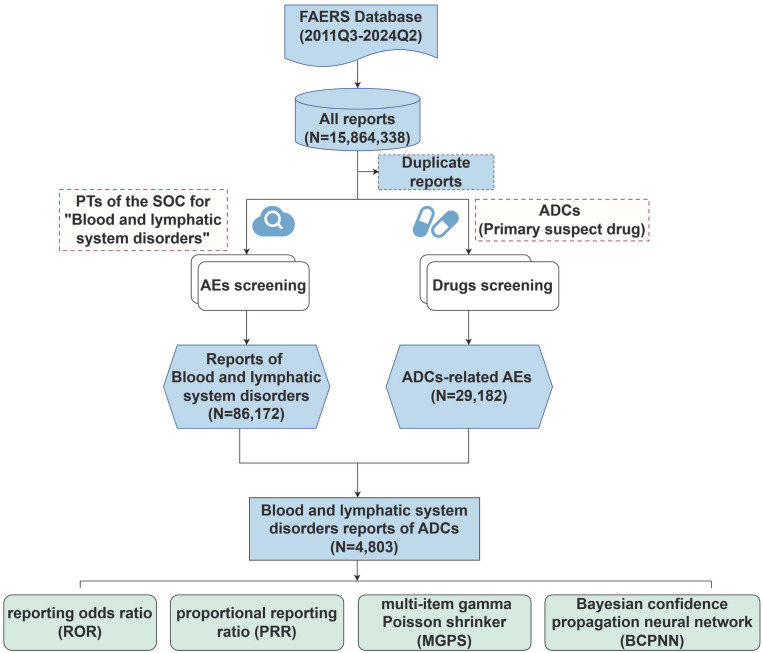 Figure 1
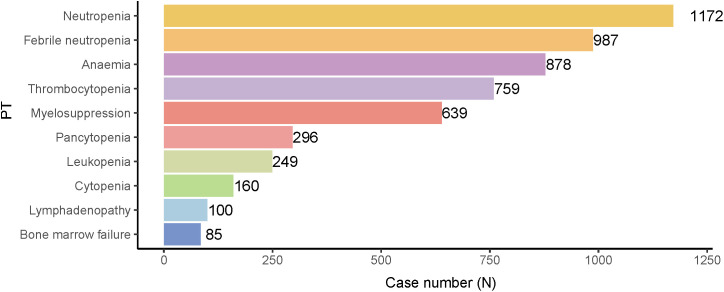 Figure 2
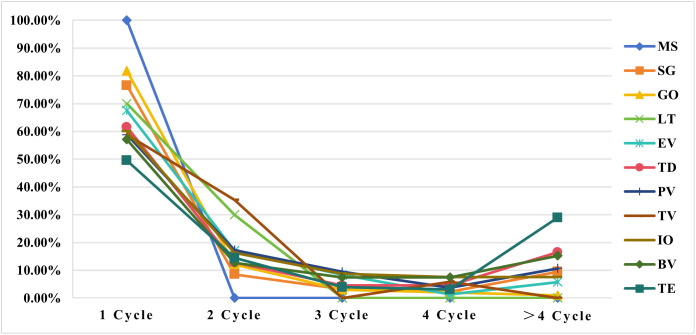 Figure 3
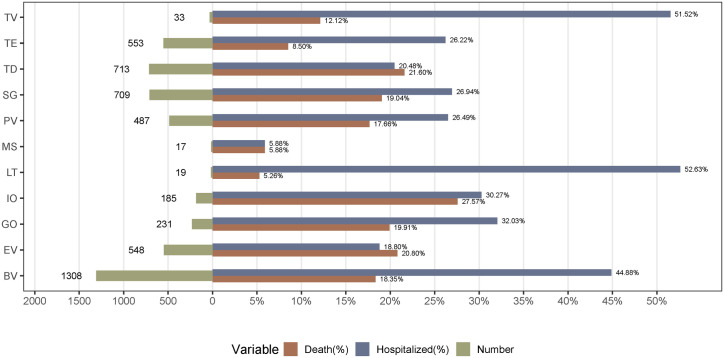 Figure 4
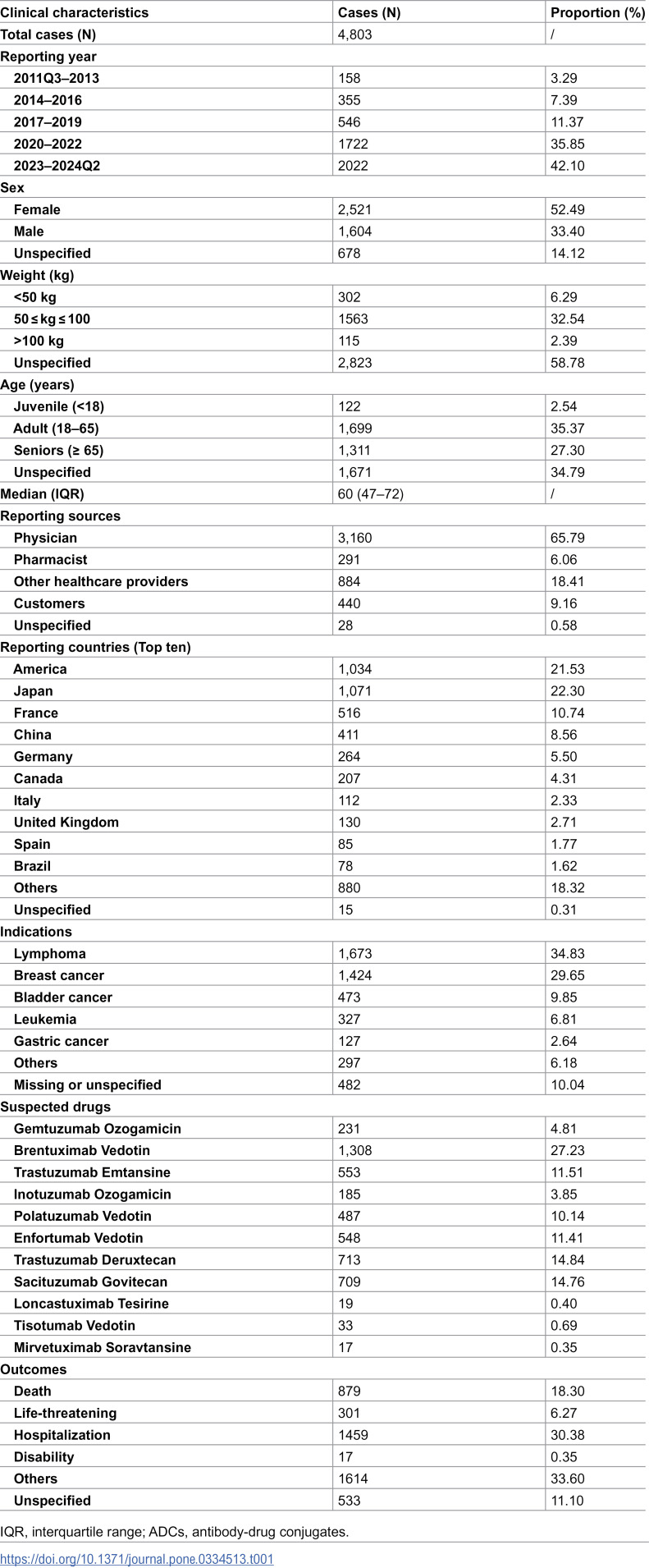 Figure 5
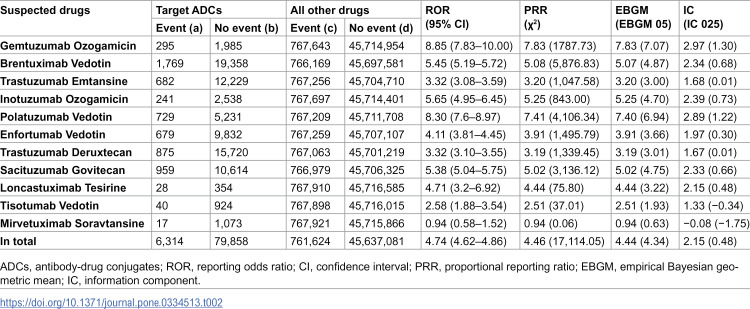 Figure 6
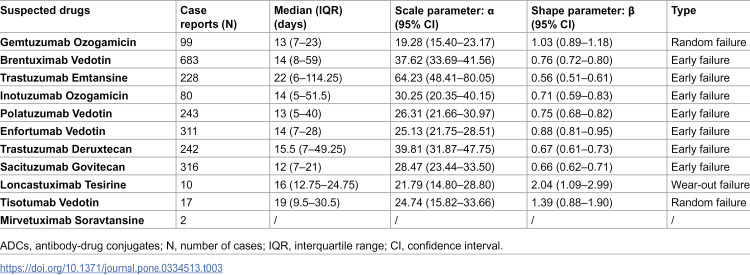 Figure 7
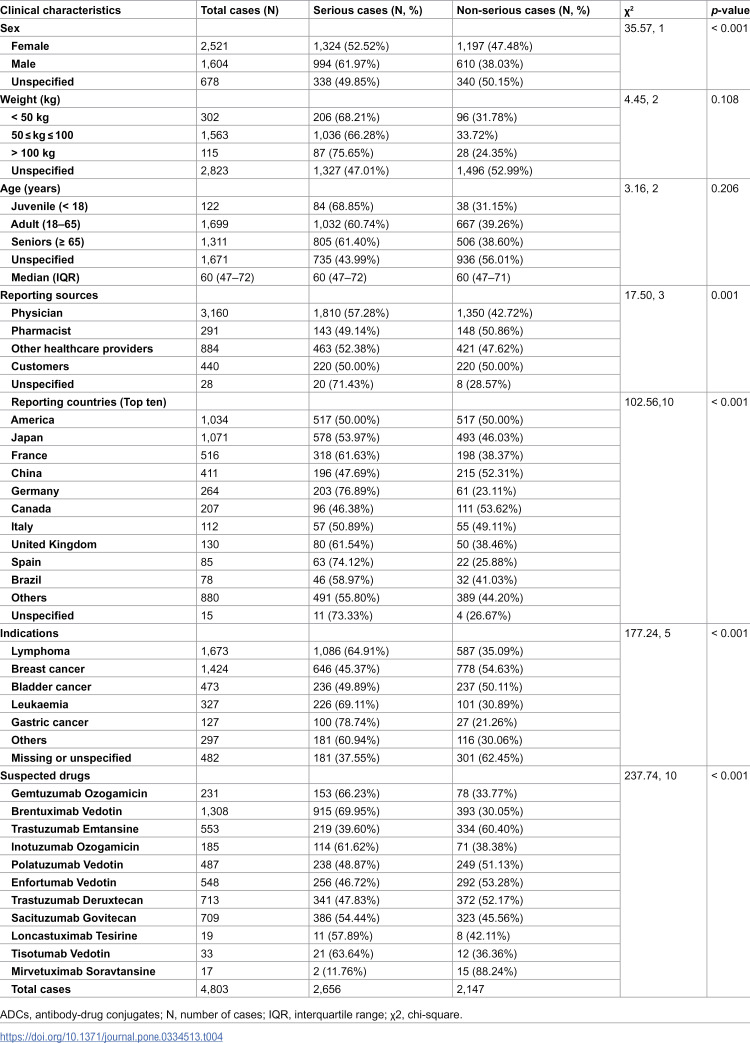 Figure 8
Peer Reviews
No public reviews on file for this paper yet. If you reviewed it on a platform where reviews are public (OpenReview, ICLR, NeurIPS, ICML), you can paste yours below so the community can read it here.
Videos
No videos yet. Explain this paper in a talk, walkthrough, or lecture? Add one.
Taxonomy
TopicsHER2/EGFR in Cancer Research · Cancer Treatment and Pharmacology · Colorectal Cancer Treatments and Studies