Fixational saccade inhibition and pupil dilation during self-paced limb movement preparation
Jan W. Brascamp, Bobicheng Zhang, Vasili Marshev, Dimitris Voudouris, Dimitris Voudouris, Dimitris Voudouris, Dimitris Voudouris

TL;DR
The study shows that fixational saccades and pupil dilation both decrease before self-paced limb movements, suggesting a shared neural mechanism for motor preparation.
Contribution
This is the first study to examine fixational saccades during spontaneous limb movements without external stimuli, isolating motor preparation effects.
Findings
Fixational saccade rate decreases steadily before self-paced hand and foot movements.
Pupil dilation occurs before movements and correlates with the saccade rate signal.
Pupil changes follow saccade rate changes too quickly to be caused by visual input from saccades.
Abstract
Fixational saccades are modulated in anticipation of several kinds of stimuli and motor actions, suggesting that they can form an overt marker of preparatory state. However, no existing work has studied fixational saccades ahead of spontaneous limb movements in the absence of sensory stimuli, in order to isolate motor preparation from other anticipatory processes (e.g., those related to stimulus processing). Here we examined fixational saccades while participants made self-paced hand and foot movements. We observed that fixational saccade rate steadily dropped prior to either kind of motor action, and recovered immediately after. To examine the relation between this fixational saccade rate signal and other known signals that precede volitional action, we analyzed how this signal related to anticipatory pupil size changes in the same dataset. Replicating previous work, we found steady…
Genes, proteins, chemicals, diseases, species, mutations and cell lines named across the full text — each resolved to its canonical identifier and authoritative record.
Click any figure to enlarge with its caption.
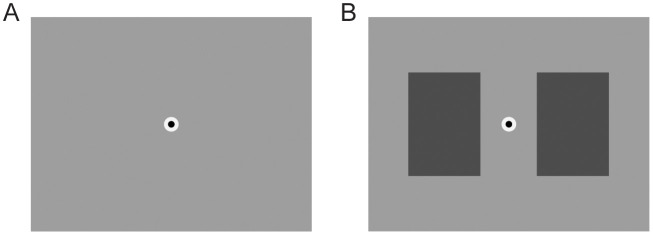 Figure 1
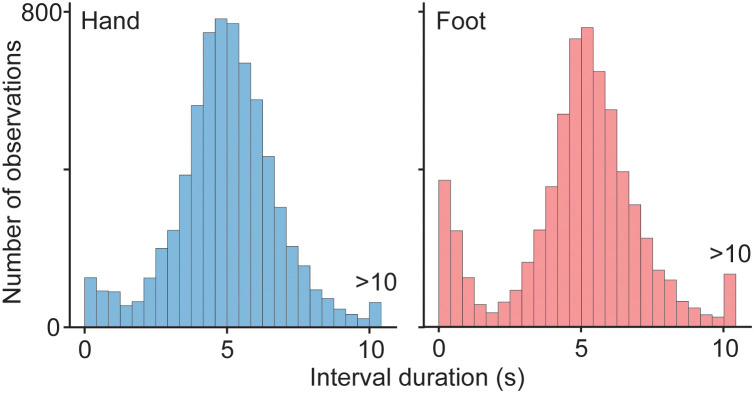 Figure 2
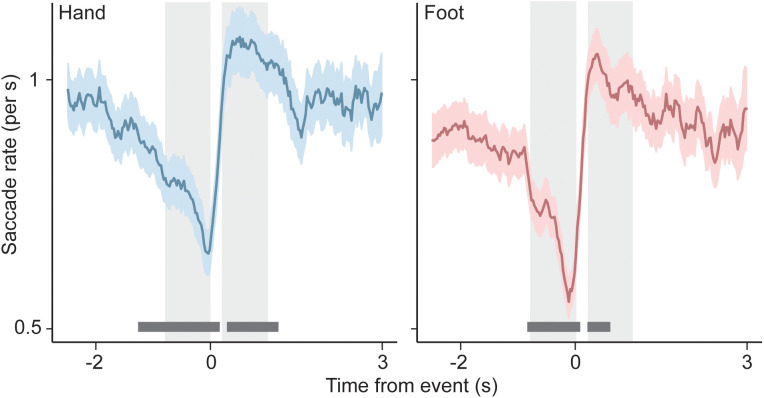 Figure 3
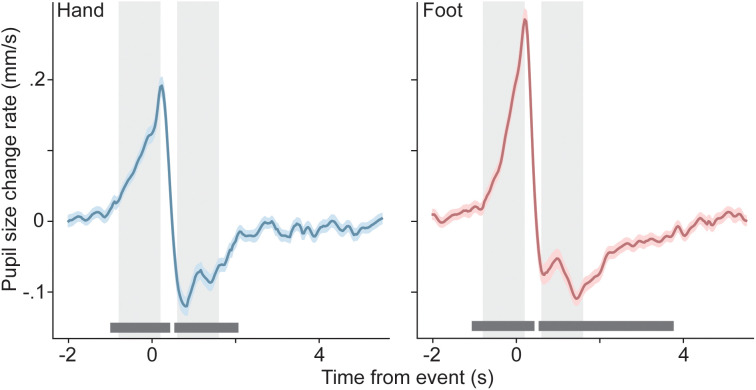 Figure 4
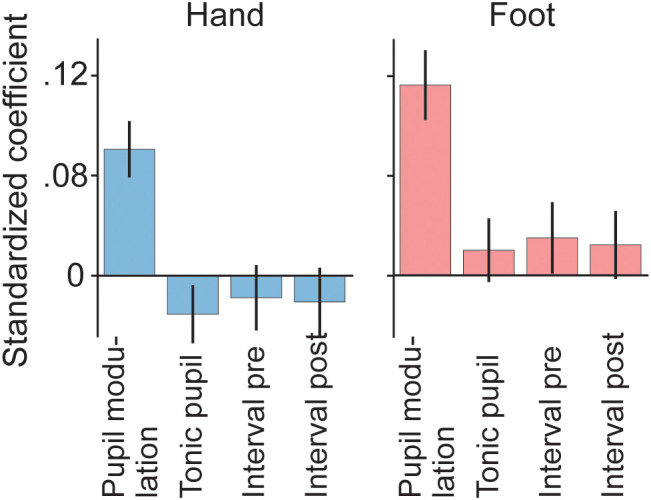 Figure 5
Peer Reviews
No public reviews on file for this paper yet. If you reviewed it on a platform where reviews are public (OpenReview, ICLR, NeurIPS, ICML), you can paste yours below so the community can read it here.
Videos
No videos yet. Explain this paper in a talk, walkthrough, or lecture? Add one.
Taxonomy
TopicsMotor Control and Adaptation · Neural and Behavioral Psychology Studies · EEG and Brain-Computer Interfaces