Normative value of upper extremity Y balance test in healthy subjects aged between 18 and 36 years from South India: A cross-sectional study
Arjun Pavithran, S. Rajasekar, Joshua Cleland, Varunkumar Ramkumar, Animesh Hazari

TL;DR
This study establishes normative values for the Upper Extremity Y Balance Test in healthy young adults from South India, providing benchmarks for shoulder mobility and stability.
Contribution
The study provides the first normative data for the UQYBT in healthy Indian adults aged 18–36 years.
Findings
Males had greater reach distances than females, but the difference decreased after normalization for limb length.
Participants aged 26–30 years achieved the highest normalized reach scores.
Age- and sex-specific reference values were established for upper extremity performance.
Abstract
The Upper Quarter Y Balance Test (UQYBT) is a validated tool used to assess unilateral upper extremity function in a closed kinetic chain. It evaluates parameters such as mobility, stability, and injury risk, and can inform rehabilitation planning. Normative data have been well established for adolescent and active adult populations in the United States. This study aims to establish normative UQYBT values for healthy adults aged 18–36 years in the Indian subcontinent. A total of 190 healthy young adults (95 males and 95 females) aged 18–36 years who met the eligibility criteria were included. Baseline demographic data—age, height, weight, body mass index (BMI), and limb length—were collected. Participants performed the UQ-YBT by reaching in the inferolateral, medial, and superolateral directions using the three-reach box. Average reach distances were calculated for each limb, and…
Genes, proteins, chemicals, diseases, species, mutations and cell lines named across the full text — each resolved to its canonical identifier and authoritative record.
Click any figure to enlarge with its caption.
 Figure 1
 Figure 2
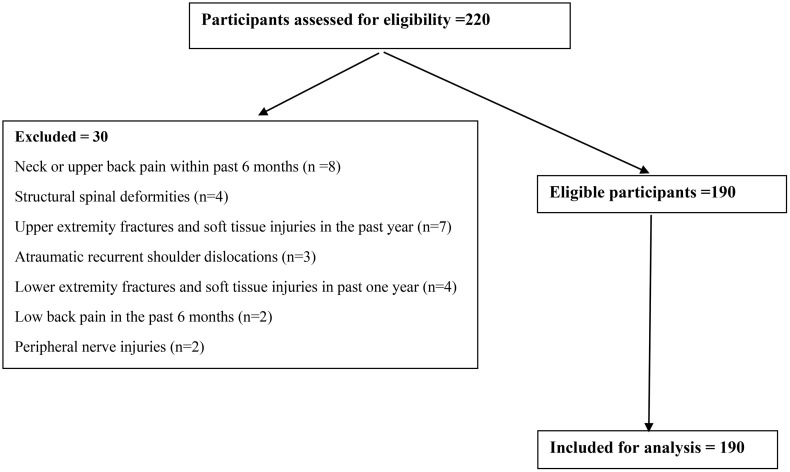 Figure 3
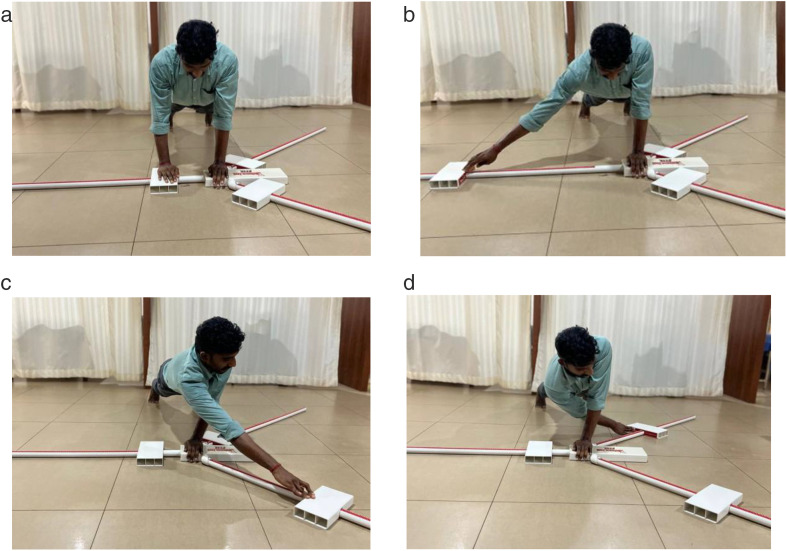 Figure 4
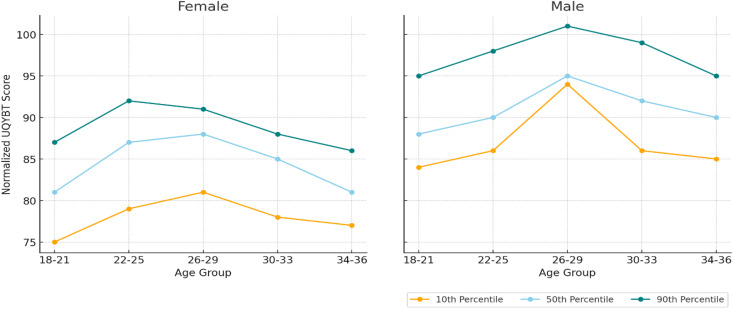 Figure 5
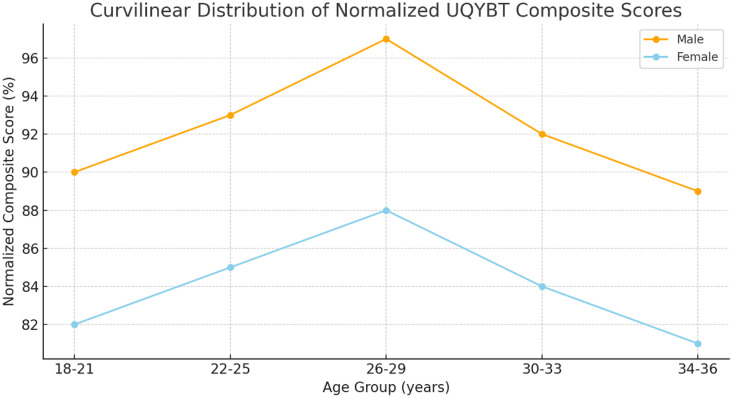 Figure 6
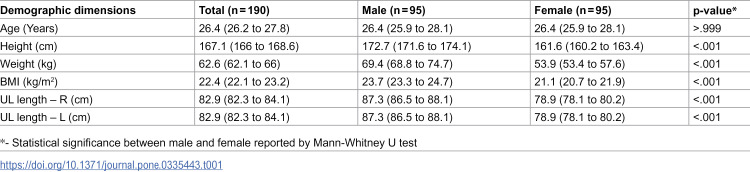 Figure 7
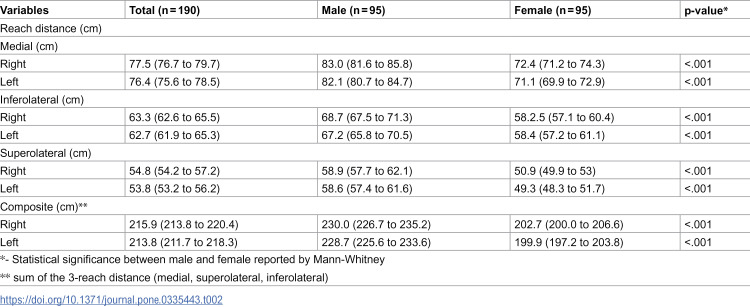 Figure 8
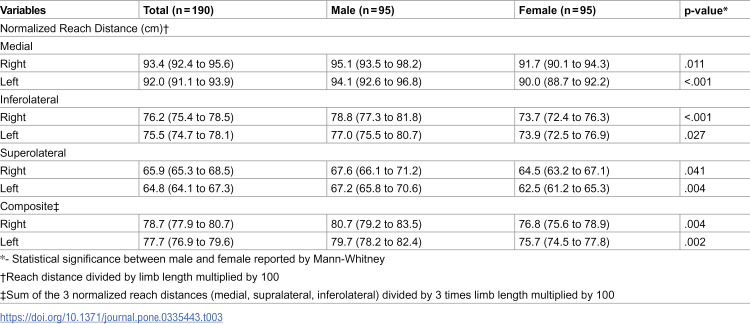 Figure 9
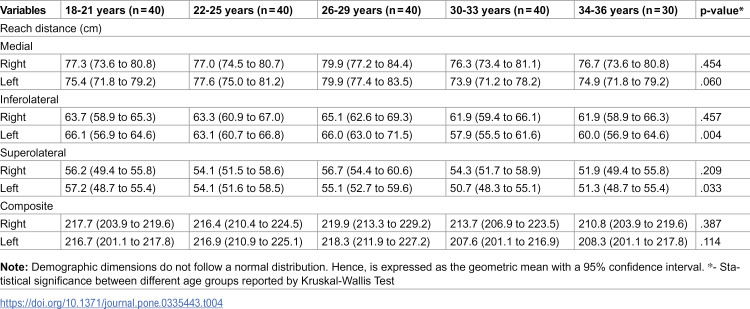 Figure 10
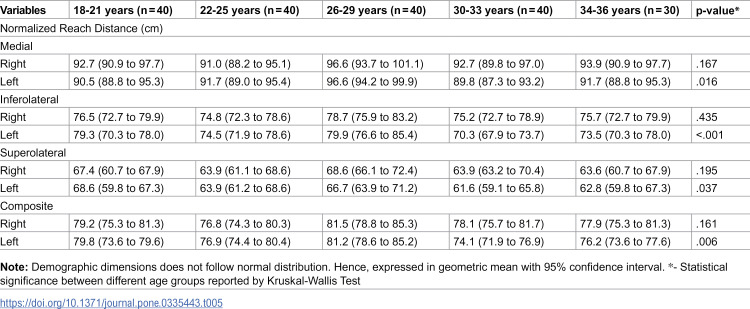 Figure 11
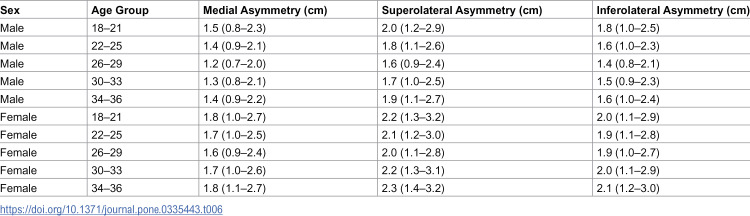 Figure 12
Peer Reviews
No public reviews on file for this paper yet. If you reviewed it on a platform where reviews are public (OpenReview, ICLR, NeurIPS, ICML), you can paste yours below so the community can read it here.
Videos
No videos yet. Explain this paper in a talk, walkthrough, or lecture? Add one.
Taxonomy
TopicsShoulder Injury and Treatment · Musculoskeletal pain and rehabilitation · Sports injuries and prevention