Changes in mercury content in oysters in relation to sediment and seston content in the Colombian Caribbean lagoons
Anubis Vélez-Mendoza, Jeimmy Paola Rico-Mora, Néstor Hernando Campos-Campos, Margui Lorena Almario-García, Adolfo Sanjuan-Muñoz

TL;DR
This study examines mercury levels in oysters and their environment in two Colombian lagoons, finding higher mercury in one area and highlighting risks to ecosystems and human health.
Contribution
The study introduces the relevance of oyster age in mercury accumulation assessments and compares contamination risks with global hotspots.
Findings
BhC had higher mercury concentrations in sediment, seston, and oysters compared to CGSM.
Mercury bioconcentration in oysters was significant in CGSM despite being below safety thresholds.
Oyster age influenced mercury accumulation, with adults in CGSM and juveniles in BhC showing higher levels.
Abstract
Total mercury (Hg) was evaluated in the mangrove oyster Crassostrea rhizophorae, in sediments and seston from the Ciénaga Grande de Santa Marta (CGSM) and Cispatá Bay (BhC) in two climatic seasons (rainy and dry). Composite samples of sediments, seston and oysters in juvenile and adult ages were collected at six stations (three in each ecosystem) and Hg was quantified by atomic absorption spectrophotometry (Environmental Protection Agency (EPA) method 7473 PLTX-017). BhC had the highest Hg concentrations in sediment, seston and oysters compared to CGSM, with values close to the tolerable threshold for the ecosystem and associated biota (TEL) of 0.13 µg/g. Although at CGSM Hg was below the TEL in sediment and was considered safe in the oyster, significant bioconcentration was evident with the metal content in the seston, indicating a potential risk to the ecosystem and humans. The…
Genes, proteins, chemicals, diseases, species, mutations and cell lines named across the full text — each resolved to its canonical identifier and authoritative record.
Click any figure to enlarge with its caption.
 Figure 1
 Figure 2
 Figure 3
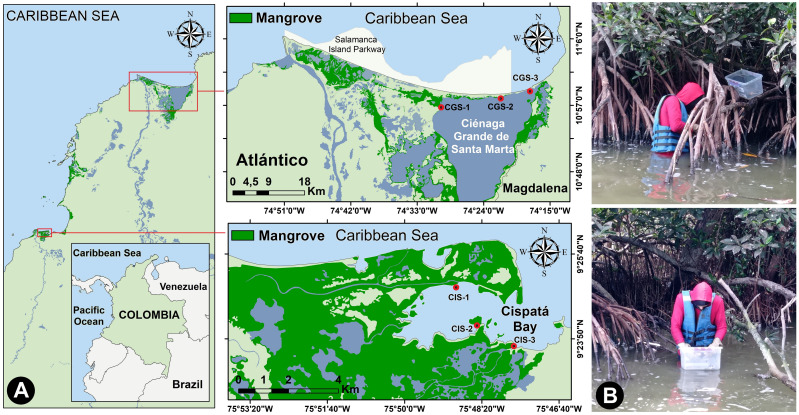 Figure 4
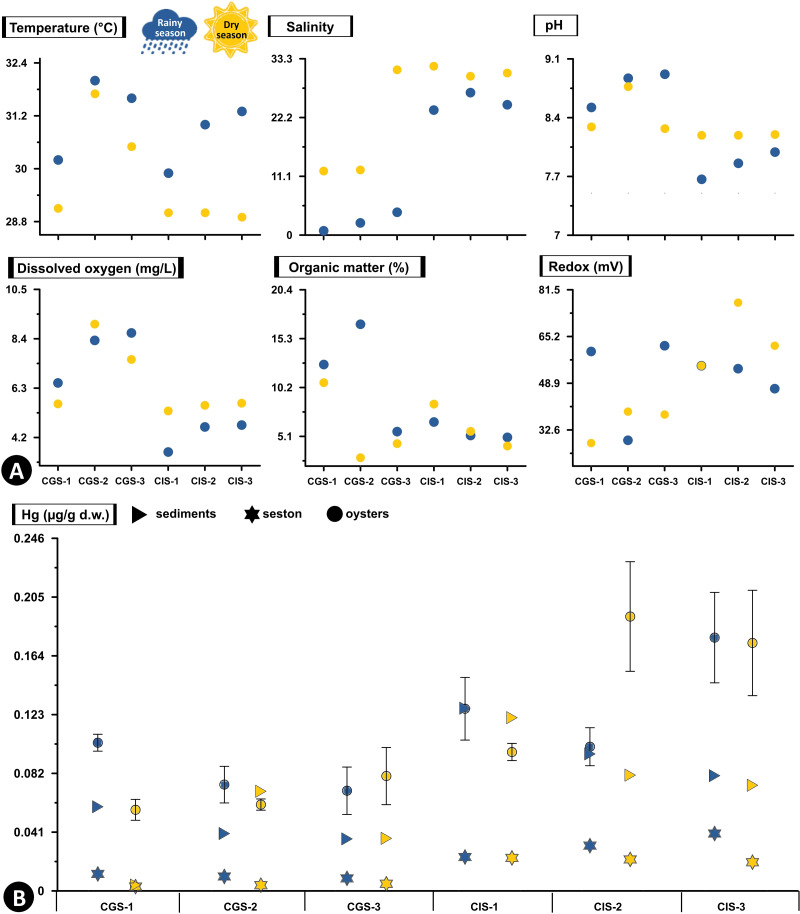 Figure 5
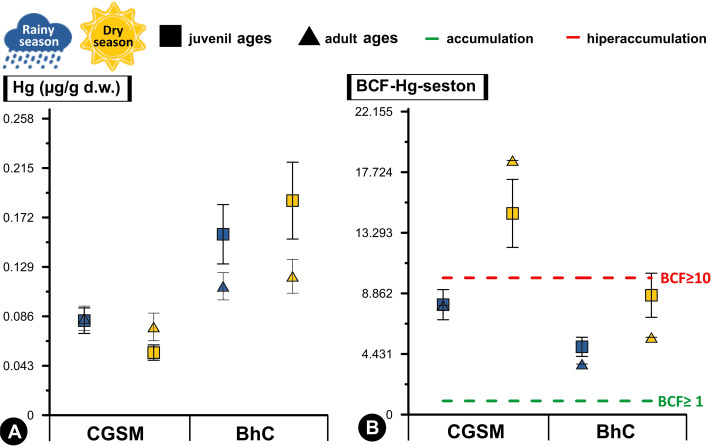 Figure 6
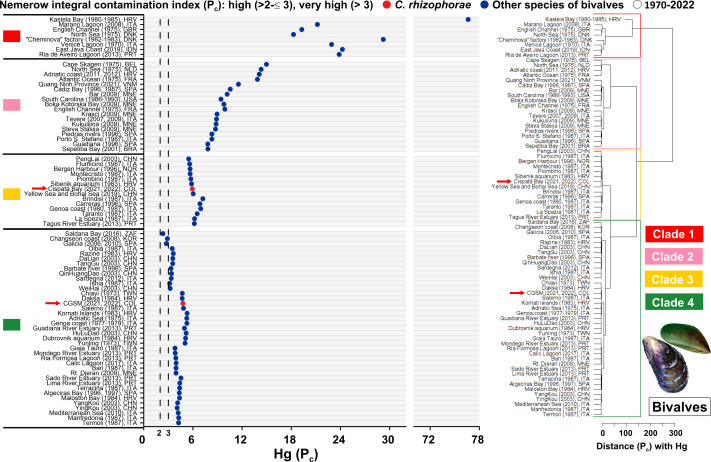 Figure 7
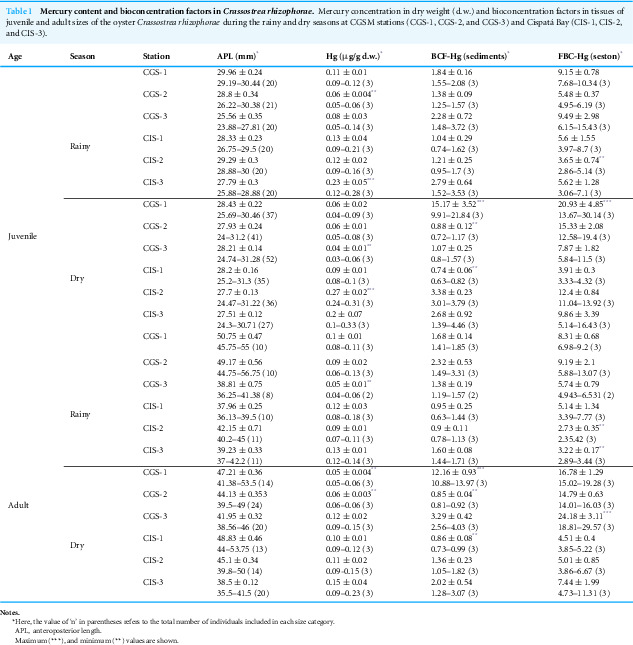 Figure 8
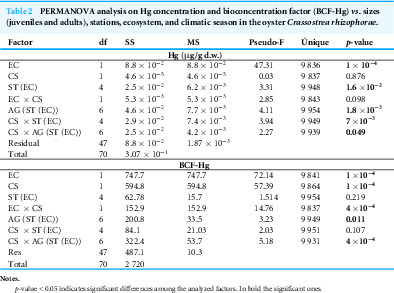 Figure 9
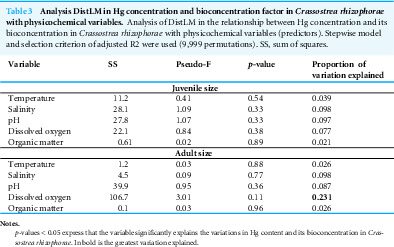 Figure 10
Peer Reviews
No public reviews on file for this paper yet. If you reviewed it on a platform where reviews are public (OpenReview, ICLR, NeurIPS, ICML), you can paste yours below so the community can read it here.
Videos
No videos yet. Explain this paper in a talk, walkthrough, or lecture? Add one.
Taxonomy
TopicsMercury impact and mitigation studies · Marine animal studies overview · Marine Bivalve and Aquaculture Studies