Food selection and feeding patterns in nectarivorous bats: Leptonycteris yerbabuenae and Glossophaga soricina
Martín Hesajim de Santiago-Hernández, Alejandro Salinas-Melgoza, Alicia Chavez-Estrada, Miguel Angel Salinas-Melgoza, Mauricio Quesada, Yvonne Herrerías-Diego

TL;DR
Two nectar-feeding bat species, Leptonycteris yerbabuenae and Glossophaga soricina, show distinct feeding preferences and timing in controlled experiments, reducing competition.
Contribution
The study reveals novel insights into how sympatric nectarivorous bats avoid competition through differential resource selection and feeding patterns.
Findings
Glossophaga soricina prefers nectar similar to Ipomoea and sucrose, while Leptonycteris yerbabuenae prefers nectar similar to Acanthocereus cacti.
The two bat species exhibit different timing patterns in feeding, further reducing potential competition.
Low competition is observed under abundant resources and low individual density, but this may change with scarcity.
Abstract
Sympatric species reduce competition for resources due to differences in one or more of their niche dimensions. Biotic interactions between pollinators and variations in the availability and quality of resources are important factors that determine food selection in bats. The nectarivorous species Leptonycteris yerbabuenae and Glossophaga soricina coexist temporarily in much of their distribution and depend on nectar to feed. These species have similar requirements but differ in the way they obtain food. The coexistence of bat species with similar requirements, such as L. yerbabuenae and G. soricina, suggests that these species have strategies for avoiding competition and maximizing their nectar consumption. However, it is unclear how these bat species select resources and adjust their visits to the available floral resources. We therefore analyzed nectar selection and feeding patterns…
Genes, proteins, chemicals, diseases, species, mutations and cell lines named across the full text — each resolved to its canonical identifier and authoritative record.
Click any figure to enlarge with its caption.
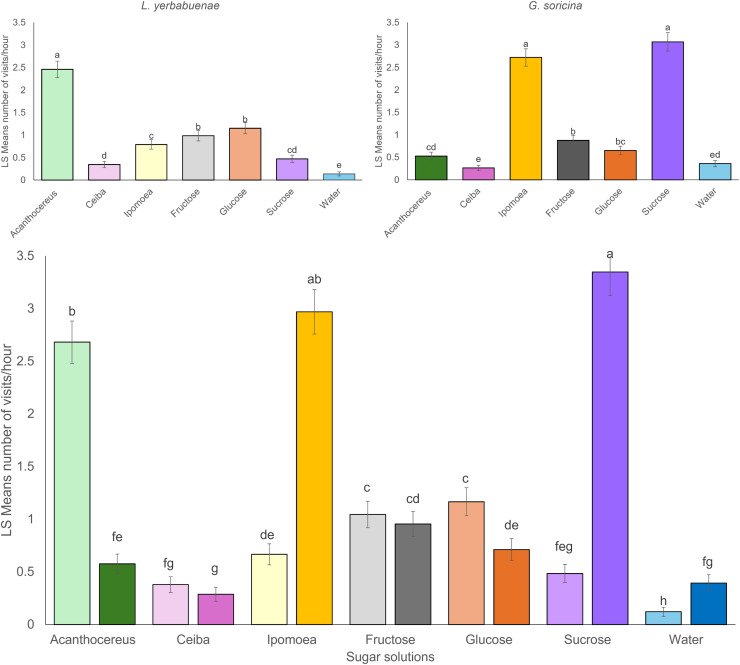 Figure 1
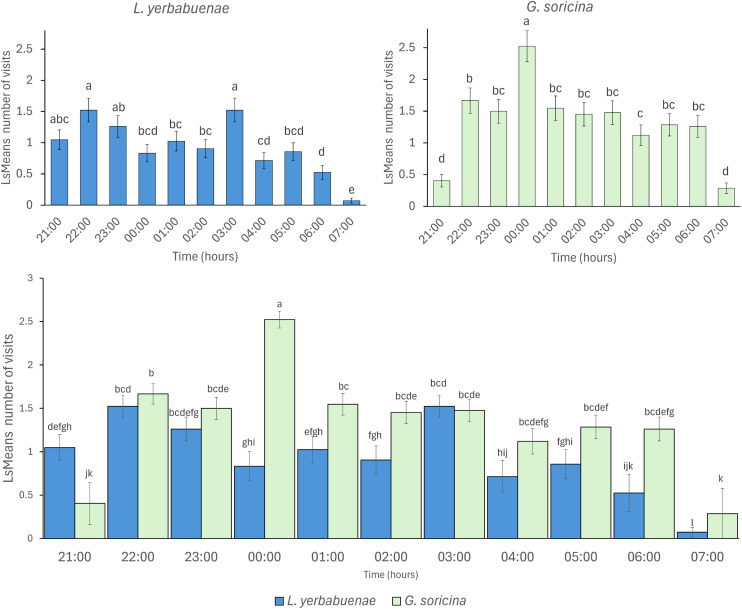 Figure 2
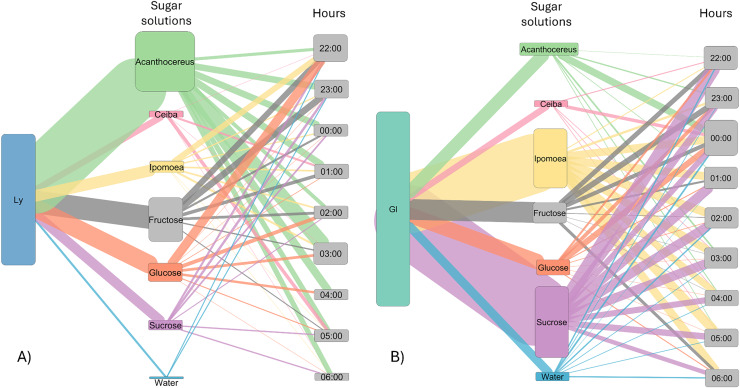 Figure 3
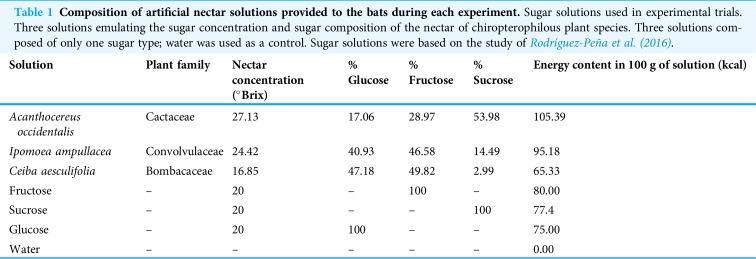 Figure 4
Peer Reviews
No public reviews on file for this paper yet. If you reviewed it on a platform where reviews are public (OpenReview, ICLR, NeurIPS, ICML), you can paste yours below so the community can read it here.
Videos
No videos yet. Explain this paper in a talk, walkthrough, or lecture? Add one.
Taxonomy
TopicsBat Biology and Ecology Studies · Animal Vocal Communication and Behavior · Species Distribution and Climate Change