Common Peroneal Nerve Palsy Due to a Proximal Tibiofibular Joint Ganglion Cyst in a Recreational Runner: A Case Report
Luís Amaral Oliveira, Ana Margarida Esteves, Bruno Cancela, David Moura, Rodrigo Correia, Andre Borges, José Luís Carvalho

TL;DR
A runner developed foot drop due to a rare nerve compression caused by a joint cyst, which improved with aspiration and rehab, though recurrence is common.
Contribution
This case report highlights the effectiveness of image-guided aspiration for treating rare peroneal nerve palsy caused by a proximal tibiofibular joint ganglion cyst.
Findings
Ultrasound-guided aspiration with corticosteroid injection led to rapid improvement in foot drop and motor function within one month.
Cyst recurrence was observed on imaging, necessitating a second aspiration and eventual recommendation for surgical excision.
Conservative management combined with rehabilitation can yield meaningful recovery in severe peroneal nerve palsy cases.
Abstract
Common peroneal nerve (CPN) palsy is one of the most frequent lower-limb compression neuropathies in athletes, typically occurring at the fibular neck. Proximal tibiofibular joint (PTFJ) ganglion cysts are a well-recognized but rare extraneural cause of CPN compression, especially in runners. We report a 36-year-old female recreational long-distance runner who presented with a six-month history of progressive lateral knee pain that acutely evolved into foot drop. Examination revealed severe weakness in ankle dorsiflexion and eversion (Medical Research Council grade 1/5) and sensory loss over the dorsum of the foot. Electrophysiological studies demonstrated a >50% conduction block of the CPN at the fibular head with slowed velocity and signs of denervation. Magnetic resonance imaging (MRI) showed a large (6 × 1.1 cm), multiloculated cyst arising from the PTFJ and compressing the CPN. The…
Genes, proteins, chemicals, diseases, species, mutations and cell lines named across the full text — each resolved to its canonical identifier and authoritative record.
Click any figure to enlarge with its caption.
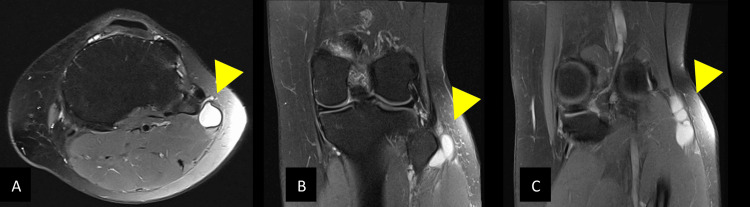 Figure 1
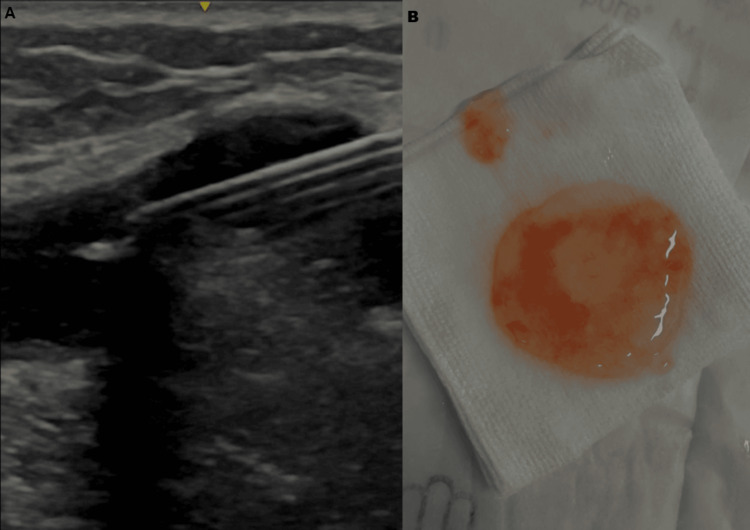 Figure 2
Peer Reviews
No public reviews on file for this paper yet. If you reviewed it on a platform where reviews are public (OpenReview, ICLR, NeurIPS, ICML), you can paste yours below so the community can read it here.
Videos
No videos yet. Explain this paper in a talk, walkthrough, or lecture? Add one.
Taxonomy
TopicsPeripheral Nerve Disorders · Foot and Ankle Surgery · Orthopedic Surgery and Rehabilitation