A minimum valency of 4 is required for robust activation of platelets in flow cytometry by multivalent nanobodies to Glycoprotein VI, C-type lectin-like receptor 2 and Platelet Endothelial Aggregation Receptor 1
Rachel E. Lamerton, Eleyna M. Martin, Jacqueline Perry, Adam F. Cunningham, Steve P. Watson, Andrew L. Frelinger

TL;DR
Tetravalent nanobodies to GPVI and CLEC-2 activate platelets more effectively than trivalent ones, helping improve flow cytometry assays for platelet function.
Contribution
The study identifies that a minimum valency of 4 is needed for robust platelet activation by nanobodies targeting specific receptors.
Findings
Tetravalent nanobodies to GPVI and CLEC-2 induce high platelet activation similar to collagen-related peptide.
Trivalent nanobodies are partial agonists, showing less activation than tetravalent ones.
Tetravalent PEAR1 nanobodies show variable activation across donors.
Abstract
We have reported that trivalent and tetravalent nanobodies against glycoprotein (GP)VI, C-type lectin-like receptor (CLEC)-2, and platelet endothelial aggregation receptor (PEAR)1 stimulate powerful aggregation and adenosine triphosphate secretion in human platelets. This study aimed to evaluate changes in platelet surface GPs elicited by activation of GPVI, CLEC-2, and PEAR1 using trivalent and tetravalent nanobodies. The effect of the crosslinked nanobodies on P-selectin was measured in whole blood and washed platelets with and without secondary mediator inhibitors using classical flow cytometry and on 16 platelet surface GPs in whole blood using multispectral flow cytometry. Trivalent nanobodies to GPVI and CLEC-2 stimulated modest (<60% of collagen-related peptide) expression of P-selectin in whole blood (10-fold dilution) and washed platelets (2 × 10⁷ mL), whereas tetravalent…
Genes, proteins, chemicals, diseases, species, mutations and cell lines named across the full text — each resolved to its canonical identifier and authoritative record.
Click any figure to enlarge with its caption.
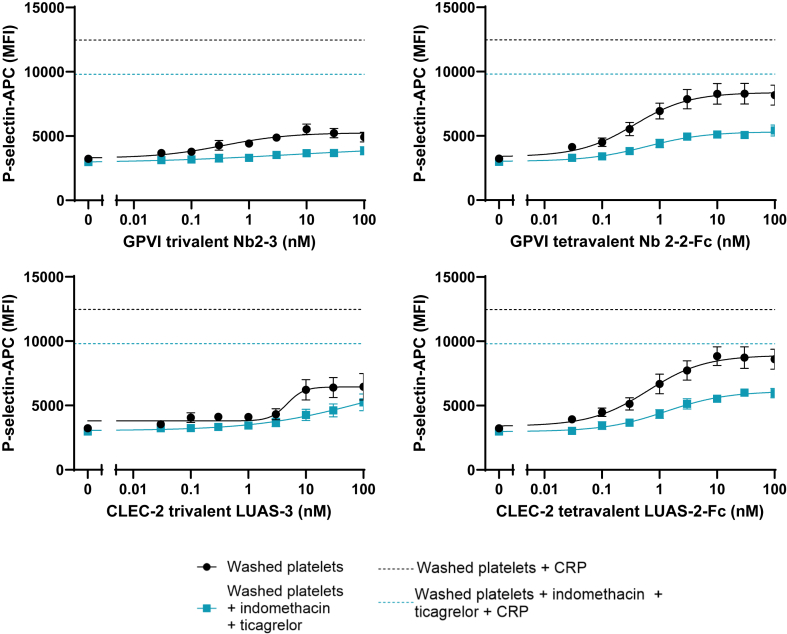 Figure 1
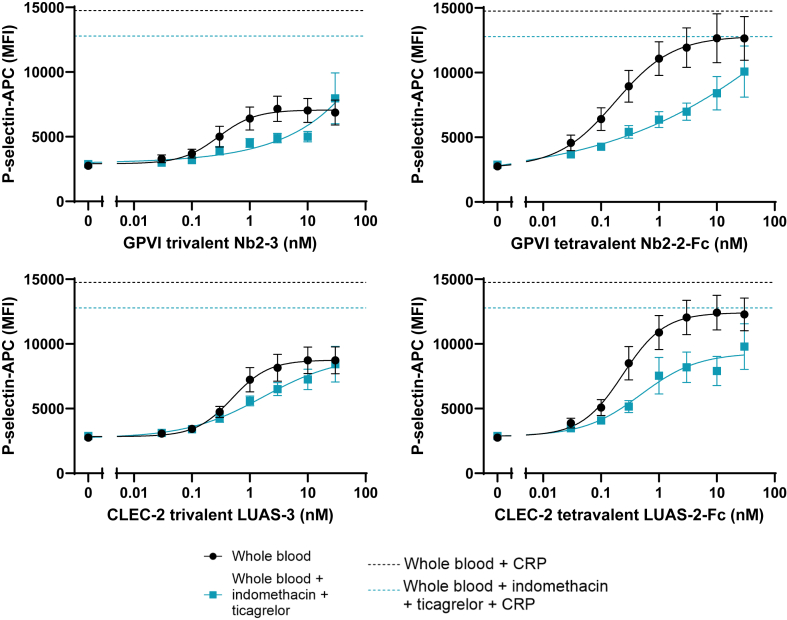 Figure 2
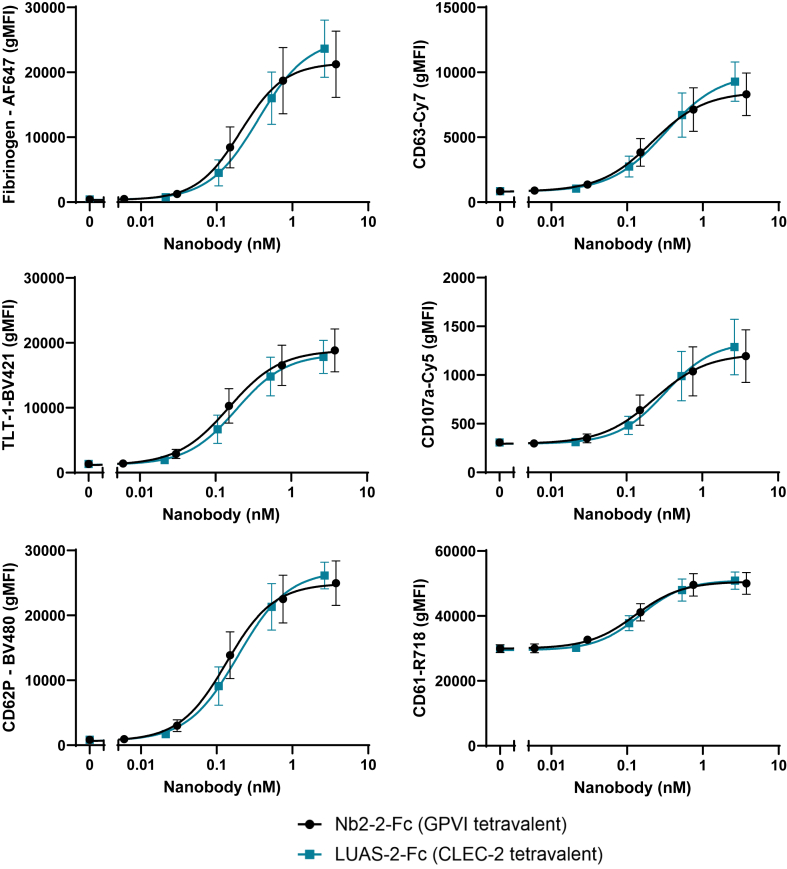 Figure 3
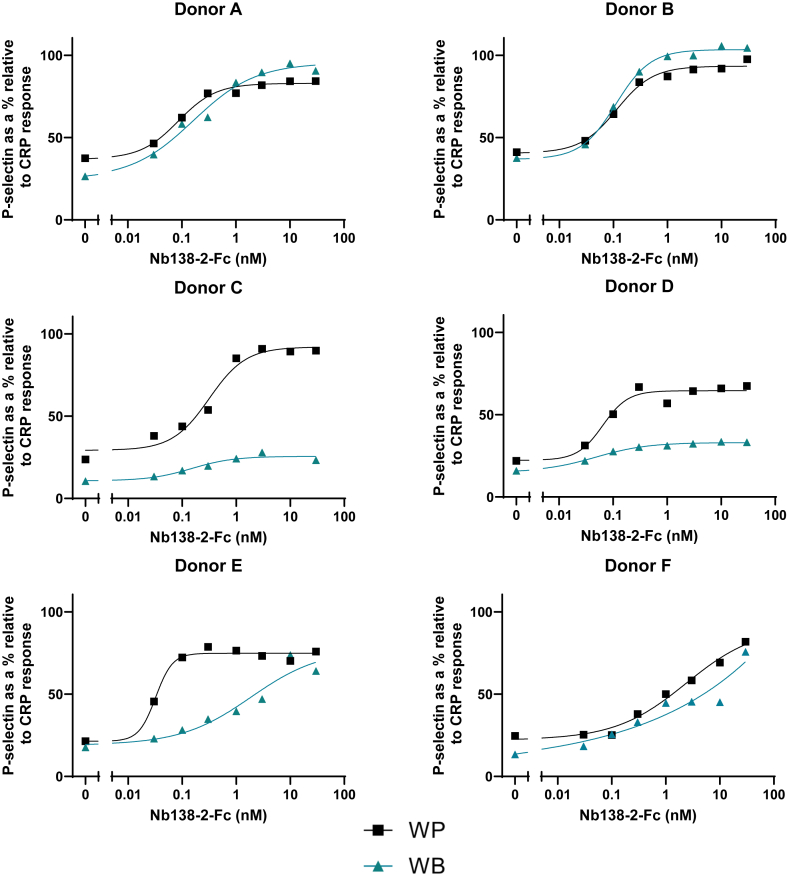 Figure 4
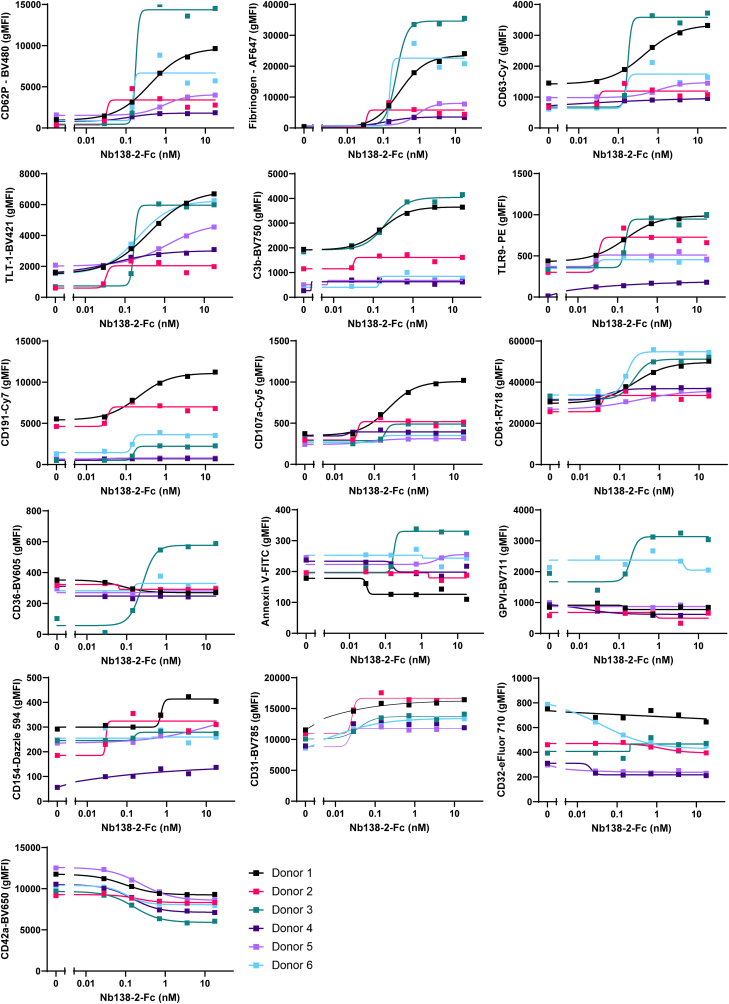 Figure 5
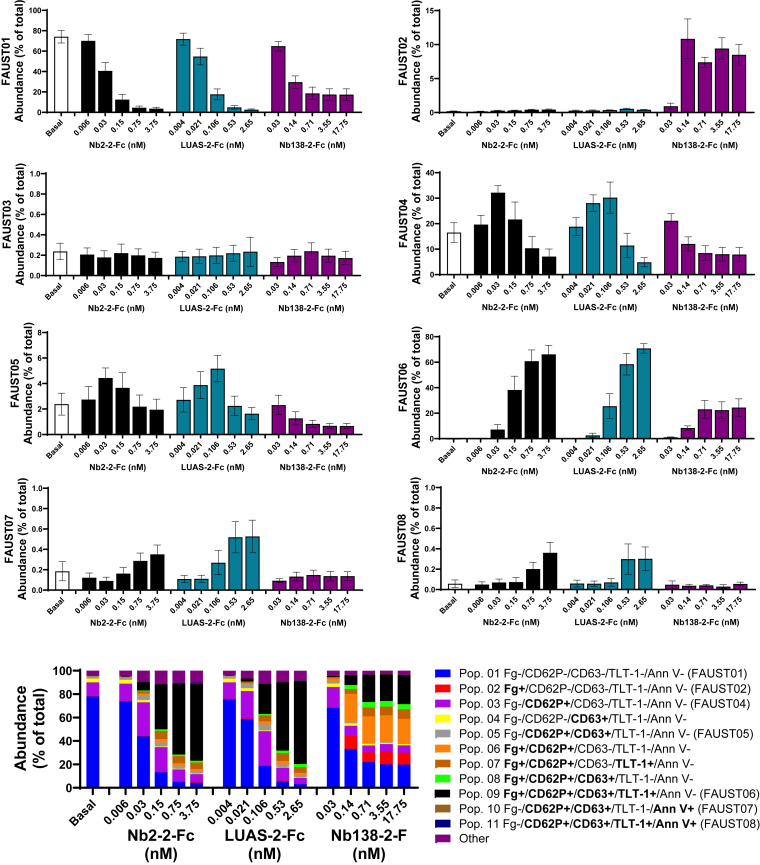 Figure 6
Peer Reviews
No public reviews on file for this paper yet. If you reviewed it on a platform where reviews are public (OpenReview, ICLR, NeurIPS, ICML), you can paste yours below so the community can read it here.
Videos
No videos yet. Explain this paper in a talk, walkthrough, or lecture? Add one.
Taxonomy
TopicsPlatelet Disorders and Treatments · Blood groups and transfusion · Renal Diseases and Glomerulopathies