New insights into molecular characterization and genetic diversity of Eimeria coccidian parasites in bats from diverse geographical regions of Thailand using nanopore-based DNA metabarcoding
Chatchapon Sricharoensuk, Pathamet Khositharattanakool, Puckavadee Somwang, Supaporn Wacharapluesadee, Padet Siriyasatien, Kanok Preativatanyou

TL;DR
This study uses DNA sequencing to explore the genetic diversity of Eimeria parasites in Thai bats, revealing complex evolutionary relationships with parasites in rodents.
Contribution
The first molecular assessment of Eimeria parasites in Thai bats, uncovering novel genetic clusters and evolutionary patterns.
Findings
Twenty Eimeria haplotypes were identified, grouped into five genetic clusters.
Phylogenetic analysis suggests shared ancestry and host-switching between bat and rodent Eimeria parasites.
Haplogroup 1 shows widespread distribution and broad host range, indicating recent population expansion.
Abstract
Bats represent over 1400 species globally, accounting for approximately one-fifth of all mammalian diversity, yet their gastrointestinal parasite communities remain understudied. Among these parasites, the genus Eimeria is one of the most commonly documented coccidian groups infecting bats. To date, more than 40 Eimeria spp. have been described from bats worldwide; however, molecular data are limited, and their evolutionary relationships with congeners infecting other vertebrate hosts remain largely unresolved. This study aims to elucidate the evolutionary connections between Eimeria parasites infecting bats and rodents, addressing a key question about shared ancestry and host-switching events across deeply divergent hosts. We investigated the genetic diversity and phylogenetic relationships of Eimeria spp. infecting Thai bats. Ninety-six genomic DNA samples extracted from bat guano,…
Genes, proteins, chemicals, diseases, species, mutations and cell lines named across the full text — each resolved to its canonical identifier and authoritative record.
Click any figure to enlarge with its caption.
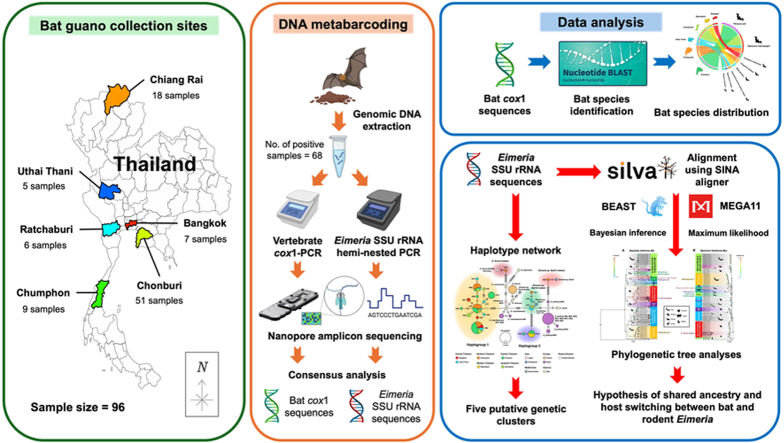 Figure 1
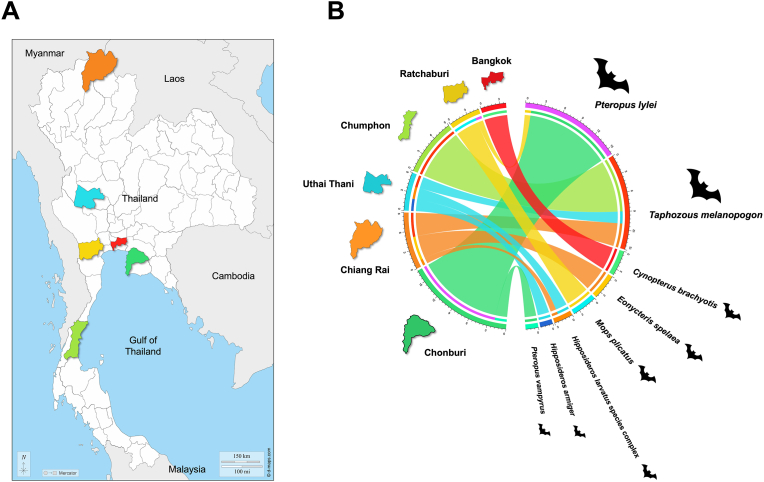 Figure 2
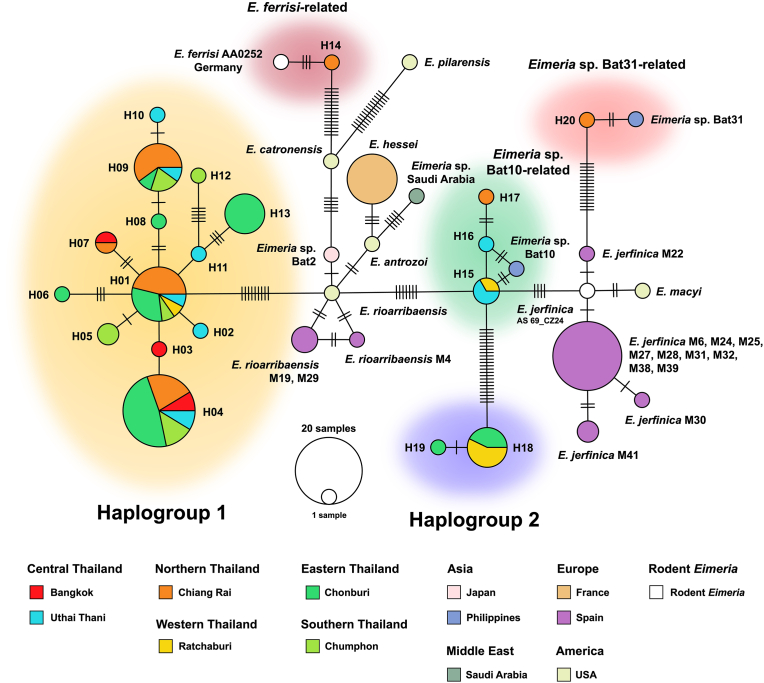 Figure 3
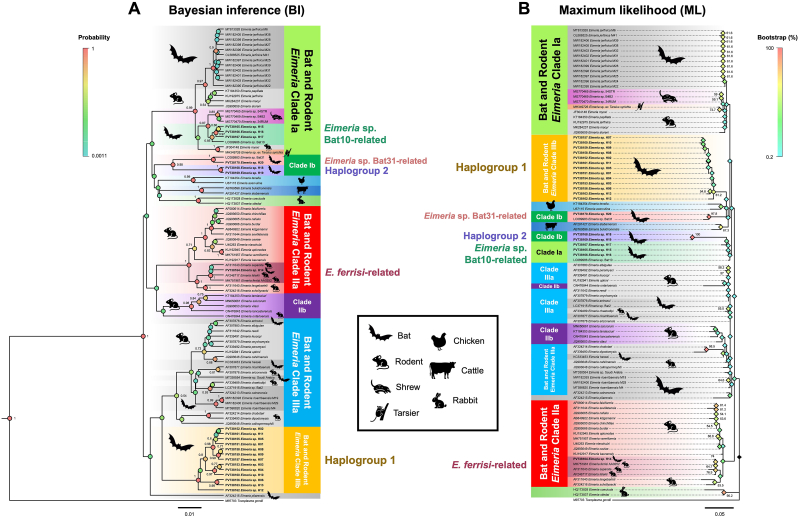 Figure 4
Peer Reviews
No public reviews on file for this paper yet. If you reviewed it on a platform where reviews are public (OpenReview, ICLR, NeurIPS, ICML), you can paste yours below so the community can read it here.
Videos
No videos yet. Explain this paper in a talk, walkthrough, or lecture? Add one.
Taxonomy
TopicsCoccidia and coccidiosis research · Parasitic Infections and Diagnostics · Parasite Biology and Host Interactions