Phytol-loaded soybean oil nanoemulsion as a promising alternative against Leishmania amazonensis
Victória Louise Pinto Freire, Mariana Farias Alves-Silva, Johny W de Freitas Oliveira, Matheus de Freitas Fernandes-Pedrosa, Alianda Maira Cornélio, Marcelo de Souza-Silva, Thayse Silva Medeiros, Arnóbio Antônio da Silva Junior

TL;DR
A phytol-loaded nanoemulsion shows promise as a safe and effective treatment for leishmaniasis, a tropical disease caused by Leishmania parasites.
Contribution
The development of a phytol-loaded soybean oil nanoemulsion with enhanced antiparasitic activity and colloidal stability for potential topical therapy.
Findings
The nanoemulsion (PHYT-NE) had a mean droplet size of ~200 nm and high colloidal stability for at least 30 days.
PHYT-NE exhibited up to 75% parasite death in Leishmania amazonensis promastigotes after 48 hours with significantly lower IC50 values than free phytol.
The formulation was cytocompatible with 3T3 fibroblasts, suggesting safety for further in vivo studies.
Abstract
Leishmaniasis, caused by protozoa of the genus Leishmania spp., is a neglected tropical disease that poses a significant challenge to the public health in tropical and subtropical regions, affecting mainly low-income individuals. Current therapies are limited due to severe adverse reactions to currently available drugs, high cost, low patient adherence, and even the emergence of resistant strains. Examining safer and more effective alternatives, natural compounds such as phytol – a diterpene derived from chlorophyll – have attracted attention due to their broad biological activities. To increase their solubility, stability, and cell delivery, nanotechnology-based systems, such as nanoemulsions (NEs), represent a promising approach. In this study, soybean oil nanoemulsions loaded with phytol (PHYT-NE) were developed using the phase inversion composition (PIC) method, and then…
Genes, proteins, chemicals, diseases, species, mutations and cell lines named across the full text — each resolved to its canonical identifier and authoritative record.
Click any figure to enlarge with its caption.
 Figure 1
 Figure 2
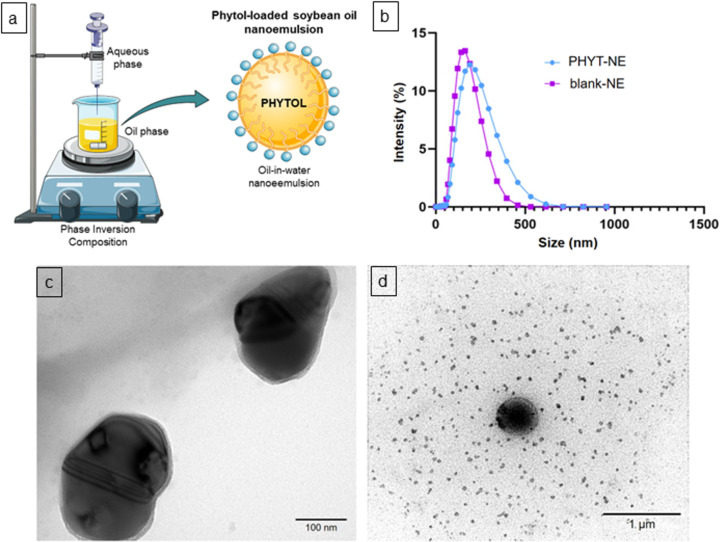 Figure 3
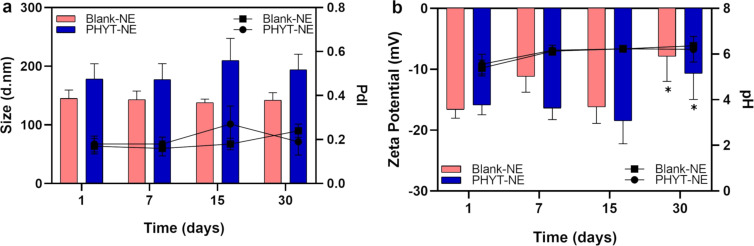 Figure 4
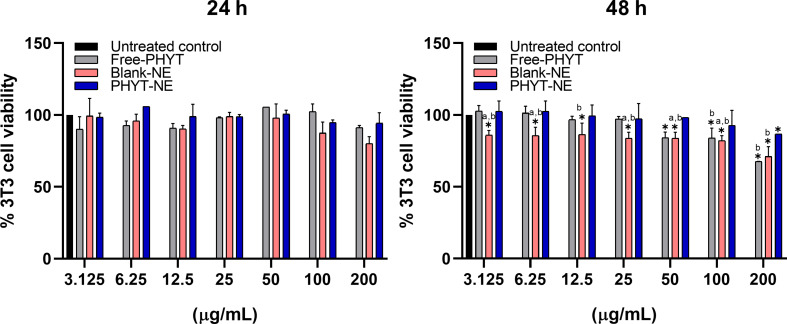 Figure 5
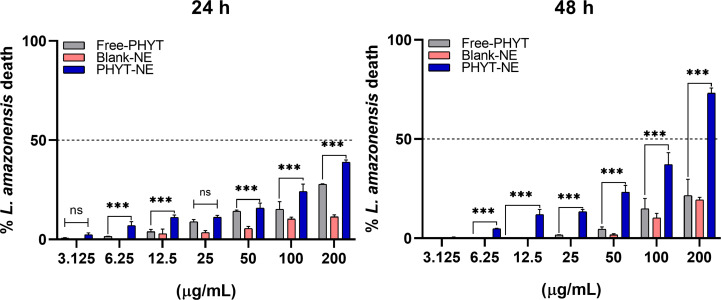 Figure 6
Peer Reviews
No public reviews on file for this paper yet. If you reviewed it on a platform where reviews are public (OpenReview, ICLR, NeurIPS, ICML), you can paste yours below so the community can read it here.
Videos
No videos yet. Explain this paper in a talk, walkthrough, or lecture? Add one.
Taxonomy
TopicsMoringa oleifera research and applications · Insect Pest Control Strategies · Research on Leishmaniasis Studies