Pd-catalyzed dehydrogenative arylation of arylhydrazines to access non-symmetric azobenzenes, including tetra-ortho derivatives
Loris Geminiani, Kathrin Junge, Matthias Beller, Jean-François Soulé

TL;DR
This paper introduces a new method to efficiently create non-symmetric azobenzenes using a palladium-catalyzed reaction, solving previous challenges in their synthesis.
Contribution
A one-pot Pd-catalyzed dehydrogenative C–N coupling method for synthesizing non-symmetric azobenzenes, including tetra-ortho derivatives.
Findings
The method enables selective N-arylation at the terminal nitrogen using bulky phosphine ligands.
The protocol is robust, tolerating various functional groups and working under O2 and water conditions.
Tetra-ortho-substituted azobenzenes were successfully synthesized for the first time using this approach.
Abstract
Azobenzenes are photoresponsive compounds widely used in molecular switches, light-controlled materials, and sensors, but despite extensive studies on symmetric derivatives, efficient methods for synthesizing non-symmetric analogues remain scarce due to regioselectivity issues, multistep procedures, and limited applicability to tetra-ortho-substituted structures. Herein, we describe a direct, one-pot Pd-catalyzed dehydrogenative C–N coupling between aryl bromides and arylhydrazines to access non-symmetric azobenzenes. The use of bulky phosphine ligands and sterically tuned substrates promotes selective N-arylation at the terminal nitrogen. The protocol tolerates a wide range of functional groups and enables the synthesis of well-decorated azobenzenes, including tetra-ortho-substituted derivatives. Notably, the reaction proceeds under an O2 atmosphere and in the presence of water,…
Genes, proteins, chemicals, diseases, species, mutations and cell lines named across the full text — each resolved to its canonical identifier and authoritative record.
Click any figure to enlarge with its caption.
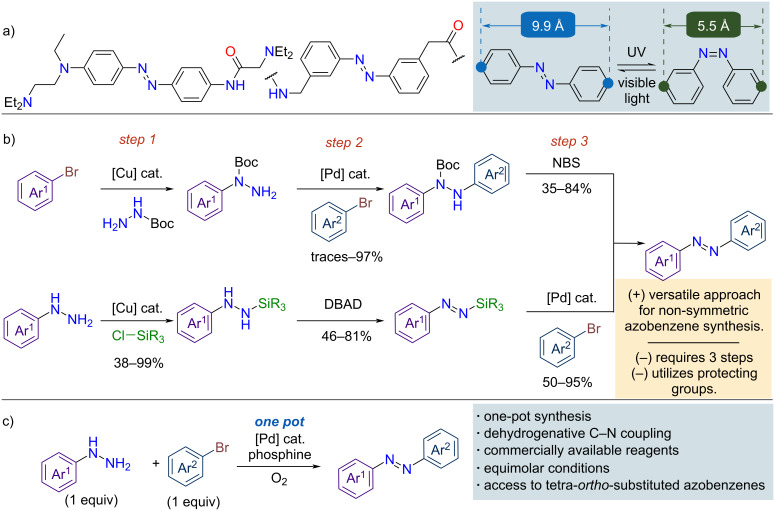 Figure 1
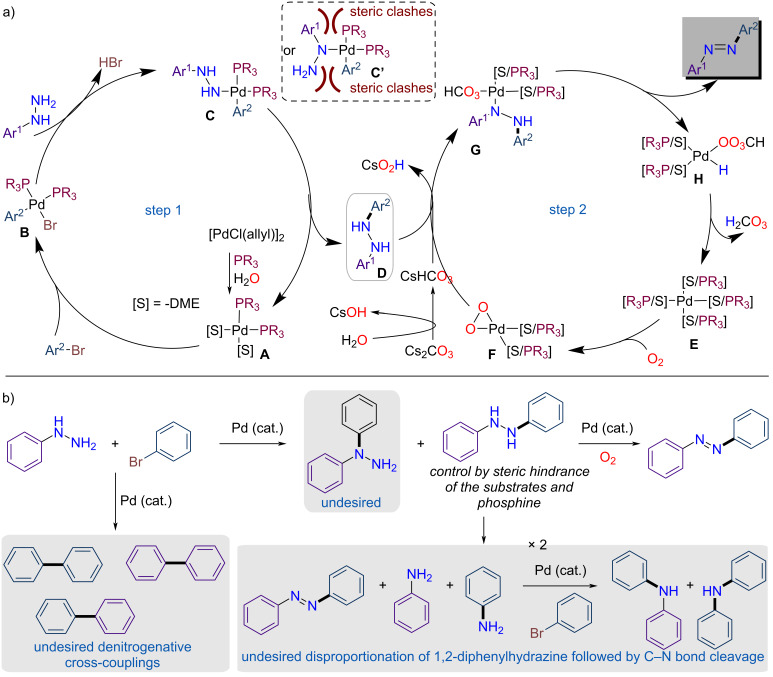 Figure 2
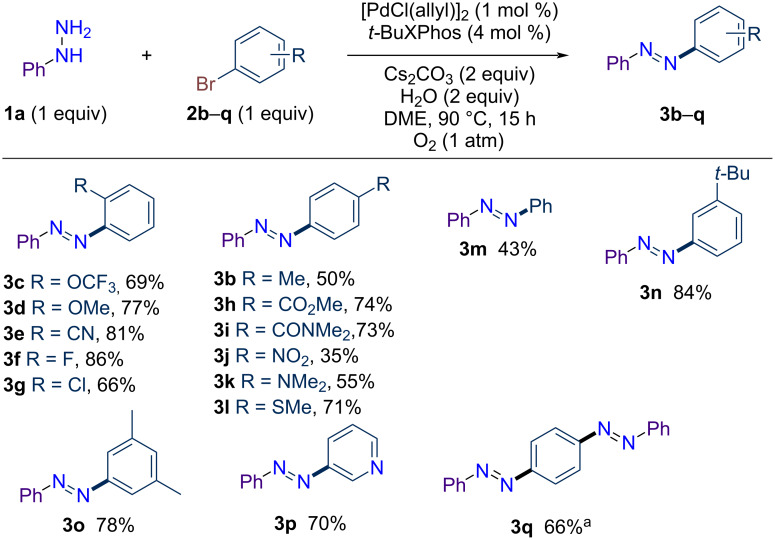 Figure 3
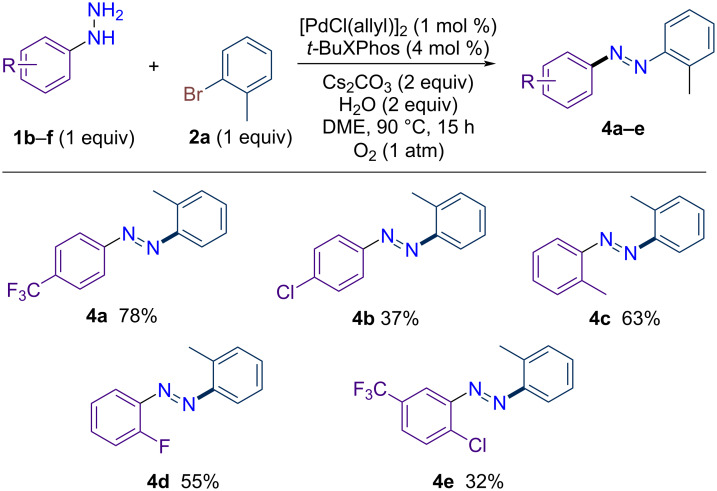 Figure 4
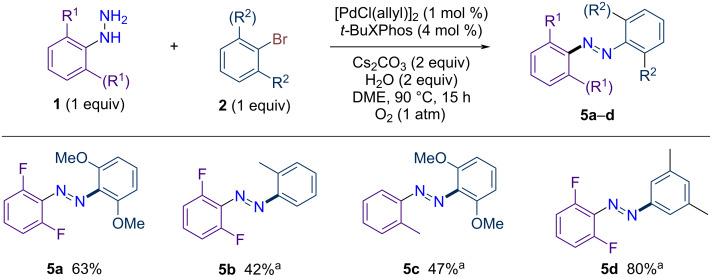 Figure 5
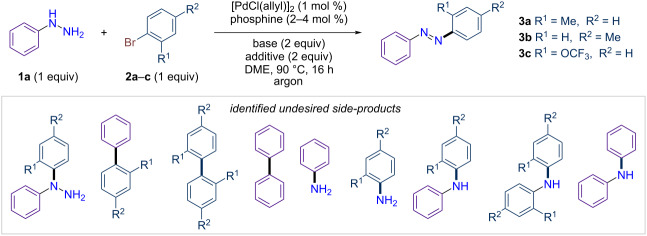 Figure 6
Peer Reviews
No public reviews on file for this paper yet. If you reviewed it on a platform where reviews are public (OpenReview, ICLR, NeurIPS, ICML), you can paste yours below so the community can read it here.
Videos
No videos yet. Explain this paper in a talk, walkthrough, or lecture? Add one.
Taxonomy
TopicsPhotochromic and Fluorescence Chemistry · Nanomaterials for catalytic reactions · Catalytic C–H Functionalization Methods