Atom-by-atom assembly reveals structure–performance control in PdCu catalysts for CO2 hydrogenation to methanol
Louise R. Smith, Emerson C. Kohlrausch, Kieran J. Aggett, Mario Samperi, Sadegh Ghaderzadeh, Andreas Weilhard, Luke T. Norman, Isla E. Gow, Yifan Chen, Giuseppe Bonura, Catia Cannilla, Elena Besley, David J. Morgan, Thomas J. A. Slater, Andrei N. Khlobystov

TL;DR
Scientists built precise PdCu catalysts atom by atom on ZnO, revealing how metal addition order affects performance in converting CO2 to methanol.
Contribution
A solvent-free method for assembling PdCu bimetallic particles with atomic-level control on ZnO.
Findings
Simultaneous PdCu deposition yields the highest methanol productivity at 8.2 mol h−1 molmetal−1.
Cu enhances CO2 adsorption and modulates Pd binding to improve methanol selectivity.
Deposition order determines particle size and structure in PdCu bimetallic catalysts.
Abstract
The catalytic conversion of CO2 to methanol using bimetallic materials presents a promising pathway for sustainable chemical production. A major challenge is the lack of atomic-level control over the catalyst structure and composition, which hinders the understanding of each metal's role in activity and selectivity. Here, we present a solvent-free on-surface assembly of PdCu bimetallic particles, directly from atoms, on ZnO with precise control of the order and quantity of metal atoms added. This atomic-defined interface reveals when atoms are added simultaneously, the metal with stronger ZnO binding governs particle size, but when introduced sequentially the first metal determines particle size. The simultaneously deposited PdCu exhibits the highest reported methanol productivity for PdCu-systems, achieving 8.2 mol h−1 molmetal−1 at 270 °C and 20 bar. In this catalyst, Cu enhances CO2…
Genes, proteins, chemicals, diseases, species, mutations and cell lines named across the full text — each resolved to its canonical identifier and authoritative record.
Click any figure to enlarge with its caption.
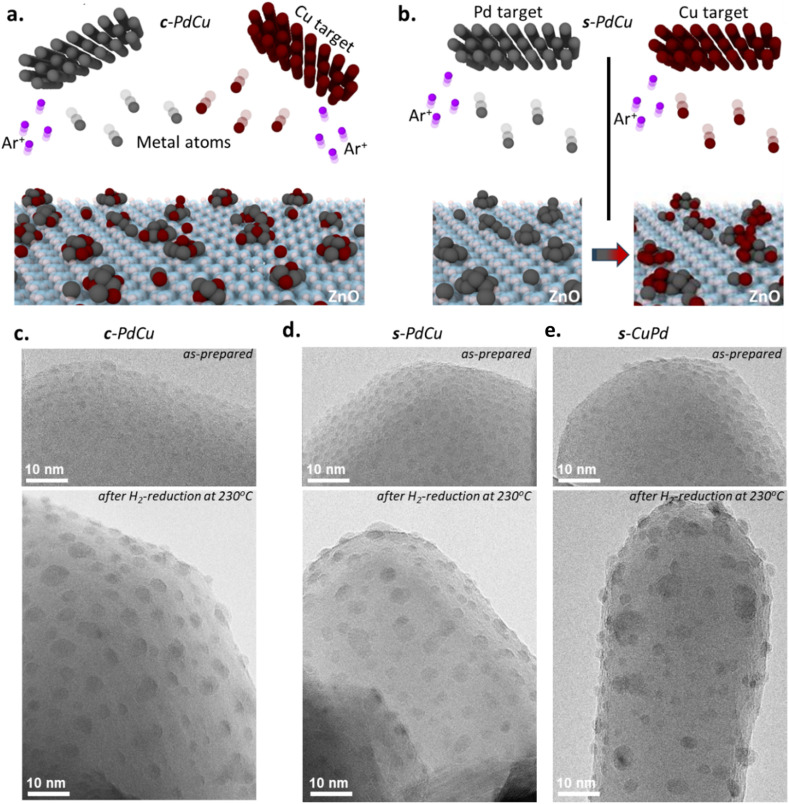 Figure 1
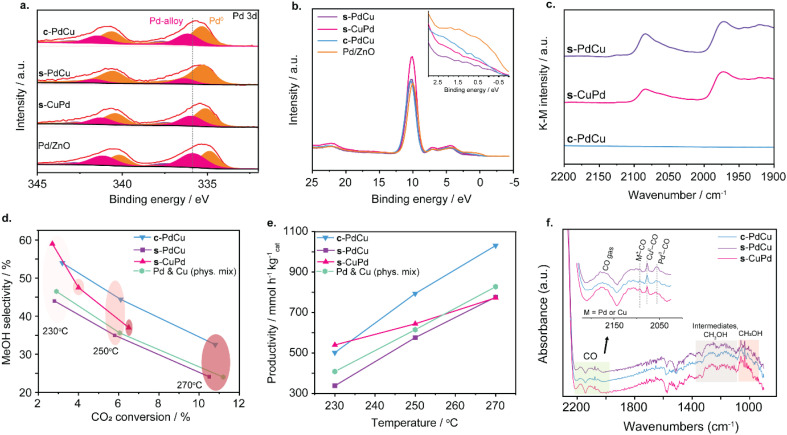 Figure 2
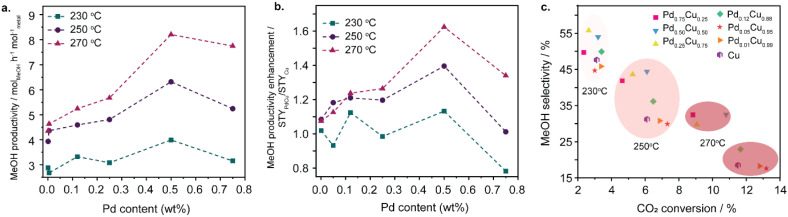 Figure 3
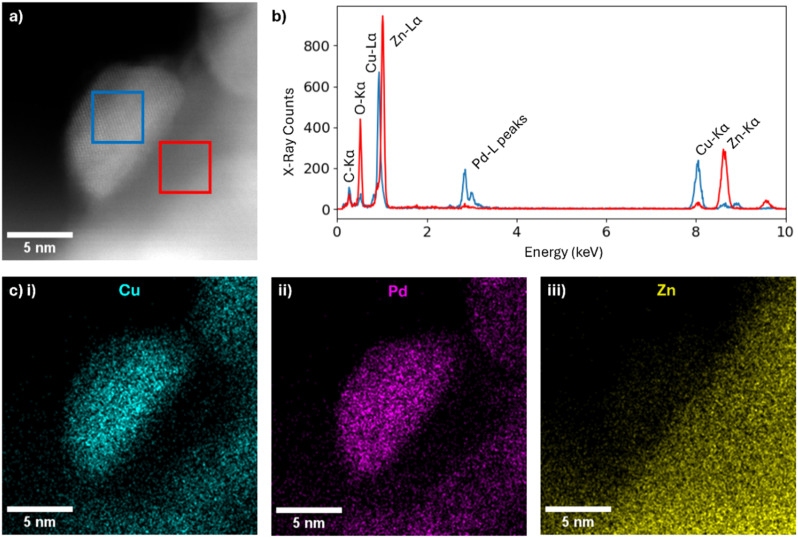 Figure 4
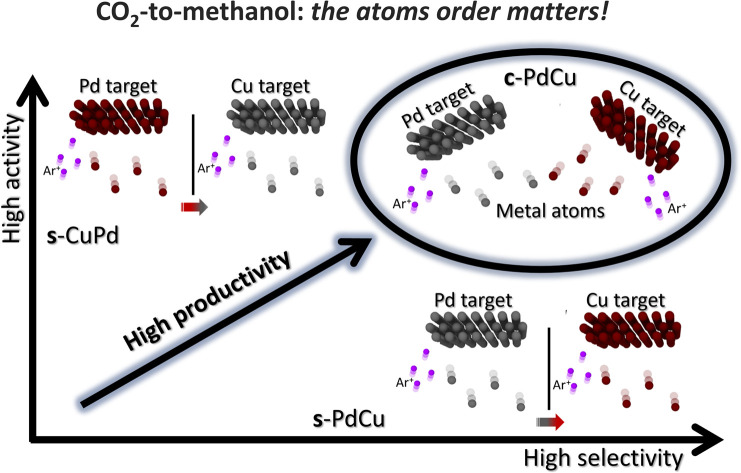 Figure 5
Peer Reviews
No public reviews on file for this paper yet. If you reviewed it on a platform where reviews are public (OpenReview, ICLR, NeurIPS, ICML), you can paste yours below so the community can read it here.
Videos
No videos yet. Explain this paper in a talk, walkthrough, or lecture? Add one.
Taxonomy
TopicsCatalysts for Methane Reforming · CO2 Reduction Techniques and Catalysts · Catalytic Processes in Materials Science