More Sophisticated Is Not Always Better: A Comparison of Similarity Measures for Unsupervised Learning of Pathways in Biomolecular Simulations
Miriam Jäger, Steffen Wolf

TL;DR
This paper compares different similarity measures for analyzing molecular simulation data and finds that simpler methods can be as effective as more complex ones.
Contribution
The study evaluates and compares the effectiveness of four similarity measures in clustering biomolecular simulation trajectories.
Findings
Wasserstein distances provided the best clustering performance in a streptavidin–biotin system.
Euclidean distances were sufficient for meaningful clustering in a more complex A2a receptor-inhibitor system.
More sophisticated similarity measures did not consistently outperform simpler ones.
Abstract
Finding process pathways in molecular simulations such as the unbinding paths of small molecule ligands from their binding sites at protein targets in a set of trajectories via unsupervised learning approaches requires the definition of a suitable similarity measure between trajectories. Here, we evaluate the performance of four such measures with varying degree of sophistication, i.e., Euclidean and Wasserstein distances, Procrustes analysis, and dynamic time warping, when analyzing trajectory data from two different biased simulation driving protocols in the form of constant velocity constraint targeted MD and steered MD. In a streptavidin–biotin benchmark system with known ground truth clusters, Wasserstein distances yielded the best clustering performance, closely followed by Euclidean distances, both being the most computationally efficient similarity measures. In a more complex…
Genes, proteins, chemicals, diseases, species, mutations and cell lines named across the full text — each resolved to its canonical identifier and authoritative record.
Click any figure to enlarge with its caption.
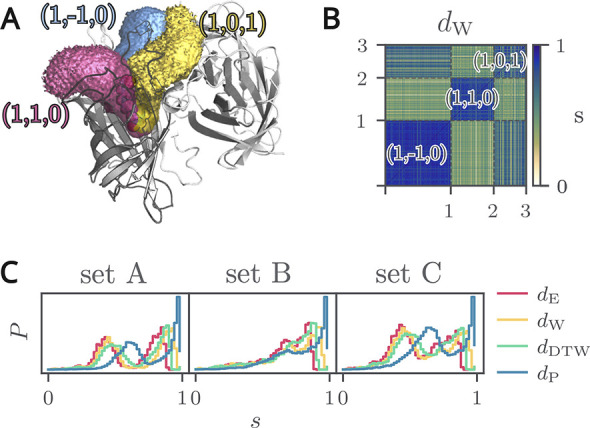 Figure 1
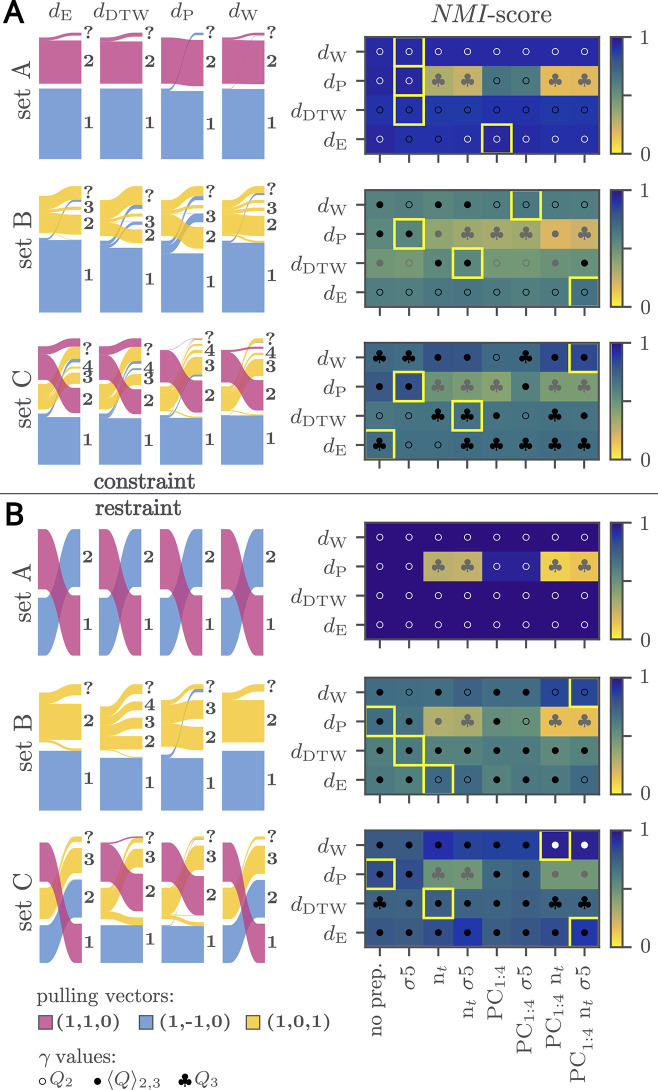 Figure 2
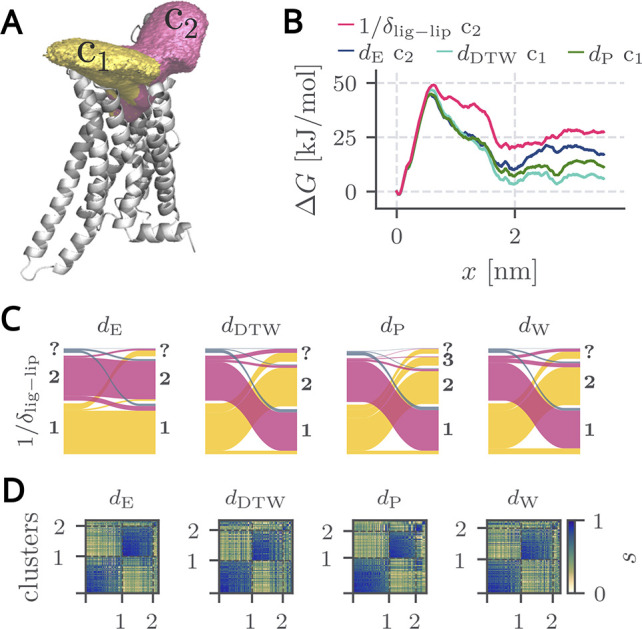 Figure 3
 Figure 4
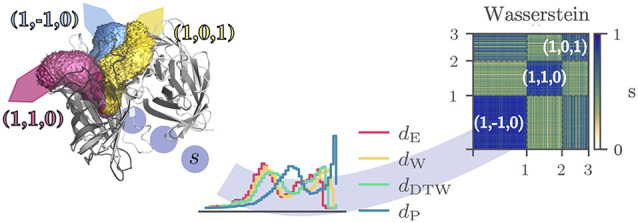 Figure 5
 Figure 6
 Figure 7
 Figure 8
 Figure 9
 Figure 10
 Figure 11
 Figure 12
 Figure 13
 Figure 14
 Figure 15
 Figure 16
 Figure 17
 Figure 18
 Figure 19
 Figure 20
 Figure 21
 Figure 22
 Figure 23
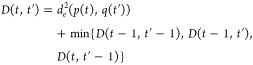 Figure 24
 Figure 25
 Figure 26
 Figure 27
 Figure 28
 Figure 29
 Figure 30
 Figure 31
 Figure 32
 Figure 33
 Figure 34
 Figure 35
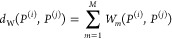 Figure 36
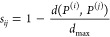 Figure 37
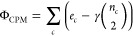 Figure 38
 Figure 39
 Figure 40
 Figure 41
 Figure 42
 Figure 43
 Figure 44
 Figure 45
 Figure 46
 Figure 47
 Figure 48
 Figure 49
 Figure 50
Peer Reviews
No public reviews on file for this paper yet. If you reviewed it on a platform where reviews are public (OpenReview, ICLR, NeurIPS, ICML), you can paste yours below so the community can read it here.
Videos
No videos yet. Explain this paper in a talk, walkthrough, or lecture? Add one.
Taxonomy
TopicsProtein Structure and Dynamics · Microbial Metabolic Engineering and Bioproduction · Bioinformatics and Genomic Networks