Tip-Induced Etching and Vacancy Island Evolution on 2H-TaS2 Revealed by STM
Dejia Kong, Richard Peckham, Kory Burns, Zhiqiang Mao, Seng Huat Lee, Jordan A. Hachtel, Zheng Gai, Ian Harrison, Petra Reinke

TL;DR
This paper shows how scanning tunneling microscopy can etch and reshape 2D TaS2 surfaces, leading to controlled vacancy island formation and potential for nanolithography.
Contribution
The study introduces a new understanding of tip-induced etching and vacancy island evolution in 2H-TaS2 using real-space STM and AI analysis.
Findings
Vacancy islands on 2H-TaS2 grow with linear perimeter and parabolic area rates.
Tip-induced etching mechanisms include chemistry, water adsorbates, and native defects.
Redeposited surface islands contribute to the etching process.
Abstract
Recent research on 2D materials using scanning probe microscopy reveals that the surface of transition metal dichalcogenides can be etched during the measurement via either a tunneling-field-driven or a scanning probe-driven process. The tip-induced manipulation of the surface structure and defects is a first step toward nanolithography using scanning probes. Real-space scanning tunneling microscopy experiments provide a surface defect inventory, which includes linear and point defects for 2H-TaS2 grown by chemical vapor transport. Extended periods of imaging trigger the formation of vacancy islands that grow and coalesce over time, leading to the sequential removal of entire layers. The growth kinetics of vacancies were observed over extended periods and quantified using AI and conventional image analysis tools. The vacancy islands have a linear growth rate of their perimeter and…
Genes, proteins, chemicals, diseases, species, mutations and cell lines named across the full text — each resolved to its canonical identifier and authoritative record.
Click any figure to enlarge with its caption.
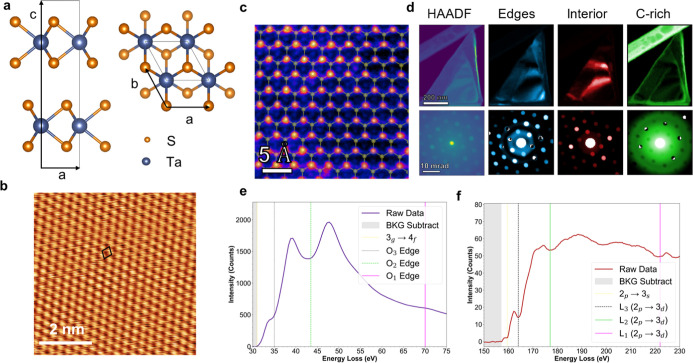 Figure 1
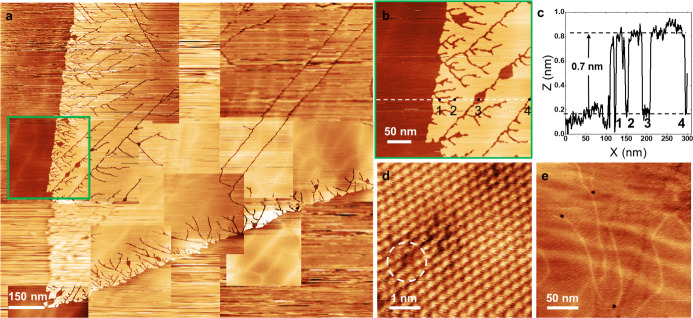 Figure 2
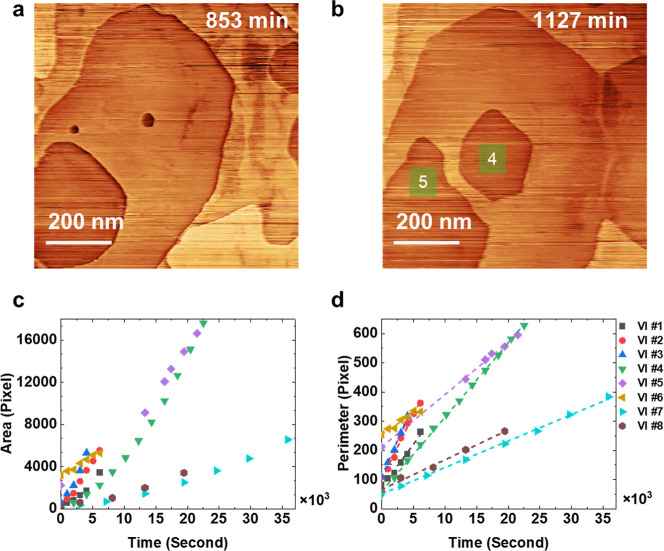 Figure 3
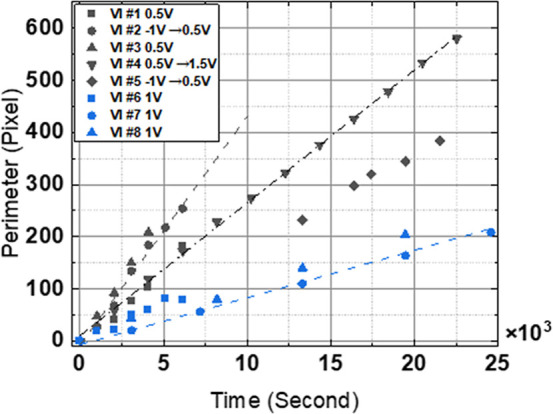 Figure 4
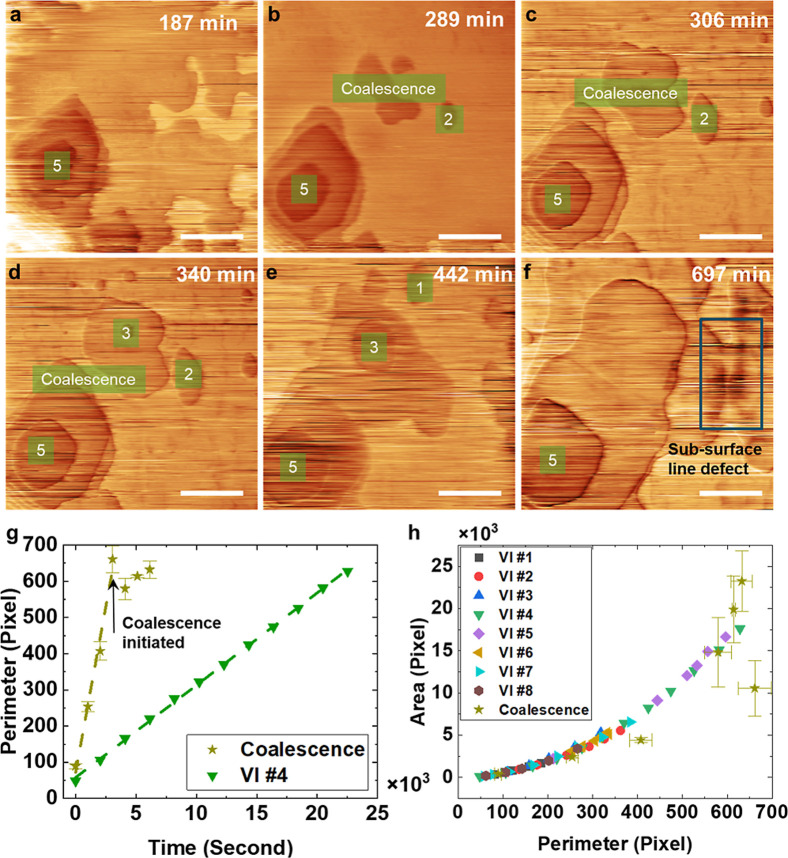 Figure 5
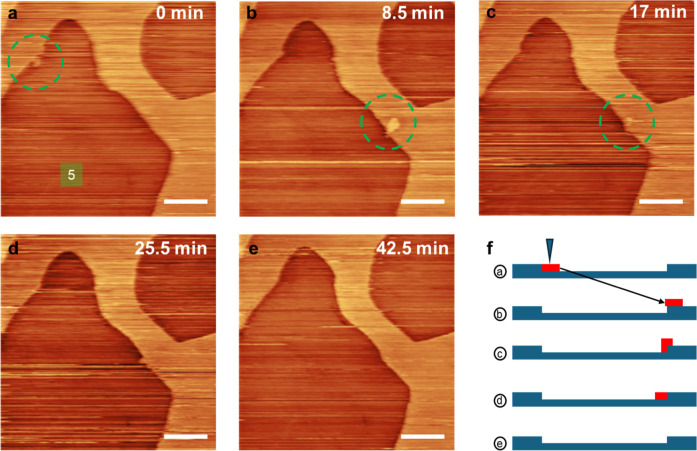 Figure 6
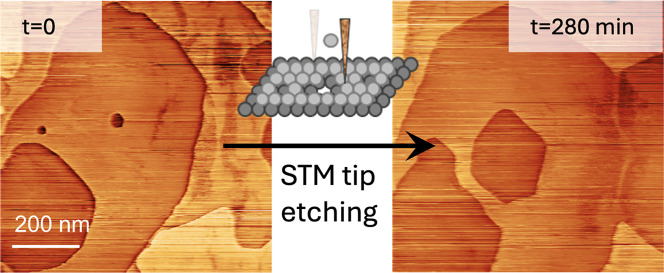 Figure 7
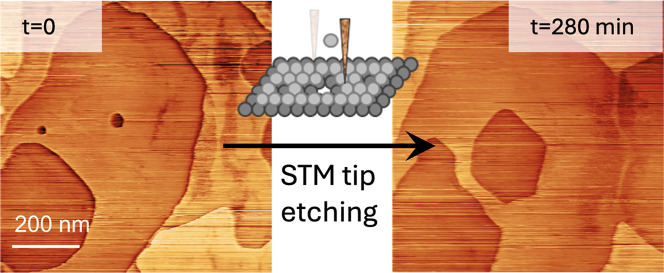 Figure 8
Peer Reviews
No public reviews on file for this paper yet. If you reviewed it on a platform where reviews are public (OpenReview, ICLR, NeurIPS, ICML), you can paste yours below so the community can read it here.
Videos
No videos yet. Explain this paper in a talk, walkthrough, or lecture? Add one.
Taxonomy
Topics2D Materials and Applications · MXene and MAX Phase Materials · Ferroelectric and Negative Capacitance Devices