Optimization of 2,8-Diaryl-1,5-naphthyridines as Plasmodium falciparum Phosphatidylinositol 4‑Kinase Inhibitors with Improved ADME Profiles and In Vivo Efficacy
Godwin A. Dziwornu, Donald Seanego, Stephen Fienberg, Venkata S. Sypu, Nicolaas Salomane, Liezl Krugmann, Dale Taylor, Keabetswe Masike, Mathew Njoroge, Nonlawat Boonyalai, Marcus C. S. Lee, Luiz C. Godoy, Charisse Flerida Pasaje, Jacquin C. Niles, Gregory S. Basarab

TL;DR
Researchers optimized a new compound that inhibits a key malaria parasite enzyme, showing improved drug properties and effectiveness in a mouse model.
Contribution
A new 2,8-diaryl-1,5-naphthyridine compound with improved ADME and in vivo efficacy against Plasmodium falciparum is identified.
Findings
Compound 27 reduced parasitaemia by 91% in a humanized mouse model of malaria.
Compound 27 shows no hERG inhibition or mammalian cytotoxicity.
Compound 27 has low selectivity against some human lipid kinases but higher selectivity against others.
Abstract
Previously reported antimalarial Plasmodium phosphatidylinositol 4-kinase IIIβ 2,8-diaryl-1,5-naphthyridine inhibitors have shown suboptimal physicochemical and pharmacokinetic properties. A focused target-based structure–activity relationship and structure–property optimization studies identified several compounds with good target and whole-cell activities and improved physicochemical properties. A new frontrunner compound 27 showed an improved pharmacokinetic profile and reduced parasitaemia (91% at 4 × 50 mg/kg QD doses) in the humanized NOD-scid IL-2Rγnull mouse model of Plasmodium falciparum malaria. Compound 27 poses no hERG channel inhibition at high concentrations or mammalian cytotoxicity but shows low selectivity against related human lipid kinases (PI3Kα and PI4Kβ); however, significantly higher selectivity margins were observed against the human MINK1 and MAP4K4 kinases.
Genes, proteins, chemicals, diseases, species, mutations and cell lines named across the full text — each resolved to its canonical identifier and authoritative record.
Click any figure to enlarge with its caption.
 Figure 1
 Figure 2
 Figure 3
 Figure 4
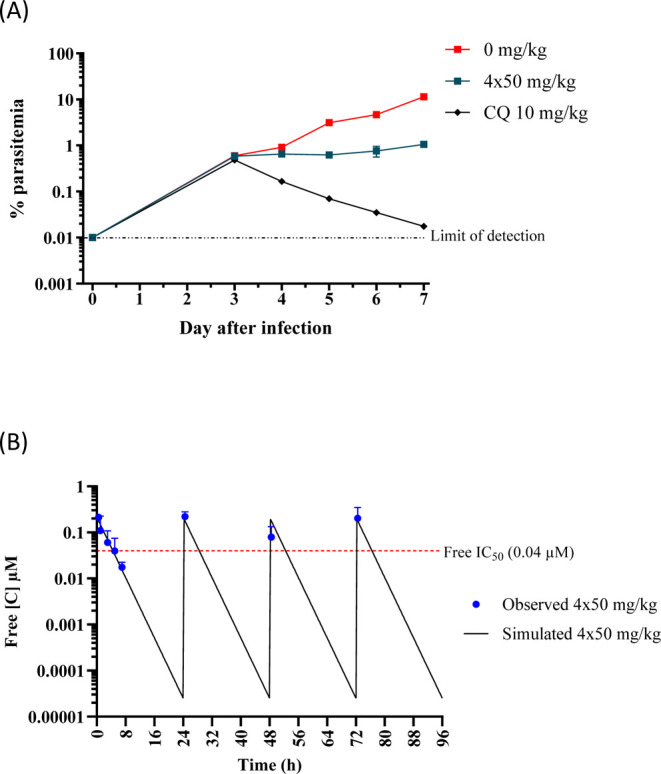 Figure 5
 Figure 6
 Figure 7
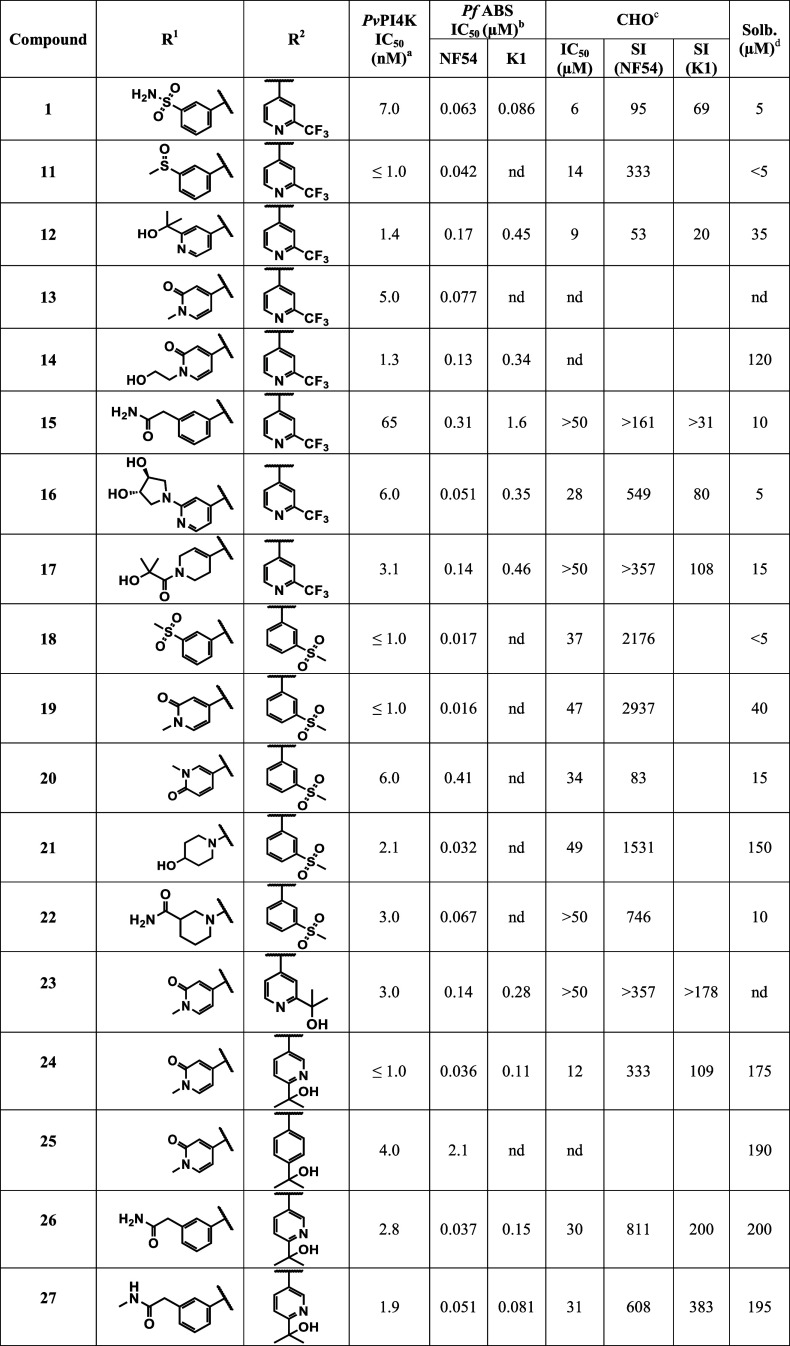 Figure 8
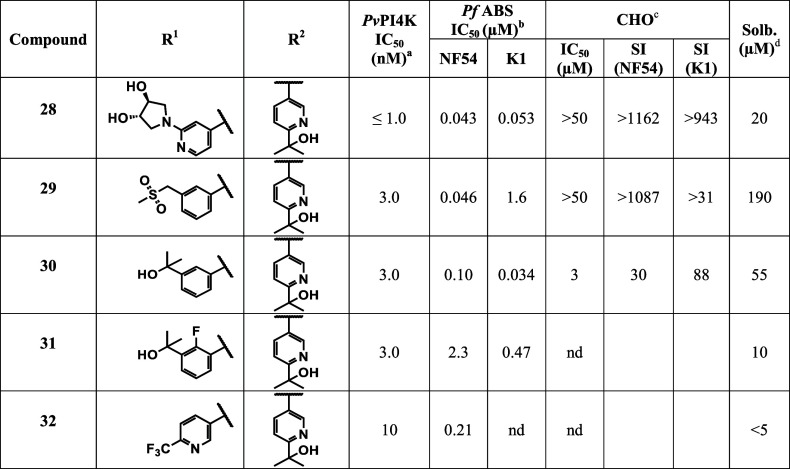 Figure 9
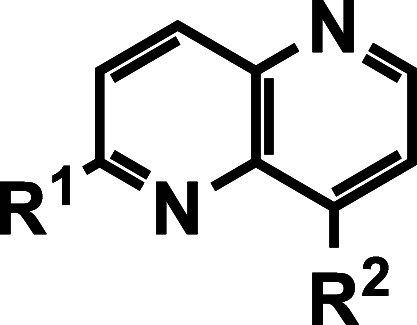 Figure 10
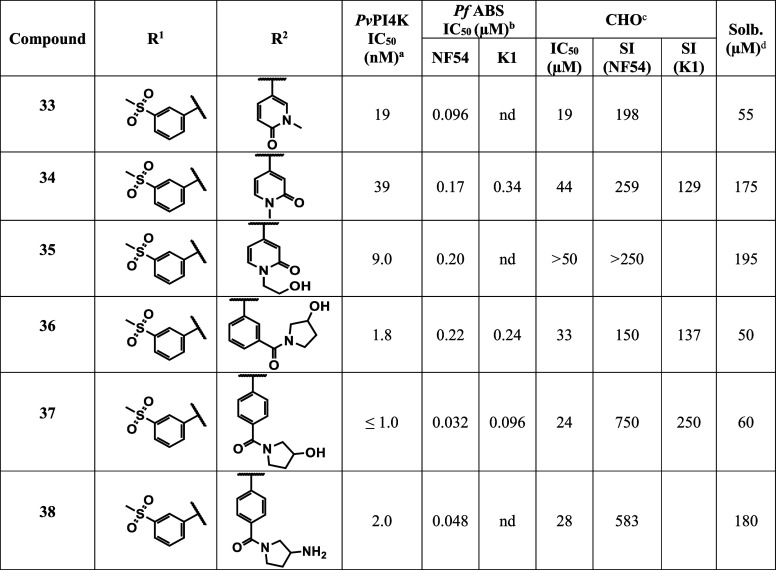 Figure 11
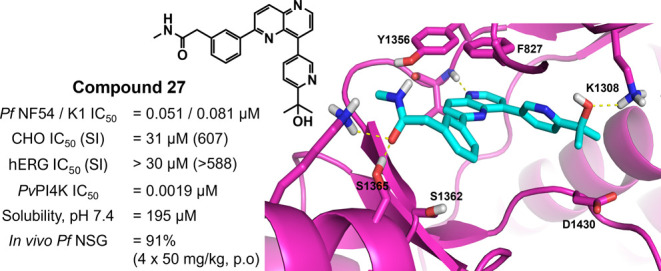 Figure 12
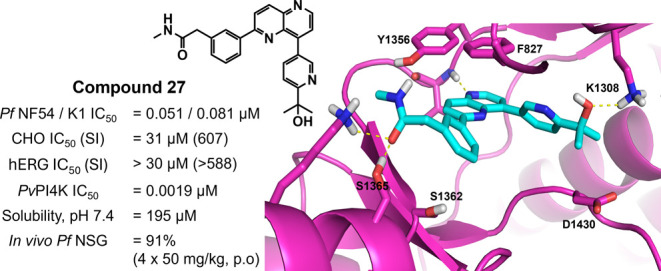 Figure 13
Peer Reviews
No public reviews on file for this paper yet. If you reviewed it on a platform where reviews are public (OpenReview, ICLR, NeurIPS, ICML), you can paste yours below so the community can read it here.
Videos
No videos yet. Explain this paper in a talk, walkthrough, or lecture? Add one.
Taxonomy
TopicsSynthesis and biological activity · Biochemical and Molecular Research · Research on Leishmaniasis Studies