Response of a General Restricted Open-Shell Hartree–Fock Wave Function. I: Formalism, Analytic Gradients, and Electric and Magnetic Response Properties
Frank Neese

TL;DR
This paper introduces a new quantum chemistry method for calculating properties of open-shell molecules with complex spin states.
Contribution
A general restricted open-shell Hartree–Fock response theory is developed for arbitrary spin configurations.
Findings
The g-ROHF method enables accurate electric and magnetic property calculations for complex open-shell systems.
New vector-coupling coefficients allow proper spin density calculations in general-spin systems.
The method successfully computes g-tensors and hyperfine couplings in transition-metal complexes and metal–radical assemblies.
Abstract
In this work, the formal development and implementation of a general restricted open-shell Hartree–Fock (g-ROHF) response theory is presented. The theory enables analytic computation of electric and magnetic response properties for arbitrarily complex open-shell configurations. In contrast to traditional ROHF methods, which are typically restricted to high-spin cases, the g-ROHF formulation supports general-spin couplings and orbital degeneracies while preserving the spin purity. A new set of vector-coupling coefficients is introduced that allows for the calculation of a proper spin density from a g-ROHF wave function. Analytic nuclear derivatives, along with the electric and magnetic orbital Hessians, are derived in a unified framework. Special attention is given to the treatment of SCF instabilities and the projection of unphysical modes from the response space. An efficient AO-driven…
Genes, proteins, chemicals, diseases, species, mutations and cell lines named across the full text — each resolved to its canonical identifier and authoritative record.
Click any figure to enlarge with its caption.
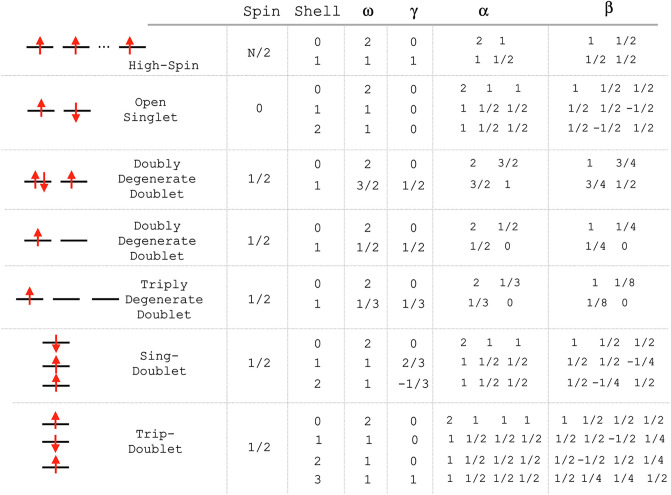 Figure 1
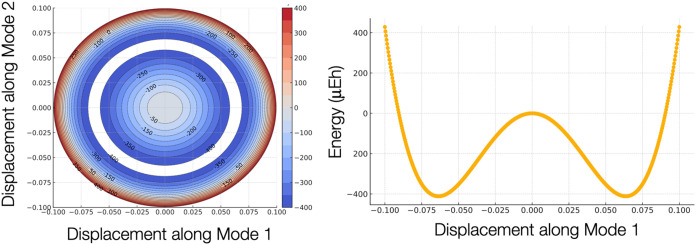 Figure 2
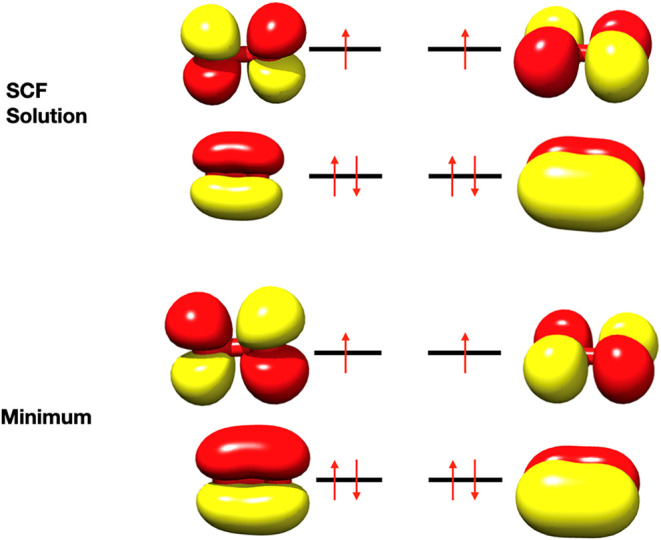 Figure 3
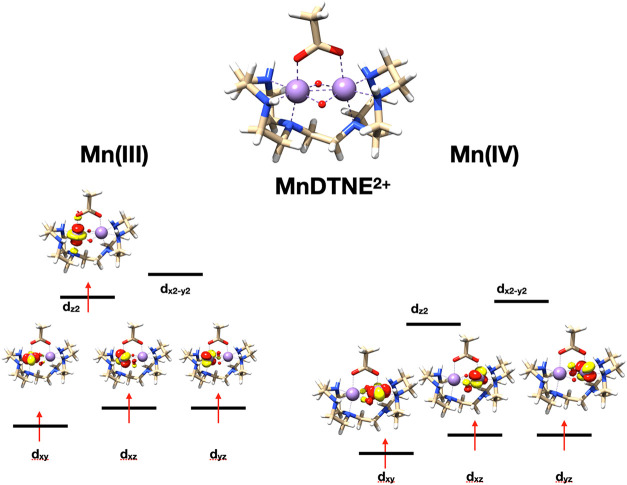 Figure 4
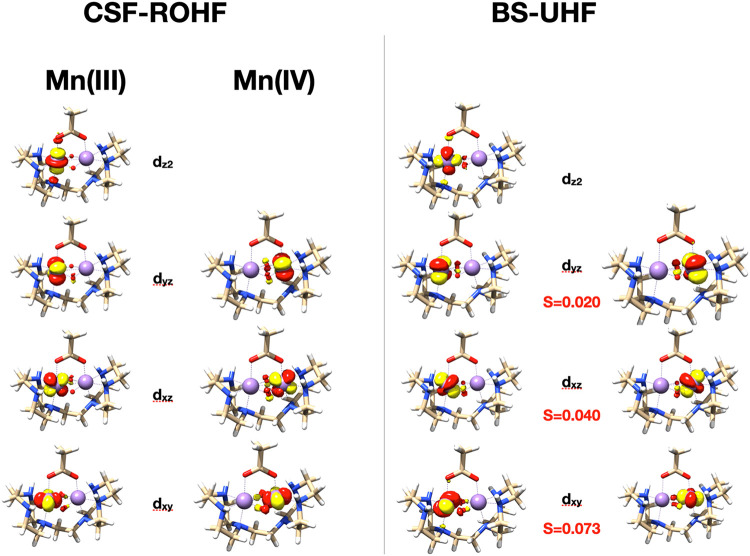 Figure 5
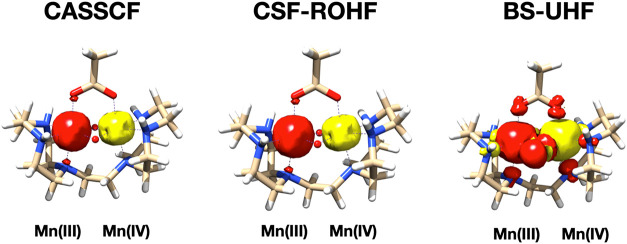 Figure 6
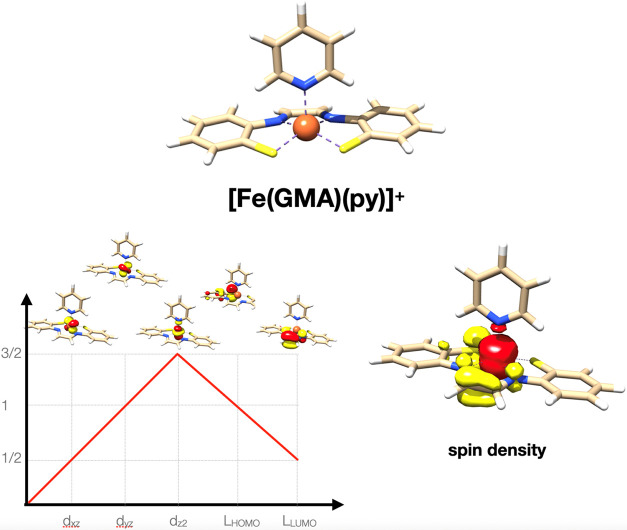 Figure 7
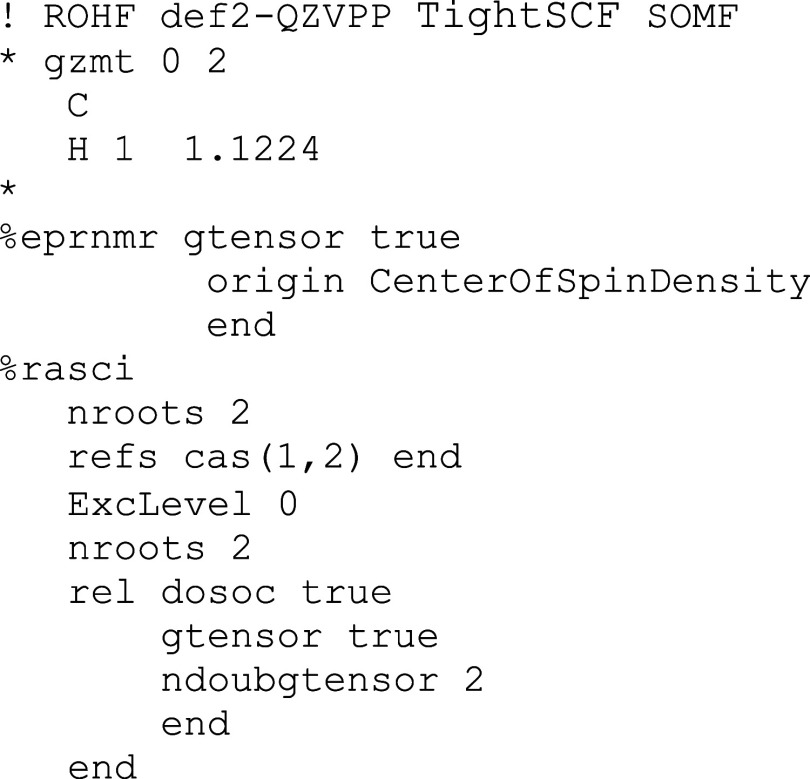 Figure 8
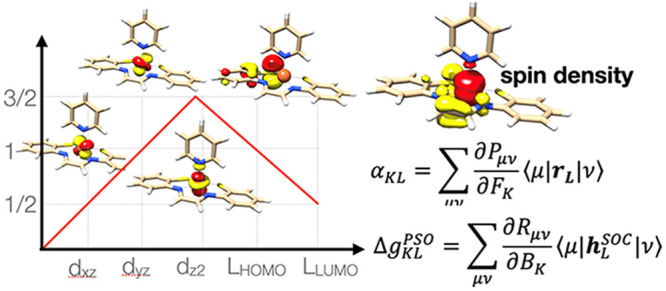 Figure 9
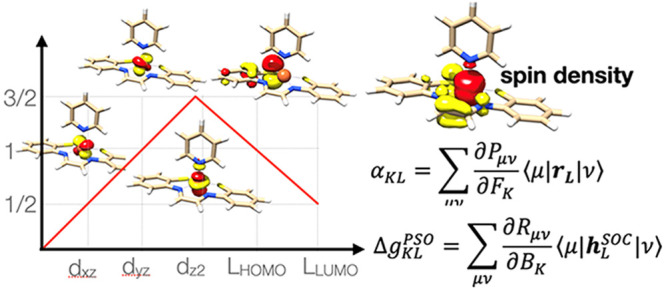 Figure 10
 Figure 11
 Figure 12
 Figure 13
 Figure 14
 Figure 15
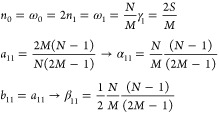 Figure 16
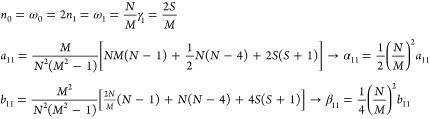 Figure 17
 Figure 18
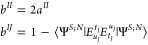 Figure 19
 Figure 20
 Figure 21
 Figure 22
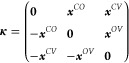 Figure 23
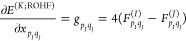 Figure 24
 Figure 25
 Figure 26
 Figure 27
 Figure 28
 Figure 29
 Figure 30
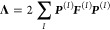 Figure 31
 Figure 32
 Figure 33
 Figure 34
 Figure 35
 Figure 36
 Figure 37
 Figure 38
 Figure 39
 Figure 40
 Figure 41
 Figure 42
 Figure 43
 Figure 44
 Figure 45
 Figure 46
 Figure 47
 Figure 48
 Figure 49
 Figure 50
Peer Reviews
No public reviews on file for this paper yet. If you reviewed it on a platform where reviews are public (OpenReview, ICLR, NeurIPS, ICML), you can paste yours below so the community can read it here.
Videos
No videos yet. Explain this paper in a talk, walkthrough, or lecture? Add one.
Taxonomy
TopicsAdvanced Chemical Physics Studies · Spectroscopy and Quantum Chemical Studies · Magnetism in coordination complexes