Density Functional Theory Calculations to Investigate the Role Played by an Aspartate Dyad in Hsp60-Catalyzed ATP Hydrolysis
Luca Torielli, Federica Guarra, Stefano A. Serapian, Giorgio Colombo

TL;DR
This paper uses computational methods to study how a pair of aspartate residues in Hsp60 influence ATP hydrolysis, a key process in protein folding.
Contribution
The study provides new insights into the mechanism of ATP hydrolysis in Hsp60 by analyzing the role of an aspartate dyad using DFT calculations.
Findings
Hydrolysis is favored when the aspartate dyad is deprotonated.
Dyad closure increases ATPase activity in the V72I Hsp60 mutant.
Protonation state significantly affects the reaction barrier for ATP hydrolysis.
Abstract
Adenosine 5′-triphosphate (ATP) hydrolysis is one of the most significant reactions in biochemistry. In chaperone proteins, energy released by hydrolysis enables them to carry out their function and help other proteins (called “clients”) to fold into their functional form. Here, we run Density Functional Theory calculations on three cluster models of the Hsp60 active site extracted from our previous molecular dynamics simulations of the 14-meric Hsp60 double-ring complex: our aim is to qualitatively investigate the mechanisms of ATP hydrolysis in different scenarios where the chaperone closes a dyad composed of catalytic aspartates Asp50 and Asp397. Since dyad closure raises Asp pK a values and increases likelihood of protonation, we modeled the active site both in the presence and absence of a proton. Comparison of reaction barriers suggests that hydrolysis is favored when aspartates…
Genes, proteins, chemicals, diseases, species, mutations and cell lines named across the full text — each resolved to its canonical identifier and authoritative record.
Click any figure to enlarge with its caption.
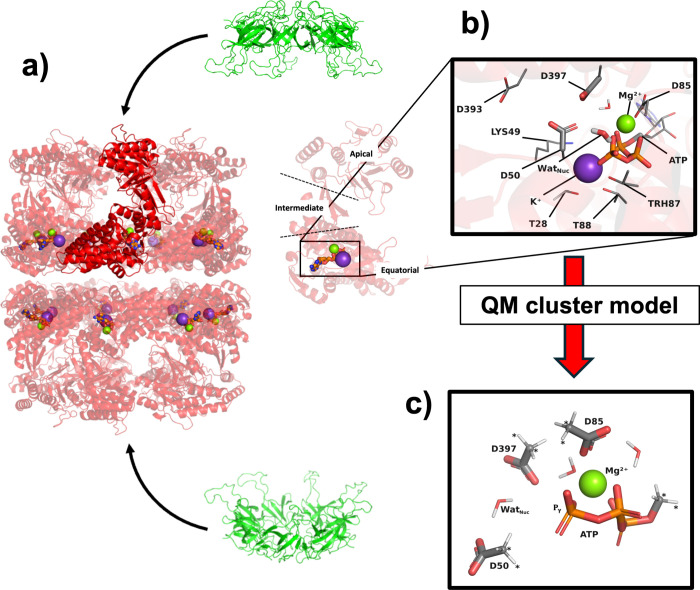 Figure 1
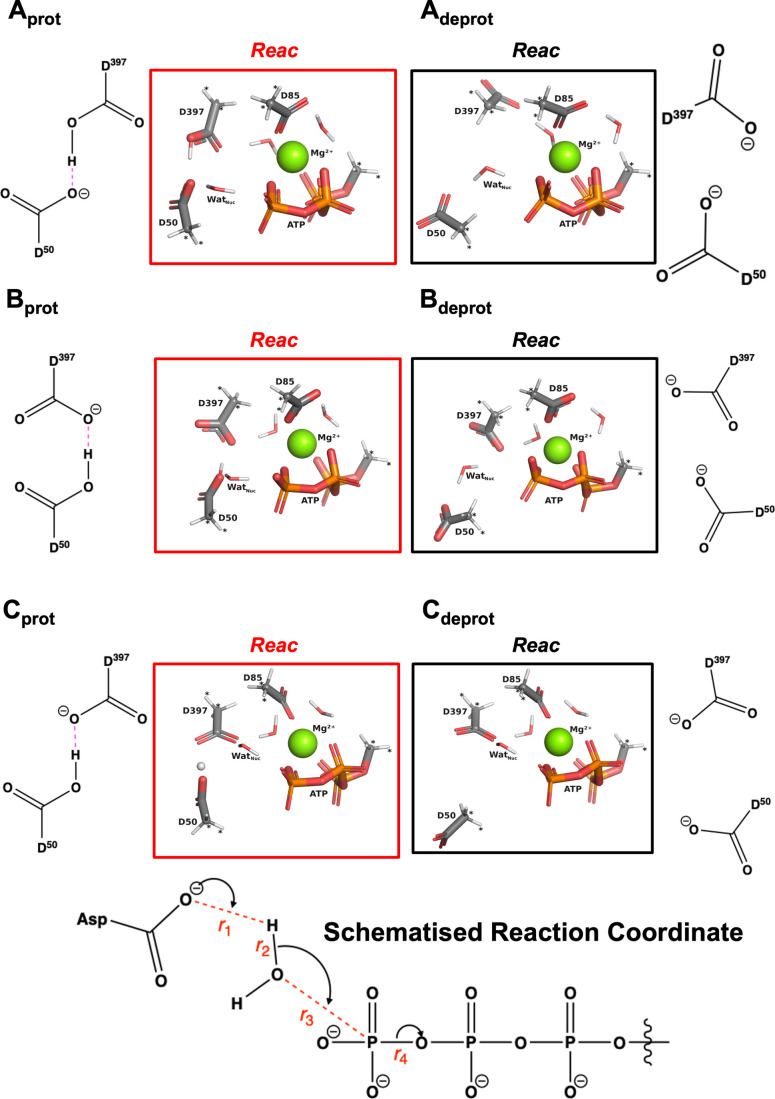 Figure 2
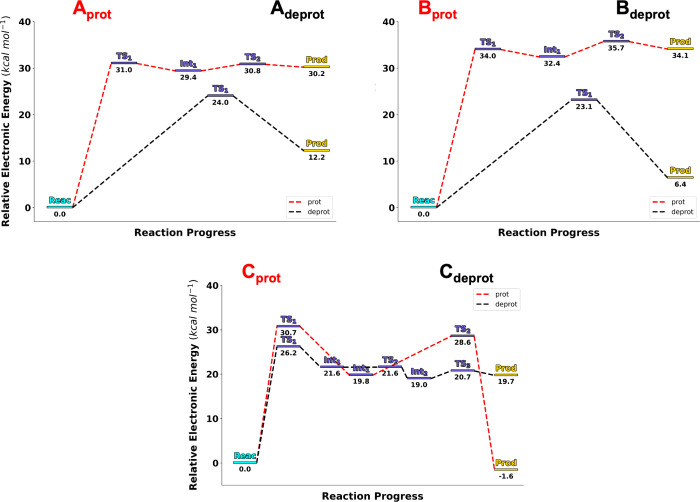 Figure 3
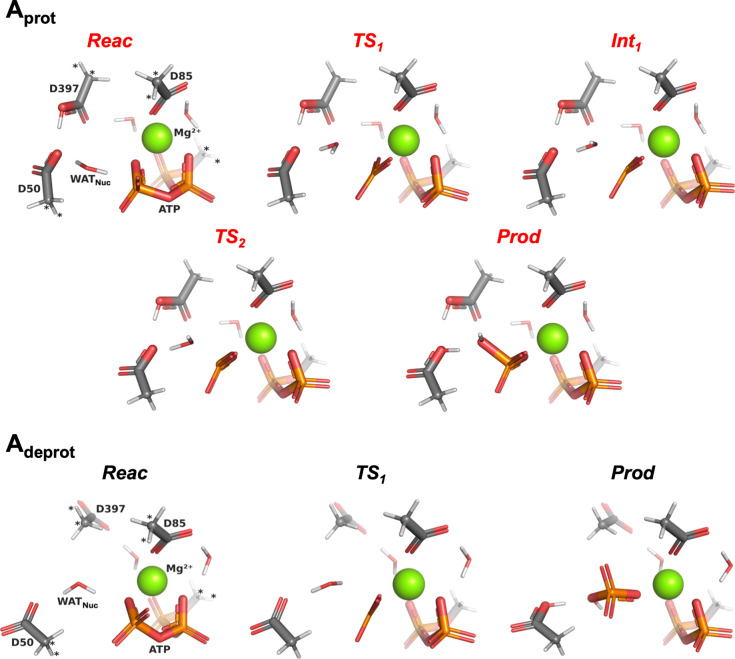 Figure 4
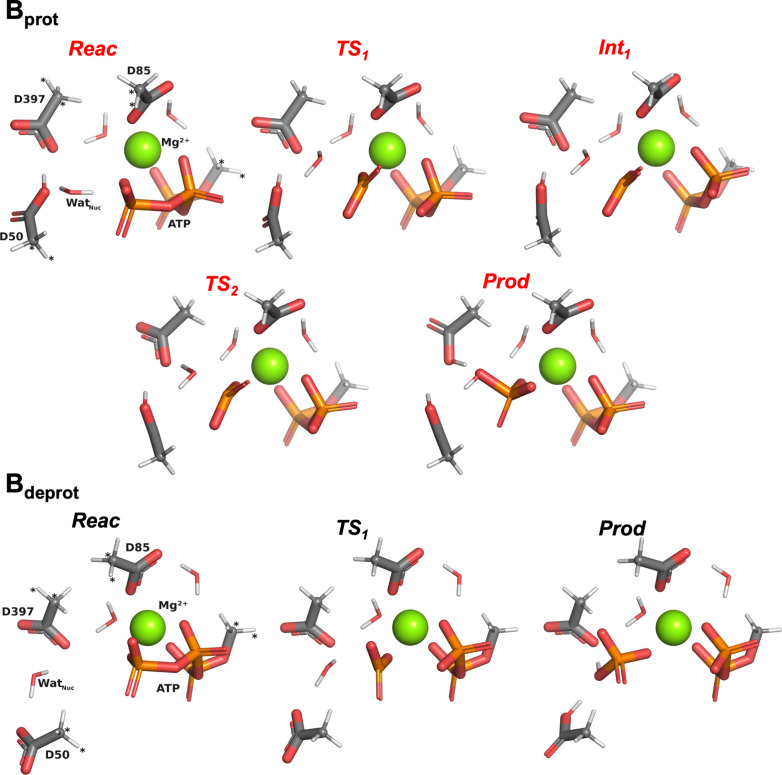 Figure 5
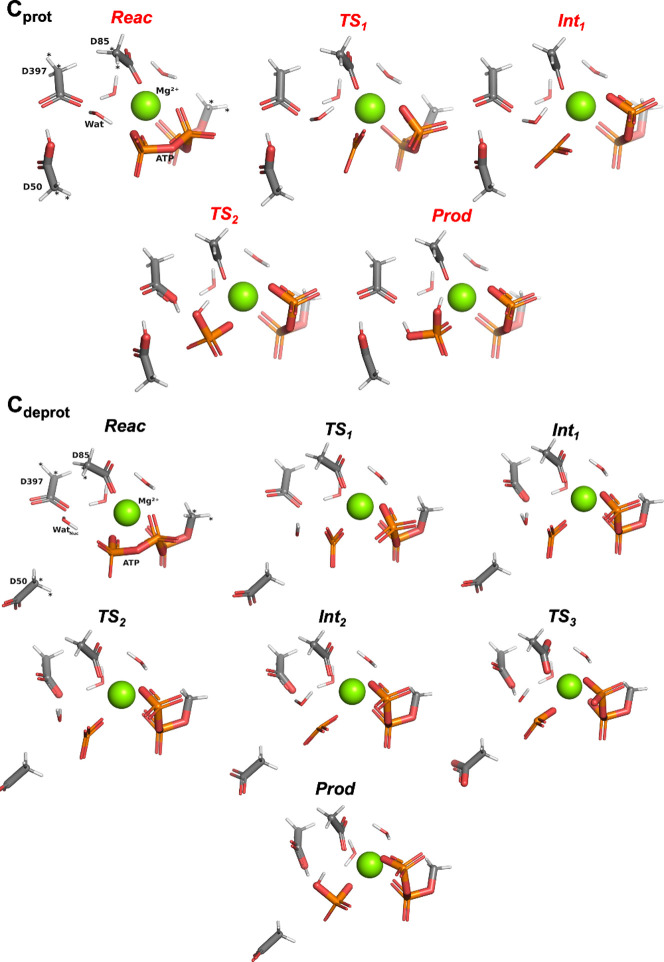 Figure 6
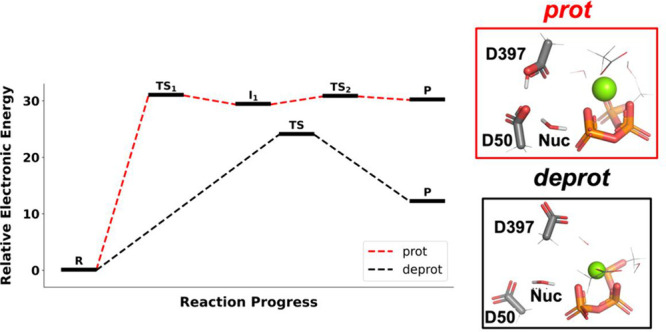 Figure 7
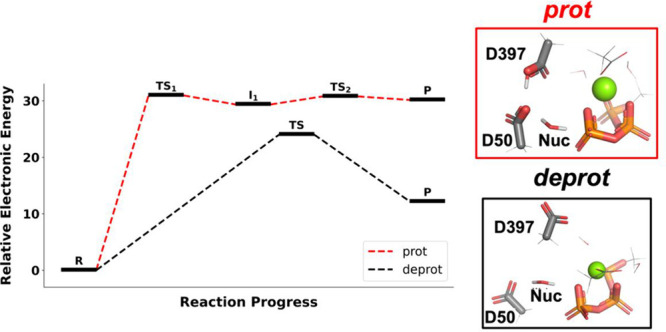 Figure 8
Peer Reviews
No public reviews on file for this paper yet. If you reviewed it on a platform where reviews are public (OpenReview, ICLR, NeurIPS, ICML), you can paste yours below so the community can read it here.
Videos
No videos yet. Explain this paper in a talk, walkthrough, or lecture? Add one.
Taxonomy
TopicsHeat shock proteins research · Protein Structure and Dynamics · ATP Synthase and ATPases Research