Maternal and Neonatal Outcomes Following Ultrasound-Guided Microwave Ablation for Selective Fetal Reduction in Complicated Monochorionic Pregnancies: A Case Series
Homeira Vafaei, Shohreh Roozmeh, Alireza Shamshirsaz, Nasrin Asadi, Naeimehossadat Asmarian, Maryam Kasraeian, Shohra Qaderi, Khadije Bazrafshan, Mozhde Ghiasi, Azam Faraji

TL;DR
This case series evaluates the outcomes of using microwave ablation for fetal reduction in complicated twin pregnancies, showing effectiveness with no maternal complications.
Contribution
The study introduces microwave ablation as a new technique for selective fetal reduction in monochorionic pregnancies.
Findings
Microwave ablation was successfully performed in all 21 cases with complete cessation of fetal blood circulation.
The procedure had an 81% survival rate and no maternal complications, though 19% of fetuses were lost after the procedure.
Babies had a 70.6% NICU admission rate, but all survived the neonatal period.
Abstract
Microwave ablation (MWA) is a newly introduced technique for selective fetal reduction in complicated monochorionic (MC) pregnancies. This study aimed to describe maternal and neonatal outcomes after implementing MWA for selective fetal reduction in complicated MC pregnancies and analyze the procedure’s success rate. This is a case series of 21 complicated MC pregnancies that underwent MWA in the Fetal-Maternal Center affiliated with Shiraz University of Medical Sciences (Shiraz, Iran) to occlude fetal blood circulation from May 2021 to May 2022. The participants were followed until delivery. Gestational age at the time of the procedure, duration of the procedure, survival rate, procedure-to-delivery time, gestational age at delivery, as well as maternal and neonatal outcomes were evaluated. MWA was successfully performed in all 21 cases. The median (Q1-Q3) gestational age at the time…
Genes, proteins, chemicals, diseases, species, mutations and cell lines named across the full text — each resolved to its canonical identifier and authoritative record.
Click any figure to enlarge with its caption.
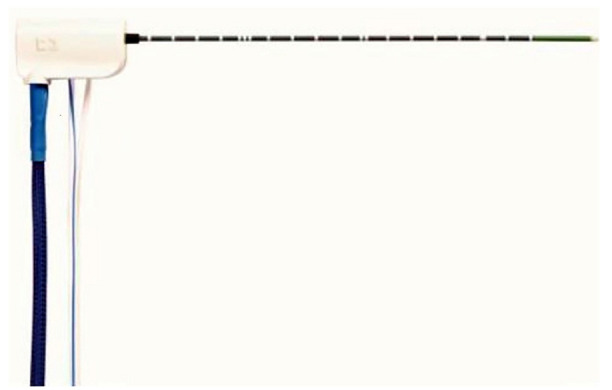 Figure 1
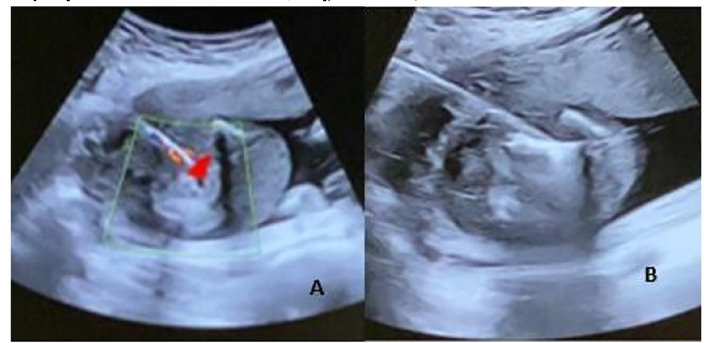 Figure 2
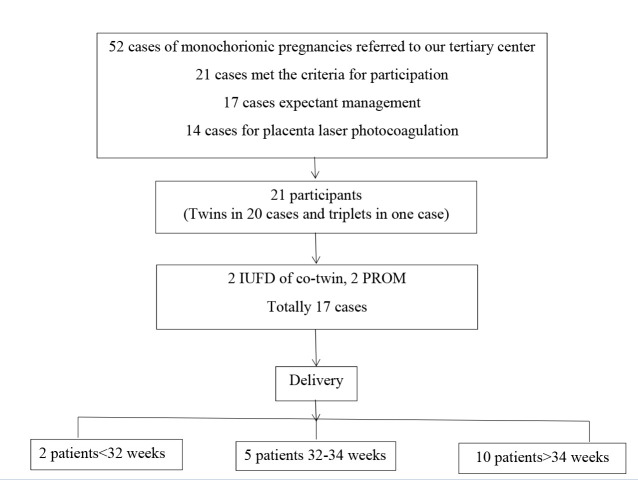 Figure 3
Peer Reviews
No public reviews on file for this paper yet. If you reviewed it on a platform where reviews are public (OpenReview, ICLR, NeurIPS, ICML), you can paste yours below so the community can read it here.
Videos
No videos yet. Explain this paper in a talk, walkthrough, or lecture? Add one.
Taxonomy
TopicsAssisted Reproductive Technology and Twin Pregnancy · Ectopic Pregnancy Diagnosis and Management · Preterm Birth and Chorioamnionitis